Made in America
Get Connected With


Choosing the right water fittings is a practical decision, not a decorative one. A fitting must match the pipe material, water pressure, temperature, and installation space. Small errors can create slow leaks behind walls. Those leaks may remain invisible for months.
Plumbing educator Richard Trethewey has said, “A good plumbing system is one you never notice.” That idea explains why fitting selection deserves careful attention. Compression fittings suit many repair jobs because they need limited tools. Push-fit fittings offer speed, especially in tight spaces. Threaded fittings provide firm connections for valves, filters, and removable equipment. Soldered copper fittings remain valued for their durability and heat resistance. PEX fittings support flexible layouts and reduce the number of joints. Each type has strengths, limits, and a different installation process.
The best water fittings are not always the fastest to install. They should also remain accessible for inspection. A fitting under a kitchen sink may face movement, cleaning chemicals, and repeated use. A fitting inside a wall faces different risks, including heat expansion and hidden condensation. Compatibility matters more than appearance.
No fitting is perfect. Even experienced installers can overlook a seal, misread a size, or tighten a connection too much. That is why this guide compares the top types of water fittings, their common applications, and their practical weaknesses. It also considers maintenance, material quality, and long-term reliability. The final choice should follow manufacturer instructions and local plumbing requirements.
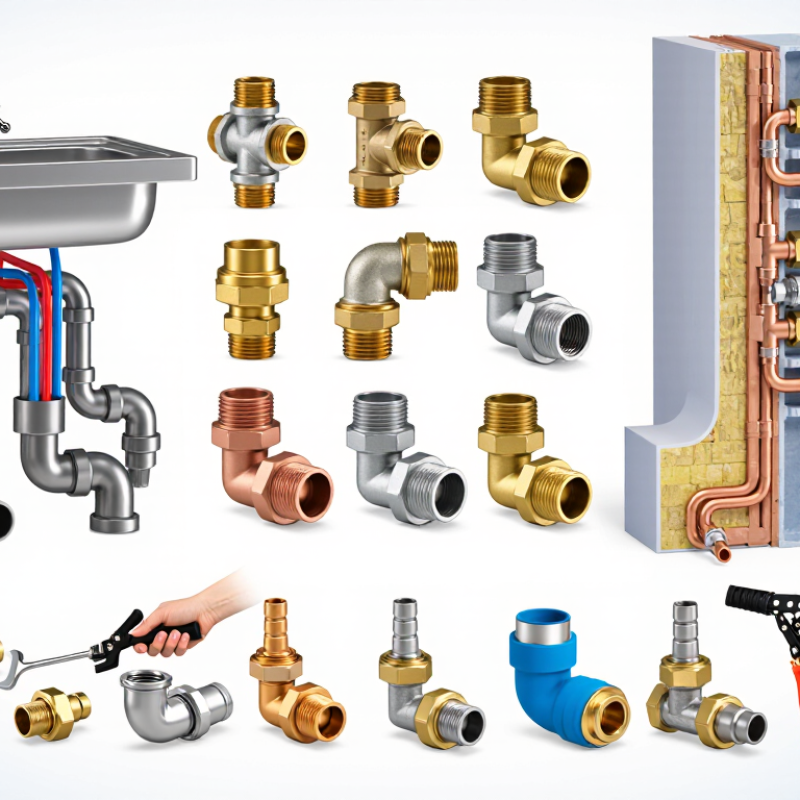
Water fittings are small components that connect, redirect, control, or terminate water pipes. They create a continuous path for water while preventing leaks at each joint. Common types include elbows, tees, couplings, adapters, valves, and reducers. Each shape solves a different installation problem. An elbow changes direction, while a reducer joins pipes with different diameters.
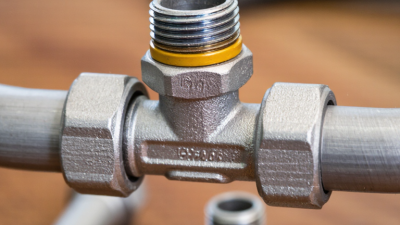
The connection method determines how a fitting works. Threaded fittings use matching grooves and sealing material to hold pressure. Compression fittings tighten a nut around a ring, gripping the pipe without heat. Push-fit fittings use an internal seal and locking mechanism. Soldered and press-fit connections create more permanent joints, but they require suitable tools and careful preparation. A dirty pipe can weaken even a well-designed connection.
Pipe material, water pressure, temperature, and access space all affect the right choice. In practical repairs, checking the pipe size twice prevents many avoidable mistakes. A fitting may look secure but still leak after pressure rises. That detail is easy to miss. I also find that tightening harder is not always safer; excessive force can damage threads or distort seals. Reliable installation depends on clean cuts, aligned pipes, compatible materials, and a pressure test before walls or cabinets are closed. No fitting is perfect. Even experienced installers sometimes need to rethink an initially convenient connection.
Water fittings are not interchangeable parts. Their shape reflects their job. Elbows redirect flow around walls or equipment. Tees create a branch for a faucet, drain, or pressure gauge. Couplings join two pipes, while reducers connect different diameters. Unions allow future disassembly without cutting the pipe. Valves regulate or stop flow, although they are often discussed separately from fittings.
Function controls selection. A 90-degree elbow saves space but can increase turbulence and pressure loss. A long-sweep elbow usually supports smoother drainage. Threaded fittings suit accessible connections, while press-fit or solvent-welded joints can reduce installation time. However, the pipe material, fluid temperature, pressure, and chemical exposure must match the fitting. A potable-water connection also needs suitable compliance documentation, such as NSF/ANSI 61 certification where applicable.
Small failures create large waste. The U.S. Environmental Protection Agency’s WaterSense program reports that household leaks can waste more than 10,000 gallons of water annually. That figure makes joint quality more than a technical detail. A practical check includes inspecting damp threads, staining, movement, and uneven pipe alignment. Do not overtighten. It may crack the fitting or damage the seal. One overlooked issue is future maintenance: a cheap permanent joint can become expensive when equipment must be removed. The best connection is not always the fastest one. It is the one that fits the system’s function, service conditions, and repair needs.
Water fittings connect, redirect, control, and repair plumbing lines. Common choices include elbows, tees, couplings, unions, adapters, and valves. An elbow changes direction around a cabinet corner. A tee divides one supply line into two branches. Couplings join straight pipe sections, while unions allow easier maintenance without cutting the pipe.
Valves matter most for control. A shutoff valve isolates a sink, toilet, or storage tank during repairs. Check valves help prevent reverse flow, especially near pumps and water heaters. Compression fittings suit many retrofit jobs because they need limited tools. Push-fit fittings install quickly, but clean, fully inserted pipe is essential. Small errors matter.
The U.S. Environmental Protection Agency estimates household leaks waste nearly one trillion gallons of water annually. Poorly tightened fittings can contribute to that loss. The World Health Organization and UNICEF reported that 2.2 billion people lacked safely managed drinking water in 2022, making reliable connections more than a convenience. They are part of basic water security.
In practical installation, match the fitting material, pipe size, pressure rating, and water temperature. A brass fitting may suit hot-water service, while plastic fittings can work well in approved cold-water systems. Local codes still decide what is acceptable. A neat-looking joint is not always a safe joint. I would recheck every threaded connection after pressurizing the line, because small seepage can hide behind walls.
What Are the Top Types of Water Fittings?
Water fittings connect pipes, control flow, and manage changes in direction. Common types include elbows, tees, couplings, adapters, unions, and valves. Their materials affect durability, water taste, temperature resistance, and installation method. Copper handles heat well, while PEX and PVC are lightweight and easier to cut. Stainless steel suits demanding environments, but it often costs more.
Size selection requires more care than many people expect. A pipe marked 20 millimeters may not match every 20-millimeter fitting. Some systems use nominal sizes, while others use outside diameter measurements. Thread standards also differ, including NPT and BSP. Mixing them can cause leaks or damaged threads. Check pressure and temperature ratings before installation, not afterward. That small step is often missed.
Tips: Match the fitting material with the pipe material. Confirm potable-water approval, such as NSF/ANSI/CAN 61 where applicable. Review local plumbing codes and the manufacturer’s technical data. Clean and deburr pipe ends carefully. A rushed cut can damage a seal. Use the correct sealing method for threaded joints, and never force a connection. Standards improve reliability, but they do not replace practical inspection. Test the completed system slowly, watching every joint for movement or moisture.
Water fittings are commonly made from copper, PVC, CPVC, PEX, stainless steel, brass, and polypropylene. The chart shows the outside diameter associated with common nominal copper tube sizes. These dimensions are based on standard copper tube sizing; nominal size is not the same as the measured outside diameter.
Copper and stainless steel are used for durable rigid systems. PVC, CPVC, PEX, and PP are common polymer options for potable-water and plumbing applications.
Relevant standards include ASME B16.22 for wrought copper fittings, ASTM D2466 for PVC fittings, ASTM D2846 for CPVC systems, ASTM F1807 for PEX fittings, and ISO 15874 for polypropylene systems.
Nominal sizes identify the fitting or tube size, while outside diameter is the measured dimension used for compatibility and connection design.
Choosing a water fitting starts with the application, not the appearance. Common options include compression, push-fit, threaded, soldered, flanged, and press-connect fittings. Each suits different pressure, temperature, access, and maintenance conditions. A fitting under a kitchen sink faces different demands from one installed in a boiler room.
Check the pipe material first. Copper, PEX, PVC, stainless steel, and galvanized steel require compatible connection methods. Then confirm the working pressure and temperature. The U.S. Environmental Protection Agency reports that household leaks can waste nearly 10,000 gallons of water yearly. Across the country, leaks may waste almost one trillion gallons annually, according to its WaterSense leak report. A poor joint can quietly add to that loss.
Use compression fittings where disassembly matters, such as appliance connections. Push-fit fittings help in tight spaces, but clean, fully inserted pipe is essential. Threaded fittings suit valves and removable equipment, while flanged fittings serve larger pipes and pumps. For drinking-water systems, select materials certified for potable use under NSF/ANSI/CAN 61. The World Health Organization also stresses controlling materials that may affect drinking-water quality. Do not ignore sealants.
In exposed or vibrating areas, verify support and strain relief. I would not choose solely by price; that shortcut often becomes expensive. Manufacturer data, local plumbing codes, and pressure testing should guide the final decision. One detail is easy to miss: access for future repair. A technically correct fitting can still be a poor choice when nobody can reach it.
| Fitting Type | Main Function | Common Connection Options | Typical Water Applications | Common Materials | Key Selection Factors | Advantages | Important Limitations |
|---|---|---|---|---|---|---|---|
| Elbow | Changes the direction of a pipe run, commonly by 45° or 90°. | Socket, solvent-weld, threaded, press-fit, push-fit, or grooved connections. | Potable-water distribution, hot-water lines, irrigation systems, and equipment connections. | Copper, brass, stainless steel, PVC, CPVC, PEX, and polypropylene. | Choose the angle, pipe size, connection standard, material compatibility, and required pressure rating. | Provides a compact change of direction and is available in many pipe systems. | Sharp changes in direction can increase turbulence and pressure loss compared with a long-radius bend. |
| Tee | Creates a branch from a main pipe or combines two flow paths. | Threaded, socket, solvent-weld, press-fit, push-fit, or grooved connections. | Branching to fixtures, manifolds, irrigation zones, water-treatment equipment, and heating circuits. | Brass, copper, stainless steel, PVC, CPVC, PEX, and polypropylene. | Match the run and branch sizes, flow direction, material, and pressure-temperature requirements. | Allows a clean branch connection without cutting into the pipe later. | Incorrect sizing may cause excessive pressure drop or inadequate flow at the branch. |
| Coupling | Joins two pipes in a straight line. | Solvent-weld, soldered, threaded, press-fit, push-fit, compression, or grooved connections. | Pipe extensions, repairs, replacement sections, and straight-run plumbing installations. | Copper, brass, stainless steel, PVC, CPVC, PEX, polypropylene, and ductile iron. | Select the same nominal size and compatible joining method; use a repair coupling where movement or limited access is expected. | Simple, widely available, and suitable for both new installations and repairs. | A standard coupling does not accommodate major changes in pipe alignment or movement. |
| Reducer | Connects pipes with different diameters. | Threaded, socket, solvent-weld, press-fit, butt-fusion, or grooved connections. | Transitions between supply mains and smaller branches, pump connections, and equipment inlets. | Brass, stainless steel, copper, PVC, CPVC, polypropylene, and ductile iron. | Confirm the larger and smaller nominal sizes, flow direction, pressure class, and whether concentric or eccentric geometry is needed. | Provides a controlled size transition and can reduce the need for multiple fittings. | A sudden reduction can increase velocity and pressure loss; sizing should follow the system design. |
| Union | Connects two pipe sections while allowing easier disassembly. | Threaded, soldered, press-fit, or solvent-weld ends with a union nut and sealing faces. | Water heaters, pumps, filters, meters, control equipment, and serviceable plumbing assemblies. | Brass, stainless steel, copper, PVC, CPVC, and polypropylene. | Choose a seal design, end connection, size, material, and pressure-temperature rating suitable for repeated servicing. | Allows equipment removal without rotating or cutting the connected pipes. | Usually costs more and may be bulkier than a permanent coupling. |
| Adapter | Connects different fitting types, pipe materials, or connection standards. | Thread-to-socket, thread-to-PEX, flange-to-thread, press-to-thread, and push-fit combinations. | Connecting plastic pipe to metal valves, fixtures, pumps, tanks, filters, and appliances. | Brass, stainless steel, PVC, CPVC, polypropylene, and reinforced composite materials. | Verify male or female thread type, thread standard, pipe size, material compatibility, and dielectric requirements. | Provides flexibility when a system contains different pipe materials or connection methods. | Mixed-metal connections may require dielectric separation to help reduce galvanic corrosion. |
| Cross | Connects four pipe branches at a single intersection. | Threaded, socket, solvent-weld, press-fit, or push-fit connections. | Manifolds, compact distribution networks, laboratory water systems, and selected irrigation layouts. | Brass, copper, stainless steel, PVC, CPVC, PEX, and polypropylene. | Check the hydraulic design, branch sizes, flow paths, pressure rating, and accessibility for maintenance. | Creates multiple branches in a compact space. | Flow interaction at the intersection can increase turbulence and pressure loss; tees may be preferable in many systems. |
| Cap and Plug | Closes the end of a pipe, branch, or fitting. | Threaded, solvent-weld, press-fit, push-fit, soldered, or mechanically restrained connections. | Temporary test closures, unused branches, pipe ends, maintenance isolation, and future extensions. | Brass, stainless steel, copper, PVC, CPVC, PEX, polypropylene, and ductile iron. | Use a cap for an external pipe end and a plug for an internal fitting opening; match the connection and pressure rating. | Provides a straightforward way to terminate or reserve a line. | Temporary closures must be suitable for the test pressure and should be removed or permanently secured as required. |
| Flange | Creates a bolted, detachable connection between pipes, valves, pumps, tanks, or equipment. | Raised-face, flat-face, threaded, slip-on, socket-weld, or welded flange arrangements. | Large-diameter water mains, pump stations, treatment plants, tanks, valves, and equipment skids. | Ductile iron, carbon steel, stainless steel, PVC, and reinforced thermoplastic materials. | Match the flange standard, nominal pressure class, face type, bolt pattern, gasket, and connected equipment. | Convenient for inspection, equipment removal, and large-pipe installation. | Requires accurate alignment, correct gasket selection, and proper bolt tightening to prevent leakage. |
| Compression Fitting | Joins pipes by tightening a nut and compression ring around the tube or pipe. | Compression nut, ferrule, and fitting body; commonly available with threaded outlet options. | Small-diameter water lines, appliance connections, refrigerator supply lines, and repairs where soldering is undesirable. | Brass, stainless steel, and approved plastic components. | Confirm tubing dimensions, ferrule type, water-service approval, installation torque, and accessibility. | Can be installed without heat and is useful where open flames are restricted. | It depends on accurate tubing preparation and correct tightening; it is not suitable for every pipe material or buried application. |
| PEX Crimp or Clamp Fitting | Connects PEX tubing to other PEX sections or to threaded, valve, and fixture outlets. | Crimp ring, stainless-steel clamp, expansion sleeve, or integrated threaded connection. | Residential potable-water distribution, radiant heating, and hydronic piping systems where the tubing system permits the method. | Lead-free brass, polymer composites, copper crimp rings, and stainless-steel clamps. | Use the fitting and joining method approved for the specific PEX type and confirm tool compatibility and water-service approval. | Fast installation, corrosion resistance, and compatibility with flexible PEX tubing. | Different PEX systems and joining methods are not automatically interchangeable; follow the applicable installation standard. |
| Push-Fit Fitting | Joins compatible pipe by inserting it into an internal sealing and gripping mechanism. | Push-fit ends with optional threaded, valve, or transition outlets. | Potable-water repairs, fixture connections, remodeling, and accessible installations using approved pipe types. | Brass, engineered polymer, stainless steel gripping rings, and elastomeric seals. | Check pipe compatibility, insertion depth, deburring requirements, temperature rating, and accessibility after installation. | Quick installation with minimal tools and no soldering, solvent, or heat. | Not every push-fit fitting is approved for every pipe, location, or concealed installation; follow the product listing and local code. |

Selection note: Always verify the applicable plumbing code, potable-water approval, connection standard, pressure rating, temperature rating, pipe material, and manufacturer installation requirements before purchasing or installing a water fitting.