Made in America
Get Connected With



Choosing the right storm water pipe in 2026 is not just a question of diameter or price. The pipe must suit local rainfall, soil conditions, expected flow, and the route water will travel. A narrow pipe can back up during a heavy storm. An oversized pipe may add cost without solving downstream drainage problems. Small details matter.
Stormwater researcher Dr. Robert Pitt’s work highlights the value of judging drainage as a system, not as an isolated component. A useful summary of that principle is: “Choose the pipe for the water, the site, and the system it serves.” This is a practical paraphrase, not a verified direct quotation. It points to the questions this guide will explore: How much runoff must the pipe carry? What material fits the site? How should slope, joints, access, and maintenance affect the choice?
A reliable selection starts with real site information, such as drainage area, rainfall data, soil type, and outlet conditions. Compare options such as concrete, PVC, and HDPE against project demands and manufacturer specifications. Then check how the pipe connects to inlets, culverts, and existing infrastructure. No material is best everywhere. Even a well-chosen pipe can fail if installation or maintenance is overlooked. That part deserves more attention than it often gets. This guide offers a careful framework for making a durable, evidence-based choice in 2026.
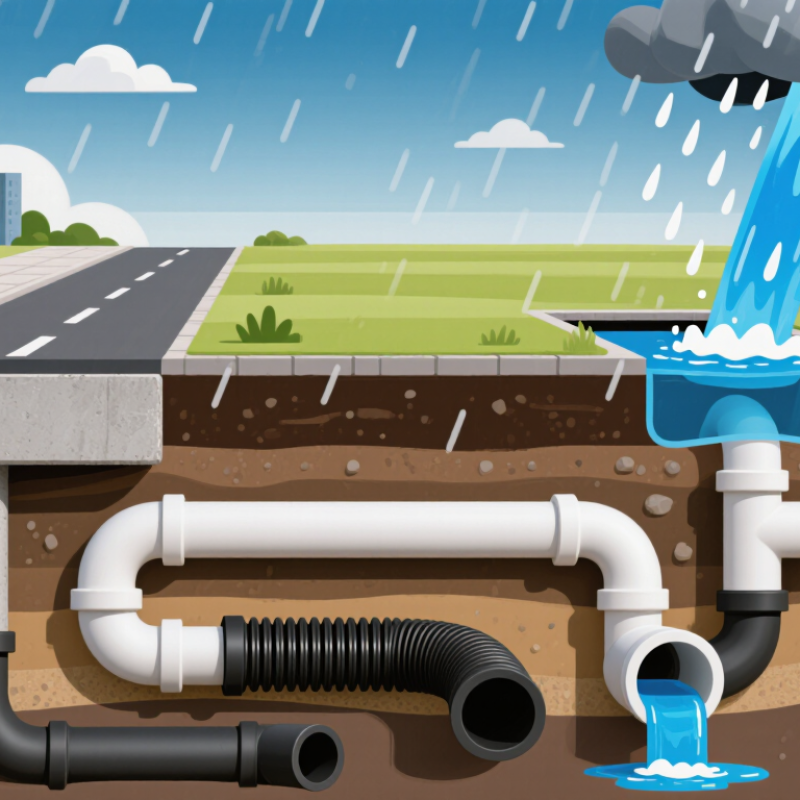
Before choosing a storm water pipe, walk the site during or just after rain. Note where water gathers, how quickly it moves, and whether it carries leaves, grit, or sediment. A low spot beside a driveway may need a different inlet and pipe capacity than a broad lawn. Look for roof downspouts, paved areas, slopes, and likely future changes to the property. Small details matter.
Measure the drainage area and check the site’s slope, soil, and groundwater conditions. Clay soil may slow infiltration, while loose or saturated ground can affect trench stability and pipe support. A gentle grade may require careful outlet planning to prevent standing water. Fast flow can erode soil near an outlet. Check local rainfall data and design requirements, then have a qualified drainage professional verify pipe sizing and hydraulic capacity. Guessing from pipe diameter alone is unreliable.
Also consider maintenance access and the material’s exposure to sunlight, chemicals, and vehicle loads. A pipe under a garden path faces different demands from one beneath a parking area. Check where the water will discharge and whether the outlet could become blocked or cause erosion. Plans can look tidy on paper, yet overlook a gate, tree root, or shallow utility line. That happens. Recheck the route on site before excavation, and revise the plan when conditions differ from the drawing.
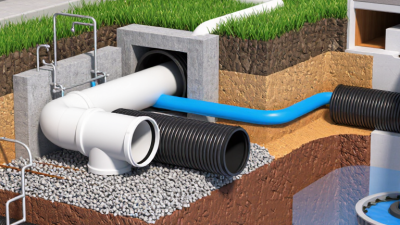
Compare Pipe Materials, Durability, and Environmental Impact
Choosing a stormwater pipe means matching material to site conditions, not picking the strongest option on paper. PVC is light and smooth inside, which can support efficient flow and simpler handling. HDPE bends around obstacles and resists many forms of corrosion, but its joints need careful installation. Concrete handles heavy loads and suits large drains, though it is bulky to transport and place. Every material has a trade-off.
Durability depends on soil chemistry, traffic loads, water flow, and installation quality. A pipe beneath a busy access road faces different stresses from one in a landscaped swale. Environmental impact also extends beyond the pipe itself: consider material content, transport distance, expected service life, and the energy needed for installation. Recycled content may help, but it does not automatically make a pipe the better choice. I would avoid pretending there is one perfect answer; project conditions can be easy to underestimate.
Tips: Check local design requirements and soil reports before comparing prices. Inspect joint details, load ratings, and maintenance access. Ask how the pipe can be repaired if a section settles. Small details matter. A poorly prepared trench can shorten the life of even a durable pipe.
Choosing a storm water pipe starts with the flow it must carry, not the diameter that looks convenient. Estimate the design flow using the contributing area, rainfall data, and expected runoff from roofs, pavement, and soil. Then check the pipe’s hydraulic capacity at its actual slope and internal diameter. A Manning-based calculation can help, but its roughness assumptions should match the pipe material and condition. Small inputs matter.
Measure the route and elevations on site. A shallow or uneven grade can reduce capacity, while an unnecessarily steep run may create awkward connections or outlet problems. Measure the run. Confirm the outlet level and consider downstream water levels, bends, junctions, and likely sediment. A pipe that works on paper may not work as intended if tailwater backs up or leaves collect at an inlet.
Compare the calculated flow with the pipe’s capacity under realistic conditions, allowing appropriate freeboard where the design requires it. Check local drainage criteria and rainfall requirements before settling on a size; there is no universal diameter or minimum slope for every site. This is an easy detail to rush. I would recheck surveyed elevations and assumptions, especially on flat ground, where a few centimeters can change the available fall. Keep access points reachable for inspection, and avoid relying on a single calculation when site conditions are uncertain.
The chart compares estimated full-flow capacity for circular pipes from 300 to 900 mm at slopes of 0.5%, 1%, and 2%. Estimates use the Manning equation with a roughness coefficient of n = 0.013. Actual pipe selection should also account for design-storm runoff, allowable water depth, inlet and outlet conditions, local standards, and pipe material.
When choosing a storm water pipe in 2026, check the standards and project specifications required by the local authority. Confirm the pipe’s material, diameter, stiffness, and joint performance meet those requirements. Do not rely on a product description alone; request current technical documents and verify they match the intended use. Requirements can vary between projects.
Climate and site conditions matter just as much. Check design rainfall, possible flooding, freeze depth, soil movement, and exposure to salt or chemicals. Then confirm the installation plan: trench width, bedding material, pipe slope, jointing method, cover depth, and access for inspection. A pipe that handles the expected flow may still fail if the trench settles or connections leak. A neat calculation can miss what the site reveals.
Tips: Walk the route before selecting a pipe. Note low spots, crossings, and nearby utilities. Ask the installer to confirm equipment access and compaction requirements. Keep the details. Even careful plans sometimes need revision after excavation.
| Decision factor | What to verify | Relevant options or references | Practical selection guidance |
|---|---|---|---|
| Hydraulic capacity | Design-storm intensity, drainage area, allowable water depth, slope, inlet capacity, and downstream conditions. | Project hydrology and hydraulic calculations; local drainage criteria. | Size the system using the project’s required design event and approved calculation method. Do not select pipe diameter from a general rule of thumb alone. |
| Applicable product standard | Confirm that the standard covers the pipe material, profile, diameter range, and intended gravity-drainage use. | Examples include ASTM C76 for reinforced concrete pipe, ASTM D3034 for PVC sewer pipe, and ASTM F2306/F2306M for profile-wall polyethylene pipe used in gravity-flow storm sewer applications. | Check the project specification and the edition adopted by the relevant authority. A standard reference is not a substitute for confirming project approval and product compliance. |
| Installation standard and design method | Review bedding, haunch support, backfill material, compaction, cover, and construction inspection requirements. | ASTM D2321 provides installation guidance for thermoplastic pipe; ASTM C1479 addresses installation of precast concrete sewer and storm-drain pipe. | Use the installation method applicable to the selected material and project. Follow the pipe manufacturer’s instructions and the engineer’s approved details. |
| Traffic loads and burial depth | Check vehicle or construction loads, soil conditions, groundwater, trench width, and minimum and maximum cover. | Project structural calculations, applicable local requirements, and the pipe manufacturer’s load-and-cover guidance. | Confirm that the pipe system is suitable for the actual installation conditions. Shallow cover, heavy traffic, or unusual soil may require a specific design or protective measures. |
| High groundwater and buoyancy | Evaluate seasonal groundwater level, uplift risk, excavation dewatering, and the condition of the pipe during installation. | Geotechnical information and project-specific buoyancy calculations. | Where groundwater could cause flotation, have the design address pipe restraint, embedment, sequencing, or other approved measures. |
| Freeze, thaw, and frost movement | Consider local frost depth, seasonal soil movement, drainage outlets, and potential ice blockage. | Local frost-depth data, geotechnical recommendations, and drainage design requirements. | Check alignment, cover, outlet conditions, and transitions for the site’s freeze-thaw exposure. Material choice alone does not prevent frost-related movement or blockage. |
| Corrosive soil or water | Assess soil and water chemistry, including pH, chlorides, sulfates, and other project-relevant indicators. | Site testing, geotechnical recommendations, and material-specific durability guidance. | Compare the exposure with the selected material’s documented limits. Where conditions are aggressive, specify suitable materials, joints, or protective measures based on engineering review. |
| Abrasion and sediment | Consider expected flow velocity, sediment load, debris, and the potential for grit or sediment to wear the pipe interior. | Hydraulic calculations, catchment characteristics, and manufacturer guidance for the proposed pipe. | Where abrasive flows are expected, evaluate durability and maintenance needs, and consider sediment-control measures in the drainage system design. |
| Storm intensity and changing climate conditions | Check the rainfall data, design storm, and climate allowances required by the local authority or project owner. | Current local intensity-duration-frequency data and adopted drainage criteria. | Use the currently approved local basis of design. If the owner requires climate-adjusted rainfall or resilience analysis, document those assumptions in the calculations. |
| Joints and system tightness | Verify joint compatibility, deflection allowance, connection details, and infiltration or exfiltration requirements. | Applicable product standard, project specifications, and manufacturer’s jointing instructions. | Match joints and fittings to the selected pipe system. Pay particular attention to manholes, inlets, dissimilar-material transitions, and movement-prone locations. |
| Constructability and access | Check available trench width, lifting equipment, delivery access, pipe lengths, and inspection requirements. | Construction plans, site logistics, and installation instructions. | Choose a system that can be safely transported, installed, connected, and inspected under actual site conditions. |
| Final approval and quality control | Confirm approved submittals, material certifications, installation records, and required acceptance tests. | Contract documents, authority requirements, and applicable inspection or testing procedures. | Before procurement, obtain design-team and authority approval. Record installation conditions and complete the specified inspection and testing. |
Note: Standards, design criteria, and accepted materials vary by jurisdiction and project. Verify the applicable editions, local requirements, site conditions, and project specifications before selecting or installing a storm water pipe.
Choosing a storm water pipe in 2026 means comparing more than purchase prices. Include excavation, bedding, traffic control, installation, inspection, repairs, and eventual replacement. The U.S. EPA’s 2022 Clean Watersheds Needs Survey estimated $115.3 billion in stormwater infrastructure needs over 20 years. ASCE’s 2021 Report Card estimated annual stormwater investment at $9.3 billion, against roughly $21 billion needed each year. That funding gap makes durable, maintainable designs especially important.
Compare systems under the same project assumptions. Concrete, corrugated metal, and thermoplastic pipes can each suit different loads, soils, water chemistry, and installation conditions. A low bid may not stay low if joints leak, corrosion shortens service life, or repairs require reopening a busy road. Check hydraulic capacity, cover depth, groundwater, joint performance, access for inspection, and local installation expertise. Small details matter. Ask suppliers for documented service-life assumptions and include them in a discounted lifecycle-cost model; don’t treat an estimated lifespan as a guarantee. I would also test the result against higher maintenance costs and earlier replacement. A spreadsheet can still miss site conditions, so review the assumptions with the designer and contractor before selecting the system.