Made in America

Get Connected With

JointsCouplings.com White Logo

Opening Hours M-F: 07:00 AM to 4:00 PM (PST)

7 Best Sewer Pipe Connections for Global Buyers

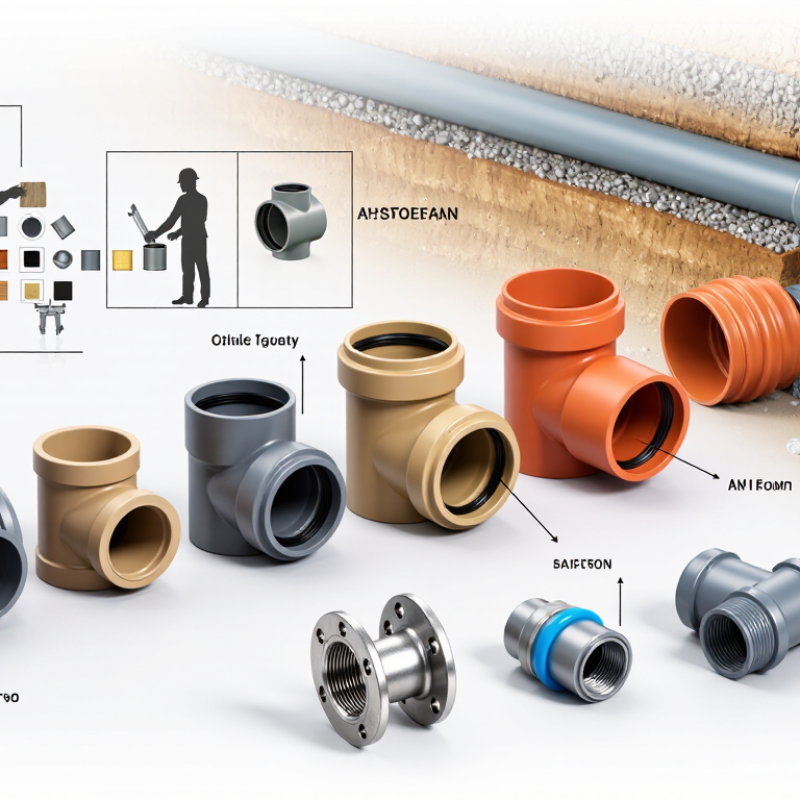
Global buyers often compare sewer pipe connections by price and availability. Yet the right joint must also suit the pipe material, diameter, operating conditions, and installation environment. A rubber-ring socket may work well for one gravity sewer, while a restrained coupling may be better where movement or pullout is a concern. Small details matter: gasket seating, clean pipe ends, and correct alignment can determine whether a connection stays watertight.

Water-infrastructure scholar Neil S. Grigg has written about managing wastewater systems as connected assets, rather than isolated components. A practical takeaway for buyers is: “Choose the connection for the whole system, not the pipe alone.” This is a guide-level summary, not a direct quotation. It reflects an important point: a fitting that looks robust on a product sheet may still be unsuitable for a particular trench, load, or maintenance plan.

This guide reviews seven common sewer pipe connections, including push-fit joints, mechanical couplings, flanged connections, and welded options. For each type, it considers compatibility, installation needs, sealing performance, and sourcing questions that matter to international purchasing teams. Ask suppliers for material specifications, dimensional tolerances, and test documentation. Then check those details against the project design and local engineering requirements. No connection is perfect. Some trade-offs deserve a second look. A careful comparison can help buyers avoid costly mismatches and choose a solution suited to the actual site.
7 Best Sewer Pipe Connections for Global Buyers

How Sewer Joints Seal: ASTM D3212’s 10.8-psi Test Benchmark

7 Best Sewer Pipe Connections for Global Buyers

How Sewer Joints Seal: ASTM D3212’s 10.8-psi Test Benchmark

A sewer joint must keep wastewater in and groundwater out. ASTM D3212 covers joints using flexible elastomeric seals for plastic drain and sewer pipe. Its often-cited 10.8-psi hydrostatic test gives buyers a useful comparison point. In practical terms, pressure loads the assembled joint while inspectors check for leakage under specified test conditions. A dry test result matters. So does proper assembly.

The benchmark is not a promise that every buried connection will perform identically. Pipe size, gasket fit, insertion depth, and installation conditions all affect the seal. Imagine a gasket rolled slightly out of its groove: the pipe may look connected, yet the joint can leak. A number can still mislead. Buyers should review the applicable standard edition and test details, rather than treating pressure alone as proof of long-term field performance.

Tips: Confirm that the pipe and fitting are designed for compatible joint dimensions. Clean the socket, inspect the gasket for cuts or twists, and mark insertion depth before assembly. Keep the pipe aligned as it enters the joint. Small details matter. If documentation is unclear, ask for the test method and acceptance criteria in writing.
Seven Joints: Solvent, Push-On, Mechanical, Flanged, Butt-Fusion, Electrofusion, Concrete

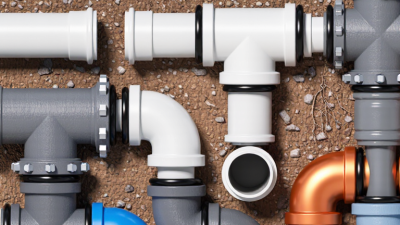
Sewer connections should match pipe material, installation access, ground movement, and maintenance needs. Solvent-welded joints suit compatible plastic pipes, but surface preparation and curing time matter. Push-on joints use a gasketed spigot and socket, making field assembly quick. Keep grit off the sealing surface. Mechanical couplings can connect different pipe ends and simplify repairs, though restraint and gasket compatibility need checking. Flanged joints allow accessible, bolted connections at pumps or chambers; they need accurate alignment and periodic inspection.

Butt-fusion heats and joins compatible thermoplastic pipe ends, creating a continuous joint when temperature and pressure are controlled. Electrofusion uses embedded heating elements, but needs clean, scraped pipe surfaces and a reliable power supply. Concrete sewer pipes commonly use gasketed bell-and-spigot joints; careful seating helps limit leakage and infiltration. Small details matter. The US EPA’s 2022 Clean Watersheds Needs Survey estimated $630.1 billion in wastewater infrastructure needs over 20 years. That figure signals the scale of investment, not a ranking of joint types. Buyers should compare installation conditions, testing requirements, spare-part access, and local technical specifications. Even a well-designed connection can fail when installation records are incomplete. A useful lesson, and an easy one to overlook.

7 Best Sewer Pipe Connections for Global Buyers - Seven Joints: Solvent, Push-On, Mechanical, Flanged, Butt-Fusion, Electrofusion, Concrete

Joint type Common pipe materials How the connection is made Typical sewer applications Key advantages Important considerations
Solvent cement PVC and, where the pipe system is designed for it, ABS Compatible solvent cement is applied to prepared pipe and fitting surfaces, which are joined and held while the joint sets. Small-diameter building drains, laterals, and approved pressure or non-pressure plastic pipe systems. Compact joint; readily available fittings; can create a permanent connection when the materials and installation procedure are compatible. Requires correct pipe, fitting, cement, surface preparation, and cure time. Use only where permitted by the pipe-system specifications and local codes; it is not a universal joint for plastic pipes.
Push-on gasketed PVC, ductile iron, and concrete pipe systems designed with compatible bell-and-spigot ends A spigot is pushed into a bell containing an elastomeric gasket. The gasket seals as the joint is assembled. Buried gravity sewers and, for appropriately rated systems, water or pressure pipelines. Fast assembly without field-applied cement or fusion; accommodates limited angular deflection and installation movement within system limits. Cleanliness, gasket seating, insertion depth, and approved lubricant are important. A standard push-on joint is not necessarily restrained against axial pullout.
Mechanical Ductile iron and other pipe materials used with compatible mechanical couplings or fittings A gland, bolts, and elastomeric gasket compress around a pipe end or fitting; coupling designs vary by system. Connections at fittings, repairs, transitions, and locations where a dismantlable or adaptable connection is useful. Can simplify repairs and connections between compatible components; some designs allow limited deflection. Joint design determines pressure rating, movement allowance, and restraint. Confirm pipe outside diameter, coupling compatibility, bolt tightening procedure, and any required thrust restraint.
Flanged Commonly ductile iron, steel, and flanged valves or equipment; other materials require compatible flange adapters Mating flanges are aligned with a gasket between them and secured with bolts. Pump stations, treatment works, valves, meters, and accessible equipment connections; less common for long runs of buried gravity sewer. Can be disassembled for maintenance and provides a firm connection to equipment and appurtenances. Needs accurate alignment and correctly selected gasket and bolting. Consider corrosion protection, access for maintenance, and support for equipment and pipe loads.
Butt-fusion Compatible polyethylene (PE/HDPE) pipes and fittings designed for butt fusion Prepared pipe ends are heated with a fusion tool and pressed together under controlled conditions to form a fused joint. PE sewer force mains and other PE pipelines where the pipe and project specifications allow fusion joining. Creates a continuous fused pipeline with no separate gasket at the joint when properly performed. Requires compatible PE materials, suitable equipment, trained operators, clean and aligned pipe ends, and controlled fusion parameters. Follow the applicable joining procedure and inspection requirements.
Electrofusion Compatible PE/HDPE pipes and electrofusion fittings An electrical current heats an element in the fitting, fusing the fitting to prepared pipe surfaces. PE sewer pipelines, repairs, and connections where the fitting configuration and project specification permit electrofusion. Useful for fittings and some restricted-access connections; can provide a fused joint without moving long pipe lengths through a butt-fusion setup. Requires compatible components, careful scraping and cleaning, secure clamping, and a controlled fusion cycle. Moisture, contamination, or movement during fusion can compromise the joint.
Concrete pipe joint Reinforced or non-reinforced concrete sewer pipe with compatible joint ends Most commonly a bell-and-spigot or tongue-and-groove joint sealed with an elastomeric gasket; some systems or applications use other specified jointing materials. Buried gravity sewers, stormwater drainage, and culverts, subject to the pipe design and project requirements. Available in large diameters and designed for buried structural loads; gasketed joints can provide a watertight connection when correctly installed. Check joint profile, gasket compatibility, alignment, and specified leakage performance. Concrete pipe and joint requirements vary by standard, manufacturer specification, and local project conditions.

Selection note: Joint suitability depends on pipe material, diameter, operating conditions, installation method, applicable standards, and local approval. Verify compatibility and installation requirements in the project specifications before selection.

Material Standards: PVC D3034, Concrete C443, and Clay C700

For global sewer projects, ASTM D3034, C443, and C700 describe different parts of the pipe decision. D3034 covers PVC sewer pipe and fittings, commonly used in gravity systems. C700 specifies vitrified clay pipe, valued for its resistance to many corrosive environments. C443 is different: it sets requirements for rubber-gasket joints used with concrete pipe and manholes, not the concrete pipe itself. That distinction matters when comparing bids. A pipe may meet one standard while its joint system follows another.

The U.S. Environmental Protection Agency’s 2022 Clean Watersheds Needs Survey estimated $630.1 billion in documented water infrastructure needs over 20 years. Sewer collection and rehabilitation are part of that wider investment challenge. Standard compliance is a useful starting point, not a complete design check. Buyers should also compare diameter, wall class, joint performance, installation conditions, and local testing requirements. A specification that looks strong on paper can still be a poor fit for rocky bedding or frequent ground movement.

Tips: Ask for the exact ASTM edition, product test records, and gasket compatibility details. Check joint alignment on a sample assembly before shipment. Small errors matter. I would not assume that “equivalent” materials behave identically; long-term performance depends on soil, loading, workmanship, and maintenance. EPA, 2022 Clean Watersheds Needs Survey.

HDPE and Ductile-Iron Connections: ASTM F2620 and AWWA C111

For HDPE sewer lines, ASTM F2620 provides a framework for heat-fusion joining pipe and fittings. The process uses controlled heat, pressure, and cooling to form a continuous joint. Clean, square pipe ends matter. So does alignment. On site, crews should follow the applicable procedure and record fusion conditions, especially when weather or equipment changes.

Ductile-iron connections use a different approach. AWWA C111 covers rubber-gasket joints for ductile-iron pressure pipe and fittings, including push-on and mechanical joints. The gasket must be correctly seated, and the joint surfaces should be clean and undamaged. A small twist or trapped grit can cause trouble later. A standard helps, but it does not replace careful inspection.

Global buyers should compare the connection method with the project’s actual service conditions. Check pipe dimensions, pressure requirements, wastewater characteristics, and the specified joint system before ordering. HDPE fusion and ductile-iron gasket joints are not interchangeable, and sewer designs do not all face the same loads. Confirm that the cited standards and installation instructions match the project specification. Details can be easy to overlook.

Compare Diameter, Pressure Class, Soil Movement, and Local Code Limits

When comparing sewer pipe connections, start with the actual outside diameter, not just the nominal pipe size. Two pipes marked with the same size may still need different couplers. Check the connector’s stated diameter range and the pipe material. A gasketed bell-and-spigot joint, flexible sleeve, or solvent-weld socket is not automatically interchangeable. Measure carefully. A small mismatch can leave a leak path.

Pressure class matters when a line operates under pressure, such as a force main. The connection should match the system’s design pressure and testing requirements. Gravity sewers usually need watertight joints that resist infiltration, but they are not selected by pressure rating alone. Soil movement matters too. In shifting or poorly compacted ground, a flexible, gasketed joint may accommodate limited movement better than a rigid connection. Restraints may be needed where thrust or settlement could pull joints apart. The right choice depends on the site; one detail is easy to overlook.

Local code can limit approved pipe materials, joint types, burial depth, and testing methods. Check the authority’s current specifications before ordering, especially for projects crossing municipal boundaries. A connection suitable for one jurisdiction may not be accepted in another. Keep installation instructions and test records with the project documents. Even a well-rated fitting can fail if its seal is twisted or the pipe ends are poorly prepared.