Made in America
Get Connected With



A sewer connection is small, but a poor choice can invite leaks, root intrusion, or costly repairs. Buyers comparing sewer pipe connections should look beyond price and consider pipe material, diameter, flow conditions, and access for maintenance. A rubber-gasketed push-on joint may suit compatible gravity sewer pipes; mechanical joints can help where restraint or adjustment matters. Solvent-welded connections are common with compatible plastic systems, while transition couplings join certain dissimilar pipe materials. Compatibility is essential.
The scale of the infrastructure need is substantial. The U.S. Environmental Protection Agency’s 2022 Clean Watersheds Needs Survey estimated $630.1 billion in wastewater infrastructure needs over 20 years. That figure covers far more than joints, but it underscores why durable, well-matched components matter. Wastewater engineering authority Dr. George Tchobanoglous’s published work emphasizes designing systems around their operating conditions; a practical paraphrase is: choose the connection for the system, not just the pipe. Buyers should verify manufacturer specifications and installation requirements, then ask whether the joint suits buried service, expected movement, and inspection access. A low-cost fitting can look convincing on a shelf. Its long-term performance is less obvious.
This guide compares common connection types, their strengths, limitations, and buyer considerations. No single joint fits every project. Local conditions, pipe materials, and installer guidance can change the right choice.
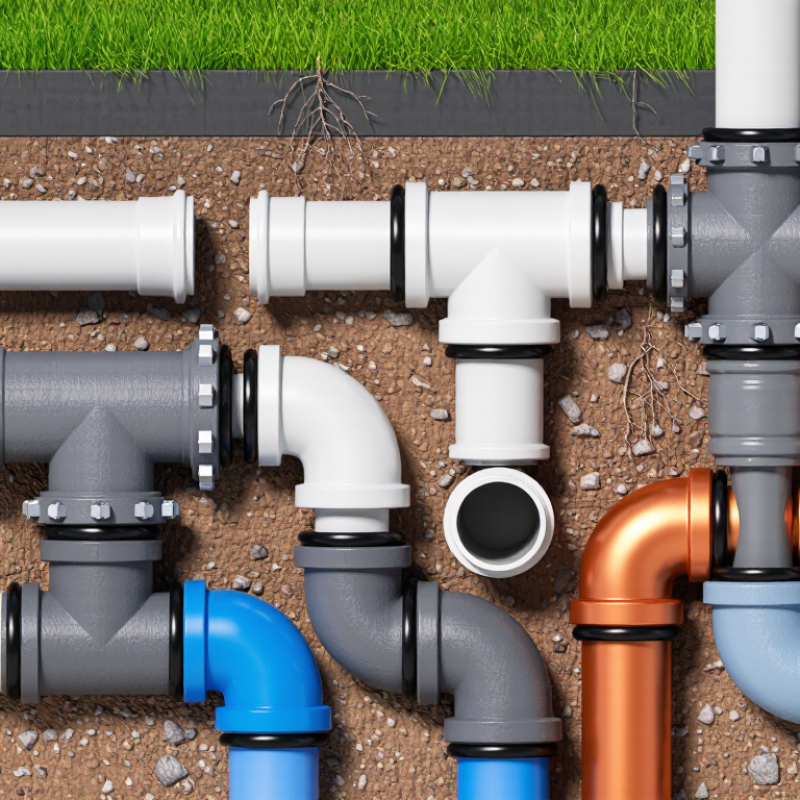
A sewer pipe connection joins pipe sections and keeps wastewater moving through a continuous, sealed path. It also helps prevent soil, roots, and groundwater from entering the line. At a home, connections may link a building drain to an outdoor sewer lateral or join sections during a repair. A sound joint should resist leaks and slight movement in the surrounding soil.
Small details matter. Common options include gasketed hub-and-spigot joints, solvent-weld joints for compatible plastic pipes, and mechanical couplings. A transition coupling can connect different pipe materials, but only when its size and design suit both pipes.
For buyers, the right connection depends on pipe material, diameter, location, and expected movement. A buried joint needs support and a seal suited to underground use; an indoor drain connection may have different requirements. Check the pipe markings and the connection maker’s installation instructions, and ask a qualified plumbing professional or local inspector when compatibility is unclear.
A coupling that feels tight by hand is not necessarily leakproof. Dirt on a sealing surface, a tilted pipe, or uneven insertion can compromise the joint. It is tempting to choose by price alone, but replacing a buried connection later can involve digging up a yard or floor. Even careful checks cannot reveal every site condition, so allow for uncertainty before buying.
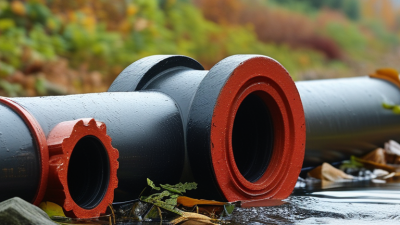
Sewer pipe connections vary in sealing method, flexibility, and installation demands. For buyers, the right choice depends on pipe material, diameter, burial conditions, and whether the joint may need future access. Small details matter.
A gasketed bell-and-spigot joint uses a rubber ring to seal the inserted pipe end. It allows some movement, but dirt, a twisted gasket, or poor alignment can cause leaks. Clean the pipe and follow the specified lubricant and insertion depth. Solvent-welded joints create a rigid bond between compatible plastic pipes. They need clean, dry surfaces and accurate alignment before the cement sets; they are not a universal fit for mixed materials.
Mechanical couplings can connect pipes of different materials or support repairs. Their bands and seals must match the pipe dimensions and be rated for buried sewer service. A flexible coupling may seem convenient, yet movement or uneven support can strain it. Check installation instructions and local requirements before buying. I would not choose by price alone; the least expensive fitting can become a difficult underground repair. Depends on the site.
Matching a connection to the pipe material and size matters more than choosing a familiar-looking fitting.
PVC sewer pipe commonly uses solvent-weld joints, provided the pipe and fitting are compatible. Some larger PVC systems use gasketed bell-and-spigot connections, which allow slight movement while maintaining a seal.
Cast iron often connects with shielded no-hub couplings. Check the pipe’s outside diameter, not just its nominal size; a small mismatch can leave a joint loose or difficult to assemble.
HDPE may require fusion joints or a transition fitting specifically rated for its material and dimensions. Corrugated pipe also needs fittings designed for its profile.
It can be easy to assume “same diameter” means “same fit.” It does not.
Tips:
Measure twice, including the outside diameter, and confirm the fitting’s listed material compatibility. Clean and prepare joint surfaces as directed, and avoid forcing a connection that does not seat smoothly.
For buried lines, check that the selected joint suits the installation conditions and local requirements. A careful match still deserves inspection before backfilling; leaks are harder to spot later.
When pipe markings are unclear, pause and verify the specifications rather than guessing.
A sewer connection is only as dependable as its seal and the surfaces it joins. For gravity-flow plastic pipe, ASTM D3212 sets performance requirements for joints, while ASTM F477 covers elastomeric gaskets. These standards help buyers compare documented performance, but they do not guarantee a good field installation. Dirt, a twisted gasket, or uneven pipe ends can compromise a joint. Small details matter.
Ask how the connection tolerates movement, groundwater pressure, and the pipe material’s expected service conditions. A push-on gasketed joint can simplify assembly, but installers must check alignment, insertion depth, and lubricant requirements. Solvent-welded joints demand compatible materials and clean, dry surfaces; mechanical couplings need correct sizing and tightening. Verify the installation instructions and required inspection or testing method before purchase. Fit is everything. Yet even a careful checklist can miss poor trench support or rushed work.
The scale of the stakes is clear: the U.S. EPA’s 2022 Clean Watersheds Needs Survey estimated $630.1 billion in wastewater infrastructure needs over 20 years, including collection systems. That figure is not a connection-failure rate, but it shows why durable, maintainable joints matter. Compare seal type, test documentation, replacement access, and crew familiarity—not just initial price. I’d still question any claim of a “maintenance-free” connection; buried joints rarely get a second look until something goes wrong.
| Connection Type | Typical Applications | Seal and Leak Resistance | Durability Considerations | Installation Requirements | Buyer Checks |
|---|---|---|---|---|---|
| Gasketed bell-and-spigot joint | Common on compatible gravity sewer pipe systems, including many PVC and concrete pipe products. | An elastomeric ring compresses between the spigot and bell to form the seal. Performance depends on the correct gasket, clean surfaces, and proper assembly. | Allows some joint movement, but a displaced, damaged, or contaminated gasket can compromise the seal. Material and service life depend on the pipe system and site conditions. | Inspect and clean the bell, spigot, and gasket; use only the specified lubricant; align the pipe and insert it to the manufacturer’s reference mark. Avoid rolling or dislodging the gasket. | Confirm pipe and gasket compatibility, nominal size, joint standard, and whether the product is approved for the intended burial and service conditions. |
| Solvent-cement socket joint | Used to join compatible PVC pipe and fittings in approved sewer or drainage systems. | Solvent cement softens and fuses the mating PVC surfaces; it is not a replaceable gasket. A correctly prepared and assembled joint forms a continuous connection. | A sound joint is durable, but poor surface preparation, incorrect cement, movement during setting, or premature testing can cause failure. | Cut square, deburr, clean, and prepare the pipe and fitting as specified. Apply compatible primer and cement where required, assemble promptly, and observe the specified handling and cure times. | Check that the pipe, fitting, primer, and cement are compatible and permitted by local code. Follow product instructions for temperature, moisture, and cure conditions. |
| Shielded no-hub coupling | Typically joins compatible hubless cast-iron soil pipe and fittings; some listed products are designed for specific other applications. | An elastomeric sleeve seals around the pipe ends while a metal shield and clamp assembly helps support the joint. | Properly matched, listed couplings can provide a robust connection. Corrosion exposure, incorrect clamp tightening, misalignment, or unsupported pipe can reduce reliability. | Square and align pipe ends, position the sleeve and shield as instructed, and tighten clamps with the specified tool and torque requirements. Support the pipe as required. | Verify the coupling’s listing, pipe materials and outside diameters, permitted location, and any local requirements for buried use. |
| Flexible transition coupling | Connects compatible pipes of different materials or outside diameters, such as at a repair or material transition. | A flexible elastomeric sleeve seals around both pipe ends; some applications require a metal shear band or shield to limit joint movement. | Flexibility can accommodate limited movement, but the wrong size or an unsupported transition may allow sagging, separation, or leakage. | Match the coupling to both pipe outside diameters and materials. Clean and insert each pipe to the specified depth, position clamps correctly, and tighten as directed. | Use a coupling specifically listed or approved for the location and application. Check whether a shielded version is required for buried, exposed, or load-bearing conditions. |
| Mechanical compression joint | Used with compatible pipe-and-fitting systems where a nut or compression mechanism presses a seal against the pipe. | A compressed elastomeric seal provides the watertight connection. The joint relies on correct component matching and adequate, even compression. | Seals can age or be damaged by incompatible materials, chemicals, excessive movement, or incorrect assembly. Some designs are intended for specific pipe systems only. | Prepare the pipe end, install the seal and components in the specified order, and tighten to the manufacturer’s instructions. Do not substitute parts or over-tighten. | Confirm the joint is intended for sewer service, the pipe material and size, and the installation location; do not assume all compression fittings are suitable for burial. |
Selection note: No connection type is universally best. Confirm pipe and fitting compatibility, applicable product standards, local plumbing or building code, burial conditions, and manufacturer installation instructions before purchase. Watertightness and long-term performance depend on correct materials, assembly, alignment, and pipe support.
Choosing the right sewer pipe connection starts with the pipe material, diameter, and site conditions. A gasketed bell-and-spigot joint is common for buried runs because it allows slight movement while maintaining a seal. The gasket must sit evenly; a twisted edge can create a leak that is hard to spot after backfilling. Check that the pipe ends are clean and fully seated.
For compatible plastic pipes, a solvent-weld joint can create a firm connection, but it depends on exact material compatibility and careful surface preparation. Mechanical couplings are useful when joining different pipe types or making a repair in a tight trench. Measure the outside diameters before buying. Small differences matter. Not every coupling suits buried service or the expected ground movement, so verify its specifications.
Think about soil, access, and future maintenance, not just purchase price. In wet or shifting ground, a flexible connection may accommodate minor movement better than a rigid joint. Local plumbing requirements and project plans should guide the final choice; connection rules vary by location. A tidy-looking joint is not proof of a sound installation. It is easy to focus too much on the fitting itself. I would also check insertion depth, alignment, and support before covering the pipe.