2026 Top Sewer Fittings Types for Global Buyers
Global buyers entering 2026 face a practical question: which sewer fittings truly deserve attention? The answer depends on pipe material, pressure conditions, joint design, installation access, and local drainage practice. A fitting that performs well in a buried municipal line may fail in a compact commercial project. Small details matter.
Dr. George Tchobanoglous, a leading wastewater engineering authority, has emphasized, “Reliable wastewater systems depend on sound design, careful installation, and appropriate materials.” His principle remains useful when comparing bends, tees, reducers, couplings, cleanouts, adapters, and inspection fittings. Buyers should examine more than catalog photos. Check dimensional tolerances, gasket quality, corrosion resistance, flow behavior, and compatibility with PVC, HDPE, ductile iron, or concrete pipes. Ask for test records and installation guidance. Then question the assumptions.
This 2026 guide reviews the top sewer fittings types for international procurement. It considers residential drainage, municipal networks, industrial wastewater, and repair applications. The discussion also addresses connection methods, including push-fit, solvent-welded, mechanical, and restrained joints. These choices affect labor time, leakage risk, maintenance access, and long-term operating cost.
No universal fitting exists. That is easy to forget. Even a technically certified product may be unsuitable for unstable soil or aggressive wastewater. Global buyers should compare standards, supplier experience, traceability, and after-sales support before placing large orders. Price remains important, but the cheapest fitting can become expensive after excavation, replacement, or service disruption. Some product comparisons may still require project-specific verification. That is not a weakness; it is responsible engineering.
Sewer Fittings: Definition, Functions, and System Applications
2026 Top Sewer Fittings Types for Global Buyers
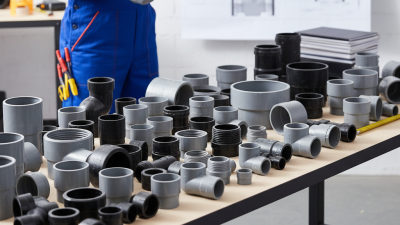
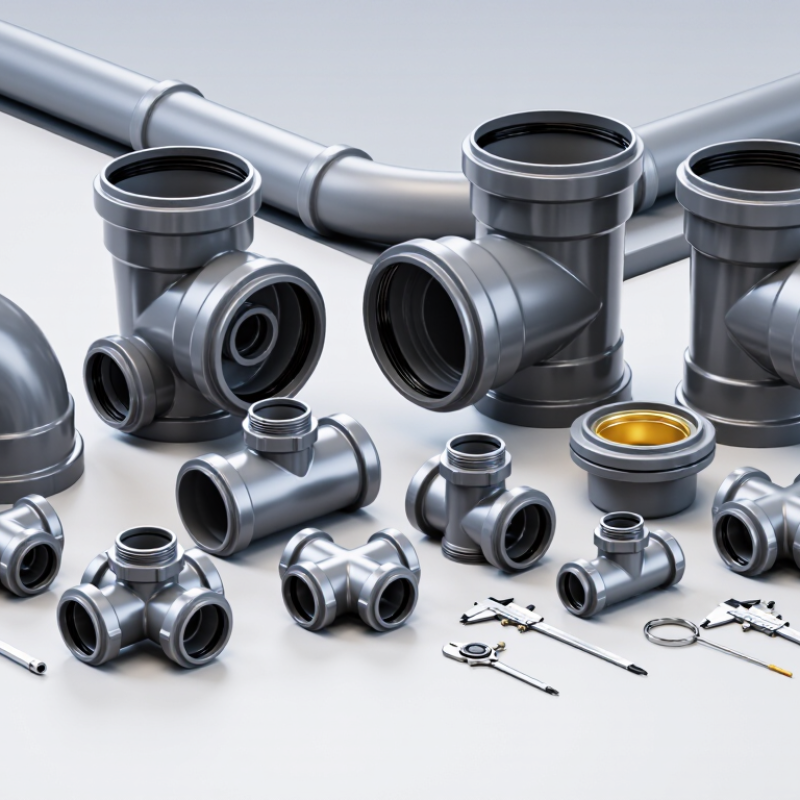
Sewer fittings are shaped components that connect, redirect, reduce, or seal underground wastewater pipes. Common types include bends, tees, wyes, reducers, couplings, and cleanouts. Each fitting controls flow while helping installers manage changes in direction, diameter, and access. A correctly selected fitting reduces leakage risks and supports smoother maintenance.
Their applications vary across municipal sewers, residential drainage, industrial wastewater networks, and stormwater systems. Wye fittings can join branch lines with less turbulence than sharp junctions. Bends guide pipelines around foundations, roads, and other buried obstacles. Cleanouts provide practical access when sediment or debris blocks the line. Material choice also matters. Plastic fittings resist many chemicals, while concrete and metal options may suit heavy structural loads. The wrong combination can still fail, even when every component meets a standard.
Tips: Check pipe outside diameter, pressure class, gasket compatibility, burial depth, and local installation codes before purchasing. Ask for test reports and dimensional drawings. Inspect sockets for cracks, dirt, or uneven surfaces. Small errors matter. Soil movement, poor bedding, and incorrect joint insertion often cause later leaks. Global buyers should also review temperature limits and transport conditions. A fitting may look suitable in a catalog, yet perform poorly in abrasive wastewater or unstable ground. Reflect on the whole system, not only the lowest unit price.
Major Sewer Fitting Types and Their Structural Differences
2026 Top Sewer Fittings Types for Global Buyers
Major Sewer Fitting Types and Their Structural Differences
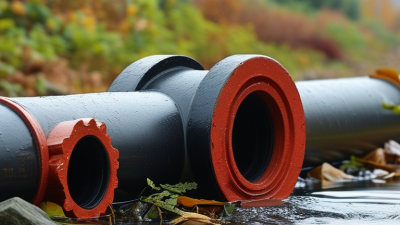
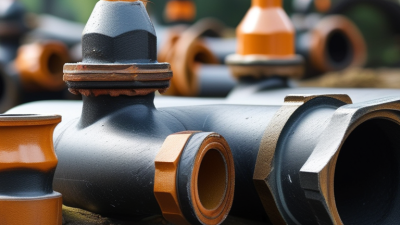
Sewer fittings guide flow through changes in direction, diameter, and elevation. Elbows create directional turns, commonly at 11.25°, 22.5°, 45°, or 90°. Tees and wyes divide incoming flow, but their branch angles affect turbulence and blockage risk. Reducers connect different pipe diameters. Eccentric reducers often protect gravity flow by maintaining a smoother pipe invert.
Socket fittings use insertion depth and a sealing ring. Flanged fittings use bolts, gaskets, and accurately aligned faces. Mechanical couplings allow faster field repairs, although poor alignment can reduce service life. Flexible joints absorb minor settlement better than rigid connections. This matters because the UN-Water World Water Development Report 2024 links growing urban pressure with increasing wastewater management needs. The UN-Water 2017 report also estimated that over 80% of global wastewater was discharged without treatment. Fitting geometry is not a small detail.
Tips: Check internal diameter, wall thickness, joint tolerance, pressure class, and installation temperature. Match the fitting to gravity or pressure service. Review local standards, because terminology differs between markets. Ask for test records, not only catalog claims. A fitting may look correct and still fail after settlement.
Selection is sometimes imperfect. Site measurements can be incomplete. Rechecking slope and joint condition prevents expensive assumptions.
Materials, Sizes, Standards, and Global Compliance Requirements
2026 Top Sewer Fittings Types for Global Buyers
Sewer fittings include elbows, tees, wyes, reducers, couplings, and inspection branches. Each type controls flow, direction, or maintenance access. PVC-U and polypropylene suit many gravity sewer systems because they resist corrosion and remain lightweight. HDPE performs well where flexibility, impact resistance, or welded joints matter. Ductile iron may suit demanding installations, but its protective coating requires careful inspection.
Size selection is more than matching a pipe diameter. Buyers should confirm DN or outside diameter, wall thickness, SDR class, and connection method. A 160 mm fitting may not match every 160 mm pipe. It depends on the regional sizing system. Rubber gaskets should fit the pipe material and service temperature. Small installation errors can create leaks.
Standards need local verification. Common references include ISO, EN, ASTM, and AS/NZS requirements, but acceptance differs by country and project authority. Request test reports for dimensional accuracy, pressure resistance, ring stiffness, impact strength, and gasket performance. Check material declarations, batch numbers, and factory traceability. Compliance markings alone may not prove suitability. I have seen complete-looking documents miss chemical-resistance data. That deserves a second review. Confirm wastewater conditions, burial depth, soil loads, ultraviolet exposure, and local inspection rules before purchase. A reliable supplier should provide drawings, installation guidance, and consistent inspection records.
How Global Buyers Select Fittings for Different Sewer Projects
2026 Top Sewer Fittings Types for Global Buyers
Global buyers should select fittings by project conditions, not catalog popularity. Gravity sewers need smooth interiors, stable joints, and resistance to soil movement. Pressure sewer lines require fittings rated for cyclic pressure and surge. Deep urban installations may demand restrained joints and higher external-load capacity. UN-Water reports that about 80% of global wastewater is released without treatment. That figure makes leakage control more than a purchasing detail. It affects public health, rivers, and treatment costs.
For coastal projects, buyers should check chloride exposure, gasket compatibility, and corrosion protection. Industrial sewers need chemical-resistance data, especially for sulfides and changing pH. In cold regions, impact performance and freeze-thaw behavior deserve documented testing. The US EPA’s 2022 Clean Watersheds Needs Survey, published in 2024, estimated 630.1 billion dollars in wastewater infrastructure needs. Budget pressure is real. Still, cheaper fittings can create excavation, traffic, and replacement costs later. Field inspections often reveal a weak point: the fitting matches the pipe, but not the bedding or joint restraint. That mistake is easy to repeat.
Tips: Ask for pressure, stiffness, chemical-resistance, and dimensional test reports. Confirm standards, traceability, gasket materials, and installation tolerances before ordering. For trenchless work, review bend limits and pulling loads with the installer. Keep spare seals in controlled storage. Details matter. Compare lifecycle cost, not only unit price. A heavier fitting is not automatically safer. It may complicate handling and increase joint stress. Select the smallest proven solution that fits the project risk.