Top Stainless Steel Fittings You Must Know About?
Stainless steel fittings are essential in various industries. They offer durability, strength, and resistance to corrosion. From plumbing to manufacturing, these fittings are widely used in many applications. Understanding the types of stainless steel fittings can enhance your projects and ensure reliability.
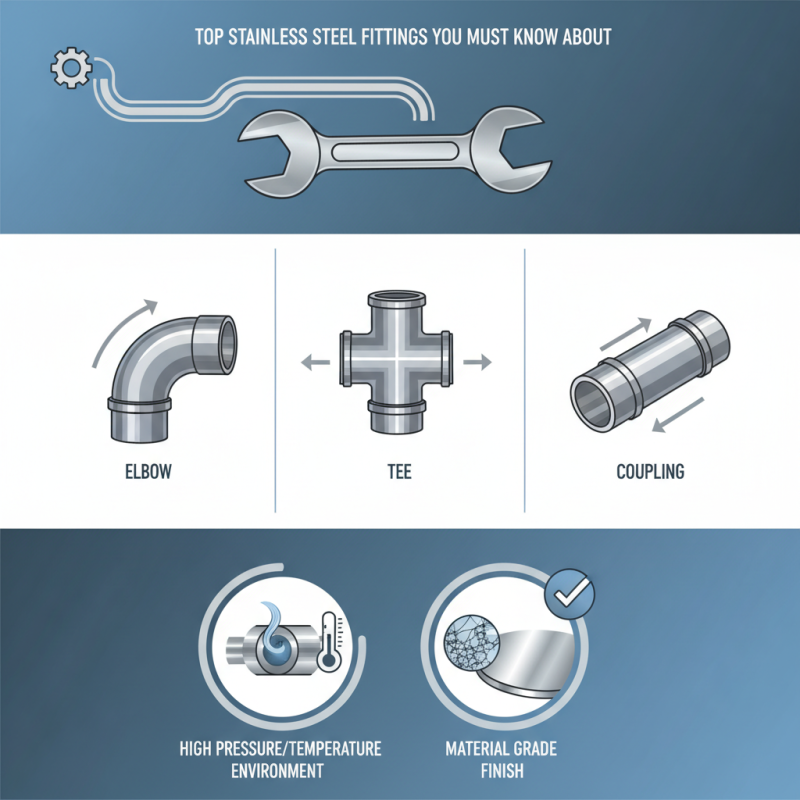
There are different fittings, such as elbows, tees, and couplings. Each serves a specific purpose. For instance, elbow fittings help change the direction of pipes. Tees allow branching off a main line. Yet, not all stainless steel fittings are created equal. The material grade and finish can significantly affect performance.
When selecting stainless steel fittings, always consider your specific needs. Reflect on the environment they will be used in. Will they face high pressure or extreme temperatures? Making careful choices can prevent costly mistakes later. In the end, knowing about stainless steel fittings is crucial for any professional.
Key Characteristics of Stainless Steel Fittings to Consider
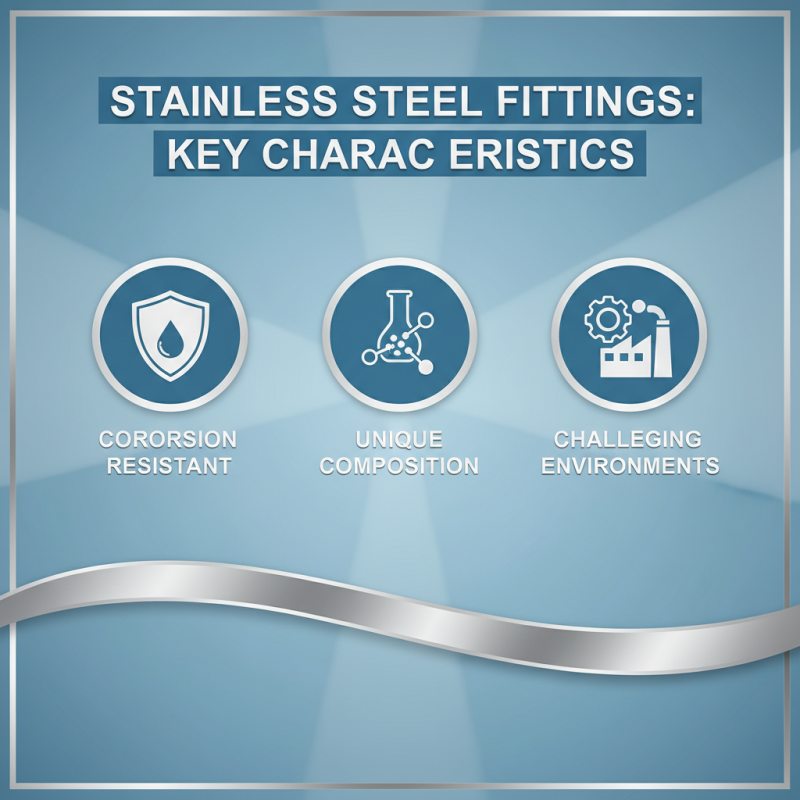
When considering stainless steel fittings, a few key characteristics stand out. Corrosion resistance is essential. Stainless steel naturally resists rust and corrosion due to its unique composition. This quality makes it ideal for various applications, especially in challenging environments.
Another important factor is strength. Stainless steel offers excellent tensile strength. This means it can withstand high pressure and heavy loads. However, not all stainless steel is created equal. Different grades serve different purposes. Understanding these grades is crucial for making the right choice.
Tips: Always check the fitting's grade for your specific use. It’s better to invest time in research than face failures later. Also, ensure proper installation to maintain the desired durability. Small errors can lead to leaks or breakages. So, don't rush the setup. Rethink and verify your choices.
Different Types of Stainless Steel Used in Fittings
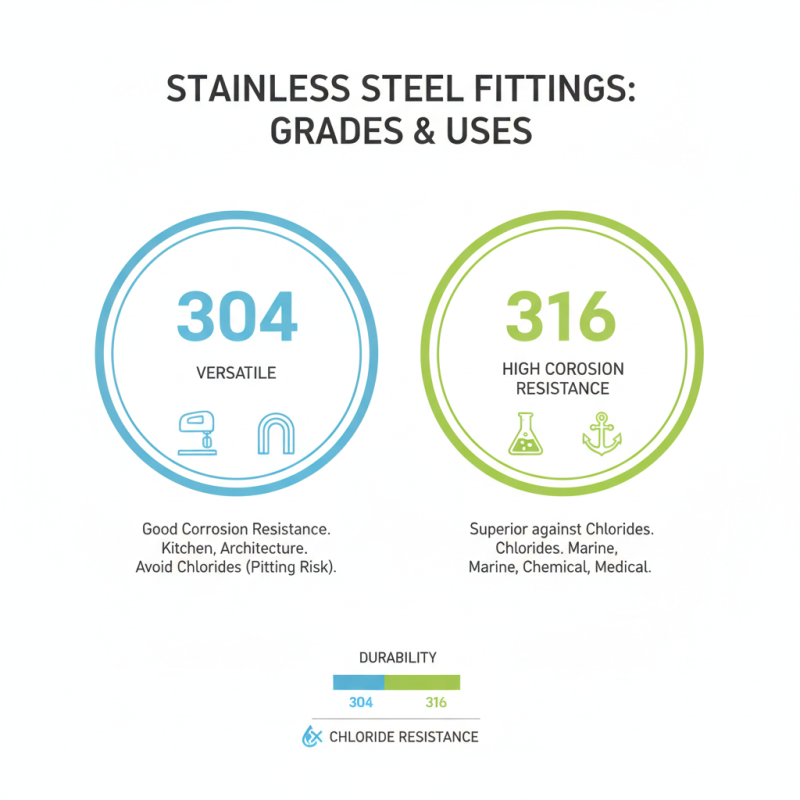
Stainless steel fittings come in various types, each made from specific grades of stainless steel. Major types include 304 and 316 stainless steel. The 304 grade is popular for its good corrosion resistance and overall versatility. It is widely used in kitchen equipment and architectural applications. However, it may not withstand chlorides well, leading to pitting.
On the other hand, 316 stainless steel offers increased corrosion resistance. This type contains molybdenum, making it ideal for marine environments. It's frequently chosen for chemical processing. But, it is more expensive than 304 stainless steel, which can limit its use in some projects.
Other specialized grades exist, like 430. This ferritic stainless steel is less corrosion-resistant but is often used in automotive applications. Each type has pros and cons, such as different costs and durability levels. Users should carefully evaluate these factors based on specific needs and environments. Selecting the wrong type could lead to unexpected failures or increased maintenance. Reflecting on these choices can save time and money in the long run.
Common Applications for Stainless Steel Fittings
Stainless steel fittings are essential in various industries. They offer durability and resistance to corrosion. Common applications include plumbing, HVAC systems, and food processing. These fittings ensure secure connections and prevent leaks.
In plumbing, stainless steel fittings are often used for pipes and valves. They withstand high-pressure conditions. Additionally, they are crucial in HVAC systems for both heating and cooling applications. Proper fittings maintain efficiency and safety in these systems.
Tips: Always choose the right size for your fittings. A wrong fit can lead to leaks. Regular inspections are key; replace any damaged fittings promptly. In food processing, hygiene is vital, and stainless steel's smooth surface helps meet sanitary standards. However, not all stainless steel is equal, so poor-quality options can compromise safety.
Top Stainless Steel Fittings You Must Know About
| Fitting Type |
Common Applications |
Size Range |
Material Grade |
| Elbow |
Piping systems, HVAC |
1/2" to 12" |
304, 316 |
| Coupling |
Joining pipes, plumbing |
1/2" to 6" |
304, 316L |
| Reducer |
Fluid control systems |
1" to 10" |
316, 317L |
| Tee |
Distribution systems |
1/2" to 8" |
304, 316 |
| Cap |
End closures, pipe stops |
1/2" to 12" |
304, 316L |
Maintenance Tips for Enhancing the Longevity of Stainless Steel Fittings
Proper maintenance is crucial for ensuring the longevity of stainless steel fittings. Regular cleaning with mild soap and water can help prevent corrosion. According to a report by the International Stainless Steel Forum, approximately 10% of stainless steel corrosion is due to surface contaminants. Therefore, a simple wash can greatly enhance durability.
Another key factor is to avoid exposure to harsh chemicals. Many households use cleaners containing bleach or ammonia. These can degrade the finish of stainless steel over time. A study by the American Metal Market suggests that improper handling can reduce the lifespan of stainless steel fittings by up to 30%. To mitigate this risk, it is essential to use appropriate cleaning agents and techniques.
It's also worth noting that the environment plays a significant role. For example, installations near coastal areas face higher corrosion risks due to salt exposure. Implementing a routine inspection can identify potential issues early on. An overlooked fitting can lead to more extensive damage and costly repairs. Regular checks can save time and resources.
Choosing the Right Stainless Steel Fitting for Your Project
Choosing the right stainless steel fitting can significantly impact your project’s success. Quality matters. According to industry reports, over 90% of corrosion-related failures are due to poor material selection. This underscores the importance of understanding the properties of stainless steel. Before making a choice, consider the environment where the fitting will be installed. For example, marine environments require fittings resistant to saltwater corrosion.
Additionally, the application dictates the type of fitting you need. Pipe fittings, for instance, vary widely in design. Some are meant for high-pressure systems, while others cater to low-pressure applications. Misjudging this can lead to leaks or failures. Reports show that improper fitting choice can increase maintenance costs by up to 40%. It’s not just about cost, but also about safety.
Furthermore, Stainless steel comes in grades, each with its unique properties. The ASTM standards indicate that 304 and 316 are the most commonly used grades. However, many underestimate the consequences of not selecting the correct grade. For instance, 316 is superior for resistance to chlorides. Neglecting this can result in premature product failure. Each project requires careful evaluation and thoughtful selection of fitting. Aim for performance and reliability.
Top Stainless Steel Fittings Usage by Type