Made in America

Get Connected With

JointsCouplings.com White Logo

Opening Hours M-F: 07:00 AM to 4:00 PM (PST)

What Are the Top Pipe Couplings for Global Buyers?

Global buyers are asking a practical question: which pipe couplings deliver reliable performance across different projects, climates, and standards? The answer is rarely one universal product. A coupling used on a municipal water main may fail as a recommendation for an oil-free industrial line, a fire-protection system, or a buried pipeline exposed to soil movement. Material compatibility, pressure class, pipe diameter, installation space, corrosion risk, and maintenance access all matter.

The demand for dependable joining systems is growing alongside global water and infrastructure needs. The WHO and UNICEF Joint Monitoring Programme reported that 2.2 billion people lacked safely managed drinking water services in 2022. That figure highlights the importance of durable networks, not merely lower purchasing prices. The United Nations World Water Development Report 2024 also connects water stress with rising infrastructure pressure, especially in rapidly urbanising regions. These findings give pipe couplings a practical role in reducing leakage, simplifying repairs, and extending pipeline service life.

However, “top” should mean best matched, not most advertised. Buyers should compare products against standards such as ISO 2531, EN 545, AWWA C219, and relevant local specifications. Independent test records, traceability documents, gasket data, and field experience deserve equal attention. A catalogue may look convincing. Site conditions can disagree. This guide examines coupling types, connection methods, materials, and supplier credibility for global purchasing decisions. It also recognises an uncomfortable limitation: published performance data is not always directly comparable across regions. Careful verification remains essential.
What Are the Top Pipe Couplings for Global Buyers?

Pipe Couplings: Definition, Functions, and Main Applications

What Are the Top Pipe Couplings for Global Buyers?

Pipe couplings connect two pipe sections and create a continuous flow path. They also support alignment, sealing, maintenance, and controlled movement. Threaded couplings suit smaller metal pipes and simple installations. Compression couplings allow faster repairs without welding. Mechanical couplings provide flexibility when vibration, ground movement, or slight misalignment occurs. Grooved and flanged designs are common in commercial water systems, HVAC networks, irrigation, and industrial lines. A coupling may look secure and still leak.

Material choice matters. Stainless steel resists many corrosive environments, while ductile iron offers strong mechanical performance. Plastic couplings can reduce weight and simplify handling. Buyers should check pipe size, pressure rating, temperature range, fluid type, and connection method. Potable water systems may require local certification. Industrial projects often need documented testing and traceable materials. A qualified engineer should review critical installations, especially where thermal expansion or repeated vibration is expected. Field inspections often reveal a simple issue: the seal was selected before the pipe material was confirmed.

Tips: Measure the outside diameter, not only the nominal size. Check gasket compatibility with the transported fluid. Inspect threads, grooves, and sealing surfaces before assembly. Follow the specified tightening sequence. Do not rely on appearance alone. Recheck the joint after pressure testing. A small alignment error can become a costly maintenance problem.

Key Types of Pipe Couplings Used in Global Markets

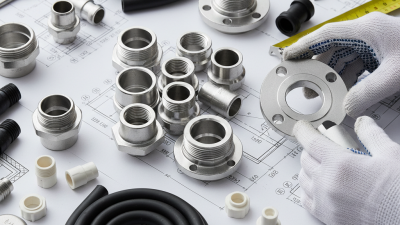
Global buyers choose pipe couplings by pressure, material, movement, and installation conditions. Key types include threaded, socket, compression, grooved, and flanged couplings. Each design solves a different joining problem, so the best option depends on the pipeline. Threaded couplings suit smaller metal pipes and routine maintenance. Their compact form helps where welding equipment is unavailable. However, poor alignment can cause leaks. I have seen this issue during rushed repairs.

Socket couplings provide a clean connection for pipes with matching outside diameters. Compression couplings use nuts and sealing rings, making them practical for field installation. They also allow easier disassembly. Yet, damaged rings or uneven tightening may reduce reliability. Grooved couplings are useful in fire protection, water, and industrial systems. They absorb limited movement and simplify installation. Proper groove dimensions remain essential.

Flanged couplings support larger pipes, high-pressure systems, and equipment connections. They allow inspection and replacement without cutting the pipe. Gaskets, bolt patterns, and tightening sequences require careful control. Otherwise, even a strong flange may leak. Material selection matters in coastal or chemical environments. Stainless steel, ductile iron, carbon steel, and reinforced polymers perform differently. Buyers should review pressure ratings, temperature limits, dimensional standards, and test records before ordering. Certification helps, but it does not replace site inspection. That assumption is often wrong. A practical choice balances engineering data, installer experience, maintenance access, and local availability.

How to Compare Pipe Coupling Materials and Performance

For global buyers, pipe coupling selection starts with material compatibility, not price. Carbon steel couplings suit demanding industrial lines and moderate corrosion exposure. Stainless steel performs better where moisture, chemicals, or hygiene requirements matter. Ductile iron offers strength for buried water systems, but its coating needs careful inspection. Plastic couplings reduce weight and resist many chemicals. However, temperature limits can be unforgiving.

Compare pressure ratings at the actual operating temperature. Check pipe outside diameter, wall thickness, movement allowance, and gasket material. A coupling may fit perfectly but fail after thermal expansion. Threaded, grooved, compression, and restrained designs also behave differently under vibration. Ask for test reports, dimensional records, material certificates, and traceable batch details. Standards help, but local approval requirements still vary.

Tips: Match the gasket to the fluid first. Confirm corrosion protection before shipping. Request installation instructions in clear language. Inspect sealing surfaces on arrival. Small scratches can matter.

Field experience shows that installation quality often controls service life. Clean pipe ends, correct torque, and proper alignment reduce leakage risks. Do not rely only on catalogue pressure values. A buried line may face soil movement, while a process line may experience repeated temperature cycles. I have seen strong couplings underperform because the gasket was stored poorly. That point is easy to miss. Buyers should also question unclear tolerances and incomplete testing data. A cheaper coupling is not always economical when replacement access is difficult.

International Standards for Pipe Coupling Quality and Safety

For global buyers, the best pipe coupling is not simply the cheapest or strongest option. It must match the pipe material, pressure class, temperature, fluid, and installation method. Threaded couplings suit smaller metallic lines, while grooved and flanged designs support faster maintenance. Compression and electrofusion couplings can serve polymer systems, but compatibility testing remains essential. ISO 17885 addresses mechanical joints for thermoplastics, while API 5B covers casing, tubing, and line-pipe thread inspection.

Quality evidence should be specific.
Buyers should request material certificates, dimensional records, batch traceability, coating details, and documented pressure-test results. ISO 9001 supports controlled manufacturing, but certification alone does not prove coupling performance. The ISO Survey 2022 recorded more than 1.2 million ISO 9001 certificates worldwide, showing broad adoption of quality systems. Still, production discipline can vary between factories. That detail is often overlooked.

Safety depends on installation as much as design. A coupling rated for 16 bar may fail when bolts are unevenly tightened, seals are damaged, or pipe movement is ignored. A 2023 WHO/UNICEF Joint Monitoring Programme report estimated that 2.2 billion people lacked safely managed drinking water in 2022. Reliable joints therefore matter beyond industrial efficiency; they protect public health and reduce leakage. Buyers should compare test pressures, standard editions, inspection scope, and field support before approval. Paperwork can look excellent. The joint may still need independent verification.

Factors Global Buyers Should Consider Before Selecting Couplings

What Are the Top Pipe Couplings for Global Buyers?

Factors Global Buyers Should Consider Before Selecting Couplings

The best pipe coupling depends on service conditions, not appearance or price. Buyers should identify pipe material, outside diameter, pressure, temperature, and fluid type before comparing products. A coupling used for chilled water may fail in abrasive slurry service. Small details matter.

Field experience shows that material compatibility often decides long-term performance. Stainless steel, ductile iron, and engineered polymers offer different corrosion resistance and strength. Check the coupling’s pressure rating at the actual operating temperature. Confirm tolerance ranges too. A perfect drawing does not guarantee a perfect fit.

Installation requirements deserve equal attention. Some projects need restrained joints, while others require flexibility for vibration or thermal movement. Review applicable local standards, test reports, traceability records, and inspection documents. Reliable suppliers should explain testing methods clearly, not just provide attractive certificates. Ask whether replacement gaskets and fasteners are available in the destination market.

Logistics can quietly affect project risk. Consider packing quality, storage conditions, delivery time, and customs documentation. Moisture damage may begin inside a sealed crate. It happens. Buyers should also calculate installation labor and future maintenance, rather than focusing only on purchase cost. A cheaper coupling can become expensive after repeated leaks, shutdowns, or difficult repairs. However, no checklist fits every project perfectly. Site conditions, installer skill, and local water chemistry still require practical judgment.

What Are the Top Pipe Couplings for Global Buyers?

Before selecting a pipe coupling, global buyers should prioritize pressure and temperature suitability, material compatibility, applicable standards, supply availability, installation effort, and total lifecycle cost. The chart shows an example weighted evaluation model based on common engineering and procurement considerations.

The percentage weights are a practical planning framework rather than a market survey. Always verify the coupling's pressure rating, temperature range, pipe material, dimensions, certification requirements, and installation conditions against the project specification.