
Made in America

Get Connected With

JointsCouplings.com White Logo

Opening Hours M-F: 07:00 AM to 4:00 PM (PST)

Top 10 Industrial Panel Hinge Types for Global Buyers

Selecting the right Industrial Panel Hinge is a small decision with large operational consequences. A hinge may carry a steel access door, guide repeated opening cycles, or protect sensitive controls inside a dusty enclosure. Its failure can stop inspection, expose wiring, and increase maintenance time.

Industry data supports a careful approach. The World Steel Association reported 1.89 billion tonnes of crude steel production in 2023, showing the scale of metal-intensive manufacturing worldwide. Meanwhile, the 2024 International Federation of Robotics report recorded 541,302 new industrial robots installed in 2023. More automated equipment means more guarded panels, service doors, and compact enclosure systems. These figures do not measure hinge demand directly. They still reveal the environment in which hinge reliability matters.

Dieter Rams, a leading industrial design authority, said, “Good design is as little design as possible.” That principle suits panel hardware. The best hinge often disappears into daily operation. It aligns cleanly, resists corrosion, and remains serviceable after thousands of cycles. However, one selection cannot fit every cabinet. Load, door thickness, opening angle, sealing requirements, vibration, and installation space must be checked together. That is the uncomfortable part.

This guide compares ten Industrial Panel Hinge types for global buyers. It considers concealed hinges, lift-off models, friction hinges, welded hinges, adjustable designs, and stainless-steel options. Reference points include IEC 60529 enclosure protection ratings and ISO 9227 corrosion-testing methods. Real projects may still expose gaps. Supplier claims require verification through drawings, samples, cycle tests, and documented material certificates. Reliability begins before purchase.
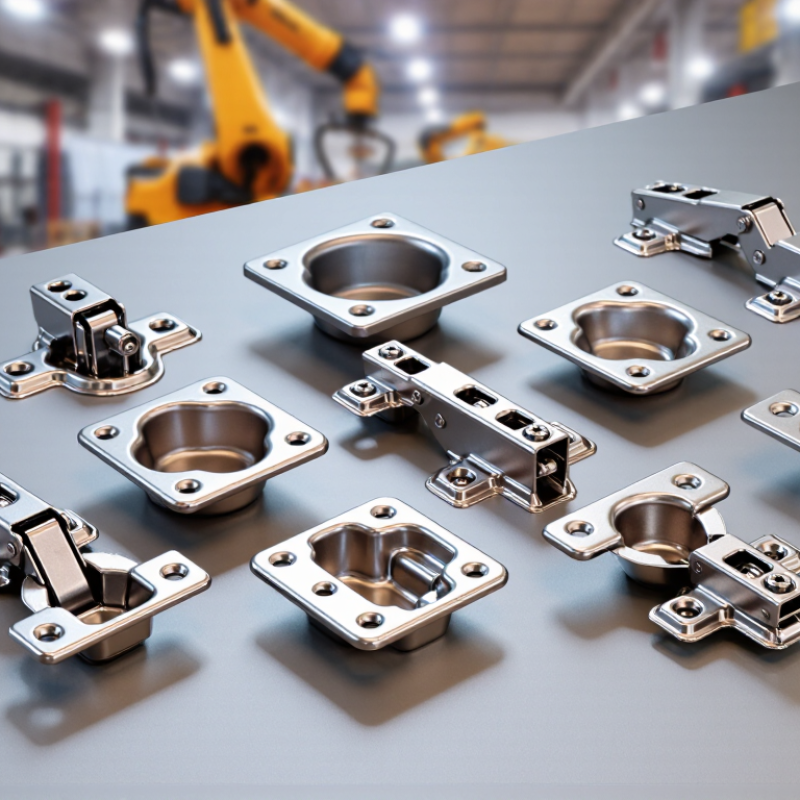
Top 10 Industrial Panel Hinge Types for Global Buyers

Industrial Panel Hinges: Definition, Functions, and Selection Basics

Top 10 Industrial Panel Hinge Types for Global Buyers

Industrial panel hinges connect doors, covers, and access panels to frames. They support movement, alignment, and secure closing in demanding equipment environments. Common types include butt, piano, concealed, lift-off, weld-on, spring, friction, torque, adjustable, and continuous hinges. Each design solves a different installation problem.

A piano hinge spreads load across the full panel edge, while a butt hinge suits compact doors. Lift-off hinges simplify maintenance when technicians remove heavy covers regularly. Friction and torque hinges hold panels at selected angles, which helps during inspection. Spring hinges assist closing, but excessive tension may distort lightweight panels. In field checks, poor alignment often causes more trouble than hinge strength. A hinge can look suitable and still fail after repeated vibration.

Selection depends on panel weight, opening angle, material, corrosion exposure, clearance, and cycle frequency. Measure the actual panel, not only the drawing. Check fastener access and the available mounting space. Stainless steel may suit humid areas, while coated steel can fit controlled indoor equipment. Load ratings also need a safety margin. This is where specifications are sometimes too optimistic.

Tips: Test a sample hinge before large-scale purchasing. Open and close the panel repeatedly under realistic load. Watch for sagging, scraping, loose fasteners, and unexpected noise. Review temperature changes too. Small details matter.

Core Hinge Designs Used in Industrial Panel Applications

Industrial panel hinges must match the panel’s movement, load, and working environment. Common designs include butt hinges, continuous piano hinges, concealed hinges, lift-off hinges, weld-on hinges, and adjustable hinges. Each design solves a different access problem.

Butt hinges suit compact doors with moderate loads and limited installation space. Continuous hinges distribute weight along the full panel edge, reducing local stress on wide doors. Concealed hinges protect the hinge body from impact and create a cleaner enclosure surface. Lift-off hinges support fast panel removal during maintenance, while weld-on hinges provide a rigid connection for heavy steel structures.

Friction hinges hold a panel at a chosen opening angle. Spring-loaded hinges assist movement, but excessive spring force can distort lightweight covers. Torque hinges offer controlled resistance, especially on inspection lids. Detent hinges provide fixed stopping positions, and adjustable hinges help correct alignment after installation. Stainless steel works well in damp areas, while plated steel can suit controlled indoor environments.

A practical selection should consider door weight, cycle frequency, clearance, sealing pressure, and access tools. Measure the real panel, not only the drawing. A common mistake is choosing a hinge by size alone. Small gaps, uneven welding, or thermal movement may change performance. No design is universally best. Field testing remains valuable, especially when vibration and repeated service cycles are involved.

Top 10 Industrial Panel Hinge Types for Global Buyers - Core Hinge Designs Used in Industrial Panel Applications

A practical comparison of widely used industrial panel hinge designs. Performance figures are typical engineering ranges for standard metal panel assemblies and should be verified against the selected hinge's technical drawing and installation conditions.

Rank Hinge Type Core Design Typical Opening Angle Typical Load per Hinge Common Mounting Method Typical Materials Environmental Suitability Typical Industrial Applications Main Selection Advantage
1 Continuous Piano Hinge Full-length knuckle and pin running along most or all of the panel edge. 180° to 270° 50–250 kg/m of hinge length Through-fastened, riveted, welded, or adhesive-backed designs. Carbon steel, stainless steel, aluminum, or brass. Suitable for indoor equipment; stainless versions suit washdown and corrosive areas. Electrical cabinets, machine guards, access covers, long enclosure doors, and control panels. Distributes door weight continuously and reduces local stress on thin sheet metal.
2 Lift-Off Hinge Two interlocking leaves or knuckles allow the door to be lifted away from the frame. 90° to 180° 20–150 kg per hinge Weld-on, screw-mounted, or bolt-on leaves. Plated steel, stainless steel, aluminum, or zinc die-cast alloy. Available for general industrial, outdoor, and hygienic applications. Removable machine doors, electrical enclosures, service panels, and maintenance access doors. Enables rapid door removal without removing hinge fasteners.
3 Concealed Hinge Pivot mechanism is mounted inside the door-frame gap and is hidden when the door is closed. 90° to 180° 15–120 kg per hinge Internal screws, threaded studs, or dedicated mounting pockets. Zinc die-cast alloy, stainless steel, or reinforced steel. Good for protected indoor and outdoor enclosures; sealing compatibility depends on geometry. Automation cabinets, clean-looking control enclosures, security panels, and machine housings. Improves appearance and reduces external snagging or tampering points.
4 Adjustable Hinge Hinge includes slotted holes, eccentric bushes, or multi-axis adjustment features. 90° to 180° 20–180 kg per hinge Bolted or screw-mounted installation with post-installation adjustment. Steel, stainless steel, aluminum, or zinc die-cast alloy. Suitable for applications where thermal movement, fabrication tolerance, or alignment variation is expected. Large electrical cabinets, machine doors, modular enclosures, and heavy access covers. Compensates for door sag and helps maintain gasket compression and alignment.
5 Weld-On Hinge Hinge leaves or barrels are permanently welded to the door and frame. 90° to 270° 30–250 kg per hinge MIG, TIG, or resistance welding during fabrication. Mild steel, stainless steel, or heavy-duty steel alloys. Strong choice for rugged indoor and outdoor equipment; surface protection is required after welding. Machine guards, steel cabinets, industrial gates, agricultural equipment, and heavy enclosures. Provides a robust, tamper-resistant connection with no exposed mounting screws.
6 Bolt-On or Screw-On Hinge Separate leaves are attached directly to prepared holes in the panel and frame. 90° to 180° 15–150 kg per hinge Machine screws, bolts, rivet nuts, threaded inserts, or captive nuts. Steel, stainless steel, aluminum, or zinc alloy. Broadly suitable; coating and seal selection determine outdoor and corrosive-environment performance. Retrofitted cabinets, control boxes, machine panels, and replaceable access doors. Simple installation, easy replacement, and minimal fabrication equipment.
7 Friction or Position-Control Hinge Internal friction washers or a torque mechanism hold the panel at selected positions. 90° to 180° 2–40 kg per hinge Face-mounted, rear-mounted, or integrated into the panel bracket. Stainless steel, zinc alloy, steel, or engineering polymer components. Best for clean, dry, and moderately demanding environments; torque can change with contamination and temperature. Operator interfaces, display covers, instrumentation panels, and small service doors. Controls panel movement and helps keep lids or screens open without a separate stay.
8 Torque Hinge Preloaded friction or cam mechanism supplies a defined resistance throughout rotation. 90° to 180° 0.5–25 N·m per hinge Through-mounted screws, threaded studs, or integrated brackets. Stainless steel, steel, aluminum, and engineered polymer components. Suitable for indoor equipment and protected outdoor electronics when properly sealed. HMI covers, monitor arms, instrument panels, compact control boxes, and display enclosures. Offers controlled movement and repeatable positioning for lightweight panels.
9 Spring-Loaded Hinge Coil or torsion spring assists opening, closing, or return movement. 90° to 180° 10–100 kg per hinge Weld-on, bolt-on, or screw-mounted configurations. Spring steel, stainless steel, carbon steel, or zinc-plated steel. Suitable for general industrial use; spring material and coating are important in humid or corrosive areas. Safety guards, access doors, inspection covers, and panels requiring automatic return. Reduces manual effort and helps return the panel to a defined closed or open position.
10 Detachable or Quick-Release Hinge Interlocking hook, pin, slide, or quarter-turn interface permits tool-free or rapid separation. 90° to 180° 10–100 kg per hinge Fixed mounting plate with removable hinge pin, hook, or slide-in interface. Steel, stainless steel, aluminum, or zinc die-cast alloy. Suitable for service-intensive equipment; choose sealed versions for dusty or washdown conditions. Removable covers, modular machines, battery cabinets, service access panels, and production-line equipment. Shortens maintenance time while retaining repeatable door positioning.
Buyer note: Final hinge selection should consider door mass, center of gravity, sheet thickness, gasket compression, cycle life, corrosion exposure, operating temperature, required opening clearance, and the safety factor specified by the equipment designer.

Top 10 Industrial Panel Hinge Types and Their Key Features

Top 10 Industrial Panel Hinge Types and Their Key Features

Industrial panel hinges differ in load capacity, access angle, corrosion resistance, and adjustment. Butt hinges suit compact enclosures and offer simple, rigid mounting. Piano hinges distribute weight along the panel edge. Continuous hinges reduce door sag on tall electrical cabinets. Concealed hinges protect the exterior surface and support cleaner equipment designs. Lift-off hinges allow fast panel removal during maintenance.

Heavy-duty weld-on hinges handle vibration and thick steel doors. Adjustable hinges correct alignment after installation, which is useful on large frames. Friction hinges hold inspection covers at selected angles. Spring-loaded hinges assist opening and reduce manual effort. Detent hinges provide fixed open or closed positions. These ten types cover most panel-access requirements, although site conditions often expose weaknesses in early selections.

The 2024 MarketsandMarkets Industrial Automation Market report projects continued automation growth, increasing demand for reliable enclosure access and shorter maintenance times. IEC 60529 remains a key reference when hinge design affects enclosure protection. In practice, salt spray testing under ISO 9227 can reveal coating failures before coastal installation. Stainless steel improves corrosion resistance, but it can increase cost and galling risk. No hinge is perfect. I have seen oversized hinges create unnecessary stress on thin panels.

Tips: Match the hinge load rating with the complete door weight, not the empty frame. Check opening clearance with cables installed. Use at least three hinges on tall doors when sag is possible. Test prototypes through repeated cycles. A small alignment problem can become expensive.

Material, Load, Environment, and Mounting Considerations

Top 10 Industrial Panel Hinge Types for Global Buyers

Material, Load, Environment, and Mounting Considerations

Choosing among butt, piano, concealed, lift-off, weld-on, strap, friction, spring-loaded, adjustable, and quick-release hinges requires practical judgment. Start with material. Stainless steel suits washdown areas and corrosive atmospheres. Zinc-plated steel offers strength at lower cost. Aluminum reduces door weight, but it may deform under repeated impact.

Load selection deserves careful calculation. Measure the panel’s mass, width, center of gravity, and opening frequency. Add a safety margin for vibration and accidental loading. A hinge can survive static weight yet fail during fast door movement. The International Federation of Robotics reported 541,302 industrial robot installations worldwide in 2023. More automated cells mean more frequent panel access and vibration exposure. That detail is easy to underestimate.

Environment controls the specification. IEC 60529 defines IP ratings; IP65 resists dust and water jets, while IP67 allows temporary immersion. NEMA 250 Type 4X adds corrosion resistance for demanding enclosures. Mounting also matters. Weld-on hinges provide rigidity, while concealed hinges protect alignment and appearance. Lift-off hinges simplify maintenance. However, quick-release designs can loosen if operators ignore retention checks.

Tips: Match the hinge to the enclosure rating, not only the door weight. Check clearance before installation. Confirm fastener strength. I have seen well-designed panels fail because the mounting surface flexed. That mistake deserves a second review. Always test a loaded prototype under heat, vibration, and repeated opening cycles.

Top 10 Industrial Panel Hinge Types for Global Buyers

Material, load, environment, and mounting considerations

How to read the chart: The values show indicative planning midpoints for typical static load capacity per hinge pair. Actual performance depends on hinge size, panel geometry, fastener strength, installation accuracy, duty cycle, and safety factor.

  • Materials: Stainless steel is preferred for corrosion-prone applications; zinc die-cast and plated steel are common for indoor or controlled environments.
  • Load: Weld-on, heavy-duty, and strap hinges generally support higher loads, while friction and concealed hinges are typically selected for lighter panels or controlled movement.
  • Environment: Consider humidity, salt exposure, chemicals, temperature, dust, and washdown requirements before selecting a finish or base material.
  • Mounting: Butt and concealed hinges usually require accurate alignment; lift-off hinges simplify panel removal; weld-on hinges provide a permanent, high-strength attachment.

Global Buying Criteria, Standards, and Supplier Evaluation

Top 10 Industrial Panel Hinge Types for Global Buyers

Global buyers should match hinge design with panel weight, opening angle, vibration, and maintenance access. Common options include concealed, piano, lift-off, friction, torque, spring-loaded, weld-on, adjustable, detent, and stainless steel hinges. Each type solves a different installation problem.

A lift-off hinge helps technicians remove heavy covers quickly. A torque hinge holds a display or access door at a chosen angle. Small details matter, such as pin retention, burr-free edges, and clearance around seals.

Supplier evaluation should begin with evidence, not attractive photographs. Request material certificates, dimensional reports, load-test results, and production samples. Check whether the supplier controls batch traceability and change management.

ISO 9001 certification can support process confidence, but it does not replace product inspection. For enclosure applications, review the stated IP rating under IEC 60529 conditions. For outdoor use, ask about corrosion testing, such as ISO 9227 salt spray testing, while remembering that salt spray results do not perfectly predict field life.

Inspect hinge movement by hand. It should feel consistent, without binding or excessive play. Test repeated cycles with the actual panel, gasket, fasteners, and mounting orientation.

This is where many evaluations become unrealistic. A hinge may pass a bench test but fail after vibration, paint buildup, or misalignment.

Supplier communication also matters. Clear drawings, realistic lead times, and honest limits are stronger reliability signals than the lowest quotation. Leave room for improvement. Some specifications will need revision after prototype testing.