
Made in America
Get Connected With

Opening Hours M-F: 07:00 AM to 4:00 PM (PST)




Email Us
sale@abrvpartsacc.com
Call Us
+1 (626) 448-2100Made in America
Get Connected With
Opening Hours M-F: 07:00 AM to 4:00 PM (PST)
Choosing commercial refrigeration is not just a matter of finding the coldest machine. A busy kitchen, food warehouse, or distribution center needs dependable temperatures, usable storage, and equipment suited to daily opening and closing. Cold Storage Freezer Units vary widely in capacity, layout, energy use, and installation requirements. The right choice depends on what you store and how often staff need access.
This guide reviews ten commercial options, from compact reach-in models to larger walk-in systems. It considers practical details: shelf space for boxed goods, door clearance in tight work areas, temperature controls, insulation, and maintenance access. Those details matter. A freezer that looks efficient on a product sheet may not fit a crowded loading area or a changing inventory. Specifications also deserve careful checking; listed capacity alone does not show how easily a team can organize stock.
No single unit is best for every business. Operating costs depend on use, room conditions, and maintenance, so estimates should be checked against the manufacturer’s documentation and a qualified installer’s advice. We have to admit one limitation: product features and availability can change. Treat this ranking as a starting point, not a substitute for measuring your site and confirming requirements. The goal is practical clarity, not a perfect answer.
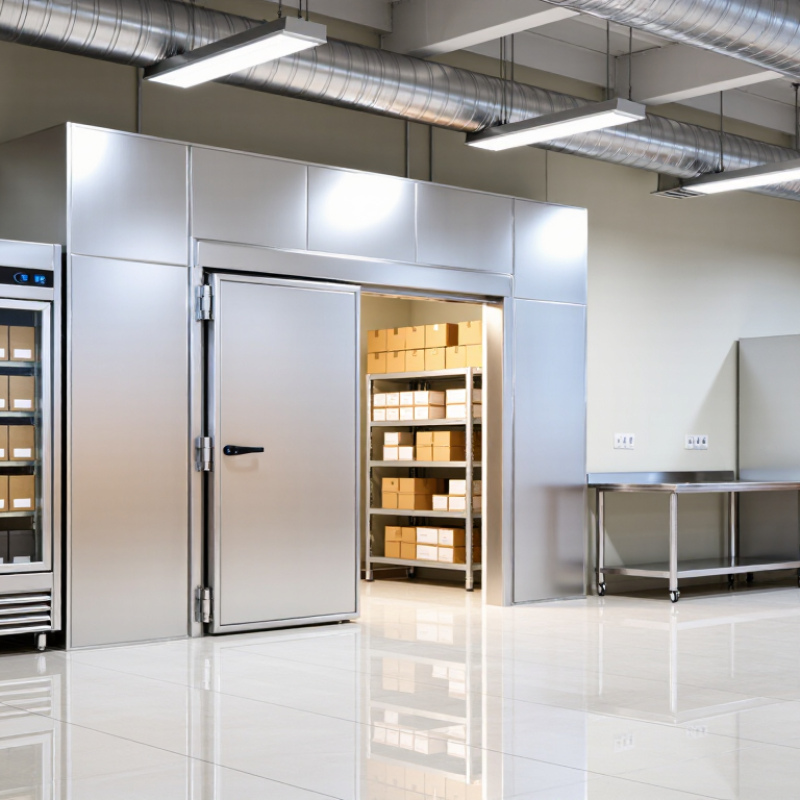
Top 10 Cold Storage Freezer Units for Commercial Use
Commercial cold storage freezers protect food quality, reduce waste, and support steady kitchen production. Most frozen foods require storage near -18°C, with stable temperatures during busy service. A reliable freezer needs strong insulation, accurate controls, safe shelving, and easy cleaning. Door openings matter more than many operators expect. Warm air enters quickly.
The main types suit different working conditions. Reach-in upright freezers save floor space and offer fast access for daily ingredients. Walk-in freezers handle bulk cartons, prepared meals, and large deliveries. Chest freezers provide efficient storage, but their deep layout can hide older stock. Undercounter and drawer units fit beneath worktables for compact kitchens. Roll-in models accept loaded racks, reducing manual transfers. Blast freezers cool hot products rapidly, helping preserve texture and food quality. Display freezers serve retail areas, where visibility and temperature recovery are both important.
Selection should follow workflow, not capacity alone. Measure doorways, ventilation space, aisle width, and electrical access before ordering. Check whether shelves adjust without tools. Inspect door gaskets regularly; a small gap can increase frost and energy use. Digital alarms help staff respond before products soften. Still, alarms are not enough. Staff need a simple response plan and temperature records. In practice, the biggest mistake is buying the largest unit available. It may waste energy, slow stock rotation, and create unsafe blind corners. A smaller, well-organized freezer can perform better. Clearance requirements also deserve careful review, because crowded condenser areas often reduce cooling performance.
A comparison of common commercial freezer categories for food-service, retail, food-processing, and specialist applications. Temperature and capacity figures are typical planning ranges; specifications vary by design, load, ambient conditions, and applicable food-safety requirements.
| # | Freezer Type | Typical Operating Range | Typical Capacity / Format | Primary Purpose | Key Considerations |
|---|---|---|---|---|---|
| 1 | Walk-In Freezer Room | About −18°C to −23°C (0°F to −10°F) | Room-sized; commonly configured from a few cubic metres upward | Bulk frozen-food storage for restaurants, hotels, institutions, and food distributors | Requires suitable floor, insulation, door seals, temperature monitoring, and enough clearance for airflow and safe access. |
| 2 | Reach-In Upright Freezer | About −18°C to −23°C (0°F to −10°F) | Typically one to three doors; roughly 500–1,500 L gross volume per cabinet | Frequently accessed ingredients and packaged frozen stock in kitchens and service areas | Choose shelves or tray supports to suit the load. Door-opening frequency and warm product loading affect recovery time. |
| 3 | Undercounter Freezer | About −18°C to −23°C (0°F to −10°F) | Compact cabinet; commonly about 100–300 L gross volume | Point-of-use frozen storage where floor space is limited | Convenient for smaller inventories, but has less capacity than upright or walk-in formats. Maintain ventilation around the refrigeration system. |
| 4 | Chest / Top-Opening Freezer | About −18°C to −25°C (0°F to −13°F) | Commonly about 200–700 L gross volume | Bulk or reserve storage in shops, kitchens, and back-of-house areas | The top-opening design can limit cold-air loss during access, but product organization and retrieval may be less convenient. |
| 5 | Glass-Door Merchandising Freezer | Often about −18°C to −23°C (0°F to −10°F) | Upright display cabinets; capacity varies substantially by cabinet size | Displaying packaged frozen products for customer selection | Designed for product visibility and frequent access. Confirm that the unit is intended for the site’s ambient temperature and sales conditions. |
| 6 | Blast Freezer | Air temperature commonly around −30°C to −40°C (−22°F to −40°F) during a freezing cycle | Tray- or trolley-based; specified by batch load and tray count | Rapidly chilling or freezing prepared food before transfer to frozen storage | Cycle performance depends on product type, portion size, loading pattern, and starting temperature. It is a process unit, not a substitute for long-term storage. |
| 7 | Plate Freezer | Typically uses refrigerated plates around −35°C to −40°C (−31°F to −40°F) | Specified by plate area, product dimensions, and batch or continuous throughput | Rapid contact freezing of flat or regularly shaped packaged products | Works best when packages make good contact with the plates. Product shape and thickness influence freezing time. |
| 8 | Ice-Cream / Hardening Freezer | Often around −23°C to −29°C (−10°F to −20°F); hardening applications may use lower temperatures | Cabinet, chest, or room format, depending on production and sales volume | Holding or hardening ice cream and other temperature-sensitive frozen desserts | Stable temperature is important for texture and product quality. Select a unit for the intended hardening process or holding duty. |
| 9 | Low-Temperature Laboratory Freezer | Common models operate near −40°C to −86°C (−40°F to −123°F) | Upright or chest cabinets; capacity is model- and application-specific | Research, laboratory, or specialty storage requiring temperatures below conventional food-freezer ranges | Not generally intended for routine food storage. Check temperature uniformity, alarms, backup arrangements, and sample-specific requirements. |
| 10 | Refrigerated Container Freezer | Commonly designed to maintain cargo near −18°C (0°F); operating limits depend on the container system | Large transport-container format, commonly around 20 or 40 feet in length | Temporary, mobile, or transport-related frozen storage for commercial goods | Requires a suitable power supply, airflow around cargo, monitoring, and contingency planning for interruptions or equipment faults. |
Selection note: Commercial freezers are intended to maintain frozen product conditions; they do not all perform the same task. Confirm the required product temperature, storage volume, loading pattern, installation conditions, monitoring needs, and local food-safety rules before selecting equipment.