
Made in America

Get Connected With

JointsCouplings.com White Logo

Opening Hours M-F: 07:00 AM to 4:00 PM (PST)

7 Tips for Choosing an LP207 Pillow Block Bearing

Selecting an Lp207 Pillow Block Bearing is not just a matter of matching a shaft diameter. The housing, insert, mounting pattern, load direction, and operating environment all affect reliable performance. A unit that fits the drawing may still struggle when dust, vibration, or frequent washdowns enter the picture. Fit matters. This guide presents seven practical checks for comparing options before ordering or replacing a bearing. It focuses on details that are easy to miss on a product page, including sealing, lubrication, alignment, and maintenance access.

Start with equipment specifications and supplier documentation, not assumptions based on a similar-looking model. Confirm the bore size and overall dimensions, then compare rated loads and speed with actual service conditions. Check whether the bearing uses the required locking method and whether its housing material suits the surrounding environment. Small details count. Where catalog data is unclear, ask the manufacturer or distributor for a drawing and stated operating limits. No checklist removes every uncertainty; installation quality and regular upkeep still shape bearing life. It is tempting to treat replacement as routine, but a rushed selection can lead to noise, heat, or avoidable downtime. Use these seven tips as a decision aid, and record any assumptions you could not verify. That last step is easy to skip.
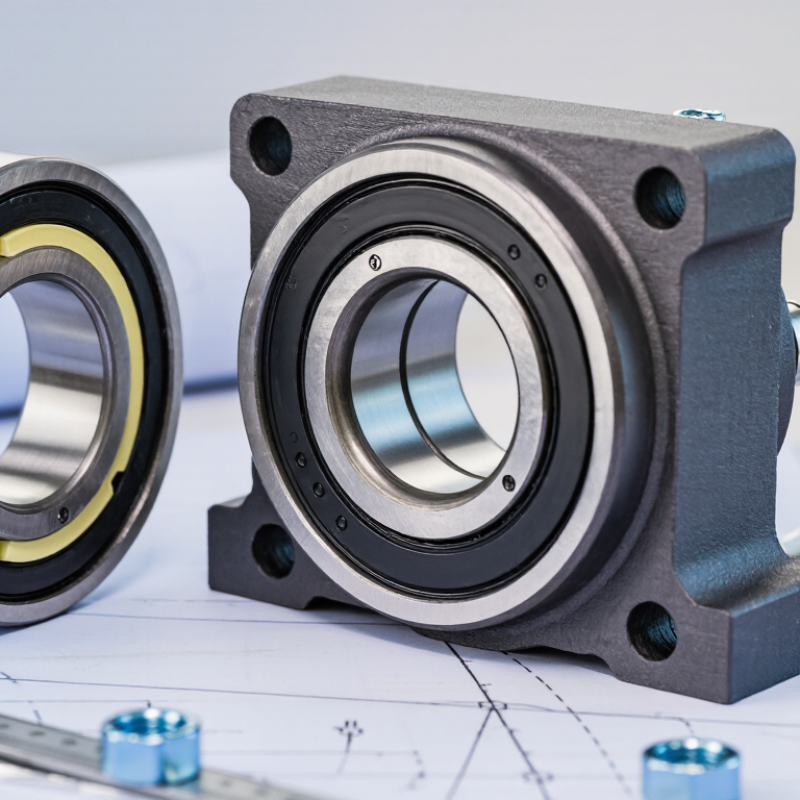
7 Tips for Choosing an LP207 Pillow Block Bearing

Understand the LP207 Pillow Block Bearing’s Design and Specifications

An LP207 pillow block bearing combines an insert bearing with a mounted housing, but its exact construction can vary by manufacturer. Check the technical drawing before ordering. Many common LP207 listings specify a 35 mm shaft bore; confirm this against the part’s measured inner diameter. Also verify housing length, bolt spacing, mounting height, and lubrication access. Small differences matter when replacing a unit on a machine frame.

Look closely at the locking method and sealing arrangement. An eccentric collar or set screws may secure the insert, while seals help limit dust and moisture near the rolling elements. Match these details to shaft rotation, operating speed, and contamination levels. A seal is not a cure-all.

For load capacity, ISO 281:2007 defines basic rating life using the relationship:

L10 = (C/P)^p million revolutions; for ball bearings, p equals 3.

L10 corresponds to 90% reliability under the standard’s stated conditions, not a guaranteed service interval. Check dynamic and static ratings in the supplier’s data sheet, then compare them with real loads and any shock during start-up. Sources: ISO 281:2007; ISO 76:2006. Even a careful fit can disappoint if the shaft is worn or misaligned.

Assess Load, Speed, and Operating Requirements

Choosing an LP207 pillow block bearing starts with the real load, not just the machine’s average. Identify radial and axial forces, including belt tension, product weight, and any impact during starts or jams. Compare these conditions with the unit’s published dynamic and static load ratings. Keep a safety margin; a brief overload can still mark the rolling surfaces. It is easy to overlook start-up forces. Don’t.

Speed needs equal care. Check the rated operating speed for the exact bearing unit and lubrication method, rather than relying on a generic figure. Higher speed can raise temperature, especially when grease quantity, shaft fit, or alignment is poor. Watch for unusual heat, vibration, and noise after installation. A quick temperature check is useful, but it cannot replace the specified limits.

Consider the actual operating environment, too. Dust, washdown, moisture, and nearby heat can affect seals, lubricant life, and maintenance intervals. Confirm the shaft diameter and mounting surface; a tilted or uneven base may create uneven loading. If the duty cycle changes often, record speed, load, and temperature during representative operation. Those notes make selection more reliable, though real machines rarely behave perfectly.

Match the Bearing Bore to the Shaft

7 Tips for Choosing an LP207 Pillow Block Bearing

Match the Bearing Bore to the Shaft

The LP207 bore must match the shaft’s nominal diameter, not just appear close on a ruler. Measure the shaft with a calibrated micrometer at several points, including near the end and where the bearing will sit. A burr, worn spot, or slight taper can change the fit. Small differences matter. Check the bearing drawing, too; the model code alone may not confirm every bore detail.

ISO 286-2:2010 gives standardized shaft tolerance limits. For a 35 mm shaft made to h7, the permitted diameter is 35.000 mm down to 34.975 mm. That 25-micrometre range is useful context, not a universal LP207 fit recommendation. The right fit also depends on bearing design, load, shaft material, and locking method. A set-screw insert and an adapter-mounted bearing may call for different shaft tolerances. Verify the supplier’s technical drawing before machining or ordering.

Tip: Measure twice, then compare the actual shaft diameter with the specified bore and fit. If the shaft is already installed, check for damage and measure where the inner ring will contact it. I would not assume a nominal 35 mm shaft is truly 35 mm; machining and wear can leave surprises. Record the readings and ask a bearing technician when the fit or locking method is unclear.

Evaluate Lubrication and Environmental Conditions

Lubrication and surroundings can determine whether an LP207 pillow block bearing runs smoothly or wears early. Check the bearing maker’s specified grease type, fill quantity, and relubrication interval; do not assume more grease means better protection. Excess grease can raise temperature and churn, while too little leaves rolling surfaces exposed. ISO 281:2007 includes lubrication and contamination factors in its modified bearing-life calculation, showing why these conditions matter.

Tip: Match grease to operating speed and temperature, then confirm compatibility before mixing products. Keep a simple service log. Note the date, grease amount, temperature, and any unusual noise. Small details help reveal a pattern. A grease gun can introduce dirt if its nozzle is left uncovered, so wipe the fitting before use.

Assess the actual environment: fine dust, water spray, washdown, and temperature swings can change service needs. ISO 4406:2021 classifies solid-particle contamination using counts at particle sizes of 4, 6, and 14 micrometres. Though developed for hydraulic-fluid cleanliness, its size bands are a useful reminder that tiny particles matter. For an exposed pillow block, consider suitable seals or shielding and inspect them for damage. One caveat: a shield may trap moisture if drainage is poor. Check the installation, not just the catalogue.

7 Tips for Choosing an LP207 Pillow Block Bearing – Evaluate Lubrication and Environmental Conditions
Tip What to Evaluate Practical Guidance Selection Check
1. Confirm the exact bearing configuration Shaft diameter, insert bearing, housing style, mounting dimensions, and locking method. Check the product drawing and dimensional specifications before ordering. Part designations can vary between suppliers, so do not rely on the code alone to confirm fit. Verify the shaft size and mounting-hole spacing against the equipment drawing.
2. Check how the bearing is lubricated Whether the insert is factory greased, has a grease fitting, and includes a path for excess grease to escape. Many mounted insert bearings are supplied with grease, but relubrication provisions differ. Follow the specific product instructions; avoid adding grease to a sealed, non-relubricatable unit. Confirm fitting location, relubrication method, and any relief or drain arrangement.
3. Match the grease to operating conditions Operating temperature, speed, load, moisture exposure, and compatibility with existing grease. Use the lubricant grade and relubrication guidance specified for the bearing. Do not mix greases unless their compatibility is confirmed; incompatible thickeners can affect grease performance. Record the current grease type and compare it with the bearing’s lubrication instructions.
4. Assess water and washdown exposure Rain, spray, condensation, frequent cleaning, and exposure to cleaning chemicals. Water can contaminate lubricant and promote corrosion. Consider suitable seals, corrosion-resistant materials, and a housing arrangement appropriate for the actual washdown conditions. Check the stated sealing and material details; a seal should not be assumed to make a unit suitable for every washdown environment.
5. Consider dust and abrasive contaminants Fine dust, fibers, grit, metal particles, or other airborne debris near the shaft and housing. Contaminants can wear rolling surfaces and degrade grease. Choose appropriate sealing and keep the bearing area clean during installation and maintenance. Compare the seal design with the type and concentration of contaminants at the installation site.
6. Review temperature and operating speed Ambient and bearing operating temperatures, shaft speed, duty cycle, and heat from nearby equipment. High temperature can shorten grease life, while low temperature can increase starting resistance. Confirm the bearing and lubricant limits for the expected operating range. Compare actual operating conditions with the product’s published temperature and speed limits.
7. Set a condition-based maintenance plan Vibration, noise, temperature changes, lubricant condition, and the consequences of an unexpected stop. Use the bearing supplier’s relubrication guidance as a starting point, then adjust maintenance intervals based on operating severity and inspection findings. Avoid overgreasing, which can increase heat and pressure. Document inspections and investigate sudden changes in temperature, noise, or vibration.

Check Mounting, Alignment, and Maintenance Needs

Before choosing an LP207 pillow block bearing, check that its bore matches the shaft and its mounting holes fit the support. Measure rather than guess. A mismatch can leave the housing skewed or force the shaft against one side of the insert. Check the expected load, speed, and operating environment against the bearing’s published specifications. Dust, moisture, and frequent washdown can change which seals and maintenance plan make sense.

Mount the housing on a clean, flat surface, then tighten the bolts evenly to the specified torque. Do not use the bolts to pull a misaligned base into place. Check that the shaft sits straight and turns freely by hand before running the equipment. Small resistance matters. A quick check now may prevent heat, vibration, and uneven wear later. It is tempting to treat alignment as a one-time task, but flexible frames and settling mounts can shift over time.

Set lubrication intervals according to the product guidance and actual conditions, not a guess. Use compatible grease, and avoid adding more than needed; excess can increase heat. During routine checks, note unusual noise, rising temperature, loose fasteners, or grease leakage. A simple log helps reveal gradual changes, though it can be easy to skip when equipment seems fine. The quiet days count too.