
Made in America
Get Connected With



A bathroom faucet should do more than look polished beneath the mirror. It must fit the sink, work with your plumbing, and feel comfortable during everyday use. The right choice can make handwashing easier and cleaning simpler. The wrong one may splash water onto the counter or leave awkward gaps around the basin. Small details matter.
Industrial designer Dieter Rams’s well-known principle, “Good design is as little design as possible,” offers a useful lens for comparing Bathroom Sink Faucets. Rams is not a plumbing specialist, so his words are a design principle, not installation advice. Still, they remind shoppers to look beyond decoration. Check faucet reach, handle clearance, mounting-hole layout, finish durability, and water efficiency. A sleek silhouette cannot compensate for a spout that misses the drain. Measure before buying.
This guide explores ten practical checks, from sink compatibility to warranty terms. It also considers materials, cartridge types, installation needs, and how a finish may show fingerprints or water spots. Product specifications can be confusing, and online photos rarely reveal scale. That is worth remembering. A faucet that suits a wide vessel sink may overwhelm a compact vanity. Compare measurements with your actual basin, and confirm details with the manufacturer or a qualified plumber when needed. No single style suits every bathroom; the best choice is the one that works reliably in yours.
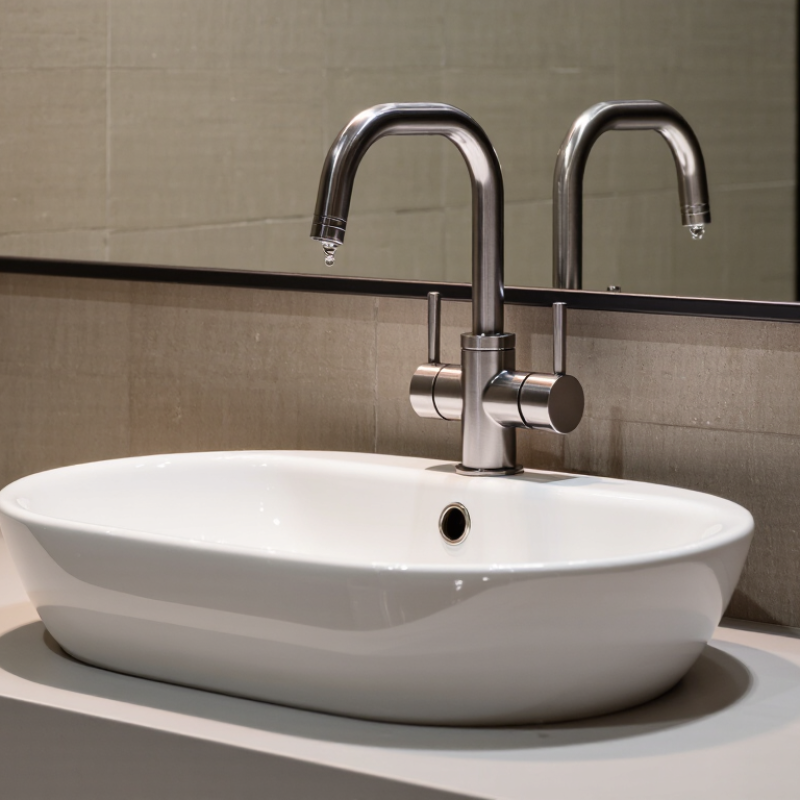
Before choosing a faucet, count the holes in the sink or countertop and measure their spacing. A single-hole faucet needs one opening; a centerset model commonly fits holes spaced 4 inches apart, while widespread faucets often need about 8 inches. These dimensions are common, not universal. Check the sink and faucet installation sheets before buying.
Look for unused holes, too. A deck plate may cover extra openings, but only if it spans them fully and sits flat. For a wall-mounted faucet, confirm that the plumbing rough-in matches the faucet and that the spout reaches the basin without splashing. A deep bowl can change the ideal spout height. Measure twice. I would recheck the reach, even when the faucet appears to fit on paper.
Flow rate matters alongside fit. The U.S. EPA’s WaterSense specification limits bathroom sink faucets to 1.5 gallons per minute, compared with 2.2 gpm for conventional faucets—a reduction of at least 30%. This technical benchmark can help narrow choices, but it does not confirm hole compatibility. Use the manufacturer’s dimensional drawing, and compare it with the actual sink. Small spacing differences can turn an easy installation into a frustrating one.
Choose the faucet and sink as one assembly. A tall vessel basin often needs a higher spout, while a shallow basin may splash under one. Deck-mounted faucets sit on the sink or counter; wall-mounted models keep the counter clear. Check the sink’s hole count and spacing before choosing a style. A single-hole faucet will not cover a three-hole layout without a plate, and wall-mounted plumbing needs suitable in-wall connections. Measure twice.
Tip: Hold a faucet template over the sink. Check spout reach, handle clearance, and the distance from the spout to the drain. These small checks can prevent awkward splashing and cramped handwashing.
Style matters, but daily use matters more. A dramatic wall faucet can look clean, yet it may be harder to install or service if the plumbing is not already positioned. The U.S. EPA’s WaterSense specification sets a maximum flow rate of 1.5 gallons per minute for labeled bathroom sink faucets, compared with the common 2.2-gallon-per-minute benchmark. That figure helps compare water use, but it does not tell you whether a faucet suits your basin. A good-looking choice can still be the wrong fit. Check the manufacturer’s installation dimensions before buying.
Compare a faucet’s body material, not just its visible finish. Solid brass is durable and commonly used in quality fixtures, while stainless steel offers strong resistance to corrosion. Some lower-cost faucets use zinc-alloy components; these may be suitable for light use, but check the warranty and construction details. A heavy handle can feel reassuring, though weight alone does not prove quality. Small details matter.
Finishes affect both appearance and upkeep. Polished chrome is easy to wipe, but water spots can show quickly. Brushed finishes tend to hide fingerprints better, yet textured surfaces may need more careful cleaning. Match the finish to nearby hardware, and ask whether the coating is designed to resist peeling or tarnishing. Feel the handle. It should move smoothly, without wobbling or scraping. If possible, inspect the cartridge type and confirm replacement parts are available. I once focused too much on color; the faucet looked right, but its stiff handle became annoying. A beautiful finish is not enough. Consider who will use the sink, how often it gets cleaned, and whether the material suits your water and daily habits.
A bathroom faucet should feel controlled, not merely look polished. The U.S. EPA WaterSense specification sets the flow limit for labeled bathroom faucets at 1.5 gallons per minute, about 30% below the 2.2-gpm federal standard. That figure is a useful comparison point, but flow at home also depends on water pressure and the faucet’s aerator. A weak stream can make rinsing awkward. Very high flow may waste water.
Tip: Move the handle before buying, if possible. A single lever is quick to adjust with wet hands; separate handles offer more distinct hot-and-cold control. Check whether the lever moves smoothly and leaves enough clearance from the backsplash. Feel matters. Product photos rarely show that.
Also compare spout reach with your sink basin. A short spout may send water against the rear wall, while an overly long one can splash near the front. Read the installation notes and confirm the faucet fits your sink’s hole layout. Small details. Easy to miss. The EPA WaterSense specification is a reliable flow reference, but it cannot tell you whether a particular handle will feel comfortable in daily use.
Before choosing a bathroom sink faucet, inspect the sink and vanity closely. Count the faucet holes and measure their spacing; a widespread model may not fit a single-hole basin. Check the deck thickness, too. Some mounting hardware has limited reach, especially on thick stone counters. Measure twice. Confirm that the spout clears the basin and reaches near the drain, so water does not splash onto the counter. If the sink is wall-mounted or unusually shaped, installation instructions deserve extra attention.
Look beneath the vanity before ordering. Note the shutoff-valve condition, supply-line length, and available working space. Older valves can be stiff or corroded, and a new faucet may need different connectors. Check whether the drain assembly is included and compatible with the sink’s overflow opening. A careful DIY installation is possible for many people, but leaks can hide inside the cabinet. If connections look damaged or the layout is unfamiliar, ask a qualified plumber to assess the job.
Read the warranty before purchase, not after a drip appears. Check which parts are covered, how long coverage lasts, and whether labor, finish damage, or mineral buildup is excluded. Keep the receipt and installation paperwork. Keep the receipt. For long-term care, use a soft cloth and mild soap, then dry the faucet to limit water spots. Avoid abrasive pads and harsh cleaners; finishes vary, so follow the care instructions for that specific faucet. Cleaning the aerator may restore flow, though it is easy to forget until the stream weakens.
| # | What to Check | Practical Guidance | Why It Matters |
|---|---|---|---|
| 1 | Sink-hole configuration | Count the faucet holes and measure the spacing. Common layouts include a single hole, 4-inch centerset, and widespread faucets with handles set farther apart. | The faucet must fit the sink or countertop openings; some models include a deck plate to cover extra holes. |
| 2 | Mounting surface and thickness | Check whether the faucet is designed for deck, wall, or vessel-sink installation. Compare the mounting instructions with the thickness of the sink or countertop. | Mounting hardware and faucet reach vary, and a faucet may not fit a surface outside its stated installation range. |
| 3 | Spout reach and sink-bowl position | Measure from the faucet mounting point to the drain and check where the water stream will land in the bowl. | A suitable reach helps keep water in the basin and makes handwashing more comfortable. |
| 4 | Spout height and clearance | Check the faucet height against the sink depth, backsplash, mirror, and any shelves. Vessel sinks often need a taller faucet or a wall-mounted model. | Clearance affects everyday use and helps prevent the handle or spout from hitting nearby surfaces. |
| 5 | Water supply and shutoff valves | Confirm the faucet's supply-connection requirements and inspect the existing shutoff valves and supply lines for compatibility and condition. | Different connection sizes or deteriorated valves may require adapters or replacement during installation. |
| 6 | Drain and pop-up compatibility | Check whether the faucet includes a drain assembly and whether it is compatible with the sink's drain opening and overflow design. | Drain assemblies are not universal, and an incompatible stopper or drain can complicate installation. |
| 7 | Water use and flow rate | Review the listed flow rate. In the United States, WaterSense-labeled bathroom sink faucets use no more than 1.5 gallons per minute and meet efficiency and performance criteria. | A lower-flow option can reduce water use while providing a tested level of performance. |
| 8 | Warranty coverage | Read the written warranty for coverage duration, covered parts and finishes, exclusions, proof-of-purchase requirements, and the process for making a claim. | Warranty terms differ by product and may treat mechanical parts and surface finishes differently. |
| 9 | Cleaning and long-term care | Follow the care instructions. A soft cloth with mild soap and water is generally suitable; avoid abrasive pads and harsh or acidic cleaners unless the instructions specifically allow them. | Incompatible cleaners can damage finishes. Periodically cleaning the aerator can also help maintain water flow. |
| 10 | Installation access and future repairs | Check the space beneath the sink for access to mounting hardware, supply connections, and the drain. Keep the installation guide and warranty details after fitting the faucet. | Good access makes installation, inspection, and future maintenance easier. |