
Made in America
Get Connected With



Round Counter Stools are compact seats designed for counters, kitchen islands, and breakfast bars. Their circular seats soften a room’s lines, while their height brings people closer to the worktop. The name can be confusing: a round seat does not automatically fit every counter. Measure the counter first. A comfortable starting point is usually 9 to 12 inches between the seat and counter surface, though body size and seat shape can change the feel.
Kitchen seating is part of a wider design shift. Houzz’s 2024 U.S. Kitchen Trends Study reports that 76% of renovated kitchens include an island, making seating decisions relevant to many remodeling projects. The National Kitchen & Bath Association’s 2024 Kitchen Trends Report also offers professional context on evolving kitchen layouts and priorities. These reports do not determine which stool suits a particular home; measurements and daily habits still matter. Check seat height, available legroom, stool width, and whether you need a backrest or swivel. Then consider materials: a wipe-clean seat may suit a busy family kitchen, while upholstered fabric can feel warmer but need more care. Small details matter. I would not choose by appearance alone. This guide explains what defines Round Counter Stools and how to compare styles, dimensions, comfort, and durability before buying. A careful fit is often less exciting than a striking finish, but it tends to matter more after the first week.
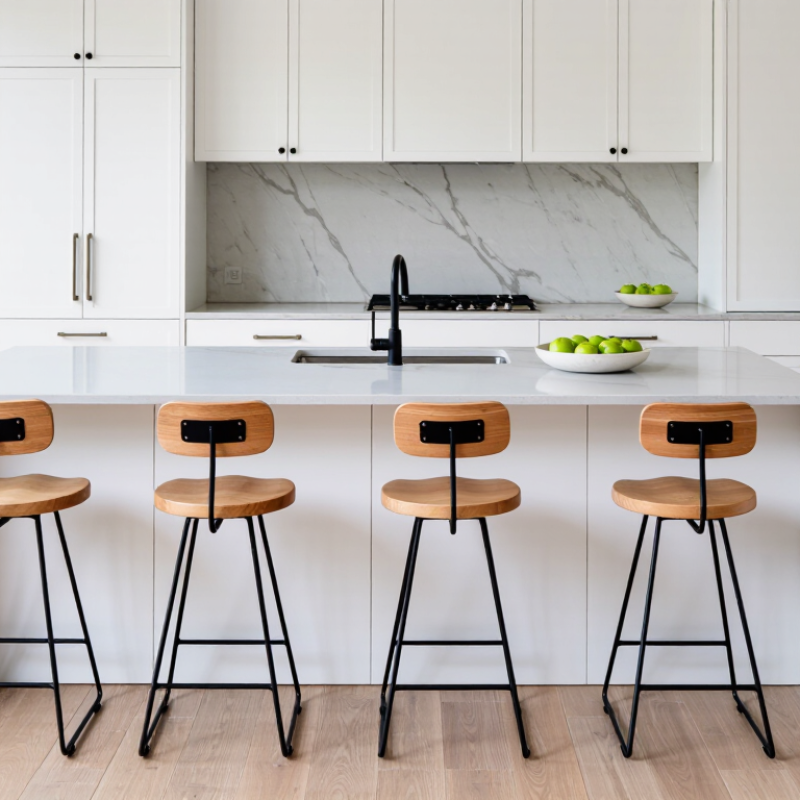
A round counter stool is defined by its circular seat and a height suited to a kitchen counter or island. Its seat may be padded, molded, or made from wood, but the curved outline is the clearest visual feature. The stool can have a backrest or be backless, with four legs or a central pedestal. Shape alone does not determine comfort. Small details matter. A shallow seat, hard edge, or missing footrest can feel awkward during a long meal.
Seat height is usually around 24 to 27 inches for counters about 34 to 36 inches high. Measure from the floor to the underside of your counter, then leave roughly 10 to 12 inches between the seat and counter edge. Fit comes first. Check that stools can slide under the counter and leave enough room for people to sit without bumping elbows. A footrest supports the legs, while a swivel base can make turning easier. Yet swivel mechanisms may add bulk, and a rounded seat does not suit every body. That distinction is easy to overlook when choosing by appearance alone.
Round counter stools have seats with curved edges, but their designs vary more than the name suggests. Some have fully round seats and four legs; others use a central pedestal that swivels. A backrest can make longer meals more comfortable, while a backless stool slides neatly beneath a counter.
Check the seat height against your counter: about 25 to 27 inches often suits a standard 36-inch counter, but measure your own space before buying.
Materials shape both appearance and upkeep. Solid wood feels warm and can show grain, though spills need prompt wiping and joints should feel firm. Metal frames offer a slimmer profile and are usually easy to clean, but can feel cold without a padded seat. Woven fibers add texture; they may need more careful cleaning near food. Upholstered seats soften a hard kitchen, yet fabric can hold stains. A small trade-off.
I’d also test whether the footrest feels natural, not just sturdy. One detail is easy to miss: a rounded seat does not guarantee comfort. Seat width, edge shape, and padding matter, and a thick cushion may raise your sitting position more than expected.
Round counter stools are common at kitchen islands and breakfast bars, where they create casual seating without taking up much floor space. Their curved seats have no sharp corners, which can make narrow walkways easier to navigate. In a compact apartment, two stools can tuck beneath an overhanging counter when not in use. Small spaces benefit.
They also suit cafés, casual restaurants, and hotel breakfast areas. A round seat lets guests turn toward a companion or shift position without moving the whole stool. At a busy counter, a wipe-clean seat and a sturdy footrest are practical details, not just design choices. Measure twice. The seat height should leave enough room between the stool and the counter’s underside, especially if the counter has a thick edge.
Some households use round stools at craft tables, standing desks, or utility counters. That flexibility is useful, though a kitchen stool may not support long work sessions comfortably. Round seats can feel less supportive than wider, shaped seats, and a swivel base may be awkward in a tight corner. Check the available clearance and consider who will use the stool most often. A detail people sometimes miss: textured flooring can affect how easily lightweight stools slide or stay put.
Choosing a round counter stool starts with the counter, not the seat. Measure from the floor to the underside of the countertop. Most kitchen counters are 34 to 36 inches high, and a seat around 24 to 27 inches usually leaves comfortable legroom. Aim for about 9 to 12 inches between the seat and counter. Measure your own space, though; a thick countertop or apron can reduce knee clearance.
Next, check the stool’s width and the room around it. Allow roughly 24 to 30 inches of counter length per stool, measured from center to center. A compact round seat can fit a narrow island, while a wider seat may feel more supportive during a long breakfast. Leave enough space behind each stool for people to pass. Small details matter.
Consider how the stool will be used. A footrest helps keep legs comfortable, especially when the seat feels high. If children will climb on and off, stability may matter more than a swivel feature. Compare the stool dimensions with your measurements before buying. I’d recheck them once more; even careful measuring can miss a bulky base or an awkward overhang. And a stool that looks small online may feel crowded in a busy kitchen.
Before comparing round counter stools, measure the counter, not just the room. Standard counter-height surfaces are about 34 to 36 inches high; seats around 24 to 26 inches usually leave comfortable legroom. Allow roughly 24 inches of counter width per person, then check that nearby drawers and walkways still open freely. Measure twice. A round seat can look compact, but its legs or broad base may take up more floor space than expected.
Compare seat diameter, height adjustment, footrest position, and stability. A footrest should let your feet rest naturally, rather than leave them dangling. Swivel seats are convenient in tight kitchens, though they need enough clearance to turn without hitting a cabinet. Check the stool’s stated weight capacity and construction details, including joint reinforcement and base materials. On hard floors, protective glides help prevent scratches. Upholstery feels softer, but spills can make it harder to maintain.
The Houzz 2024 U.S. Kitchen Trends Study reported that 35% of renovating homeowners added or upgraded a kitchen island. That makes stool fit a practical planning issue, not just a style choice. For a small island, compare the seat width with the available overhang and space between stools. A backless design tucks away neatly; a backed seat may feel more supportive during longer meals. I would not choose by appearance alone. Sit on a sample if possible, since comfort depends on body size and footrest height.