
Made in America
Get Connected With

Opening Hours M-F: 07:00 AM to 4:00 PM (PST)




Email Us
sale@abrvpartsacc.com
Call Us
+1 (626) 448-2100Made in America
Get Connected With
Opening Hours M-F: 07:00 AM to 4:00 PM (PST)
Choosing reliable Vibration Equipment manufacturers requires more than comparing prices, motor power, or catalogue images. Global buyers need evidence. They should examine factory testing, calibration records, material quality, service coverage, and documented performance under real operating conditions. A shaker table may look impressive on a showroom floor. Its long-term stability matters more.
Dr. Robert B. Randall, a respected vibration-analysis researcher and author, describes the discipline as turning vibration signals into useful information about machine condition. That principle also guides equipment selection. The best manufacturers understand frequency range, payload capacity, resonance control, noise limits, and application-specific testing. They can explain why a system suits automotive components, electronics, aerospace parts, construction materials, or laboratory research.
This guide reviews leading manufacturers serving international markets. It considers product capability, engineering support, customization, delivery reliability, and after-sales service. Certifications and traceable testing deserve attention, but they should not replace practical evaluation. Buyers should request application data, maintenance requirements, installation details, and references from comparable facilities.
No ranking is perfect. Manufacturing needs vary widely. A compact laboratory shaker may outperform a larger system in precision testing, while a heavy-duty unit may better handle industrial components. That difference is easy to miss. It can become expensive later.
The companies discussed here represent different strengths, including electrodynamic shakers, mechanical vibration systems, environmental test equipment, and monitoring solutions. The goal is not to promote one universal choice. It is to help procurement teams ask sharper questions and make decisions supported by technical evidence, realistic budgets, and measurable operating needs.
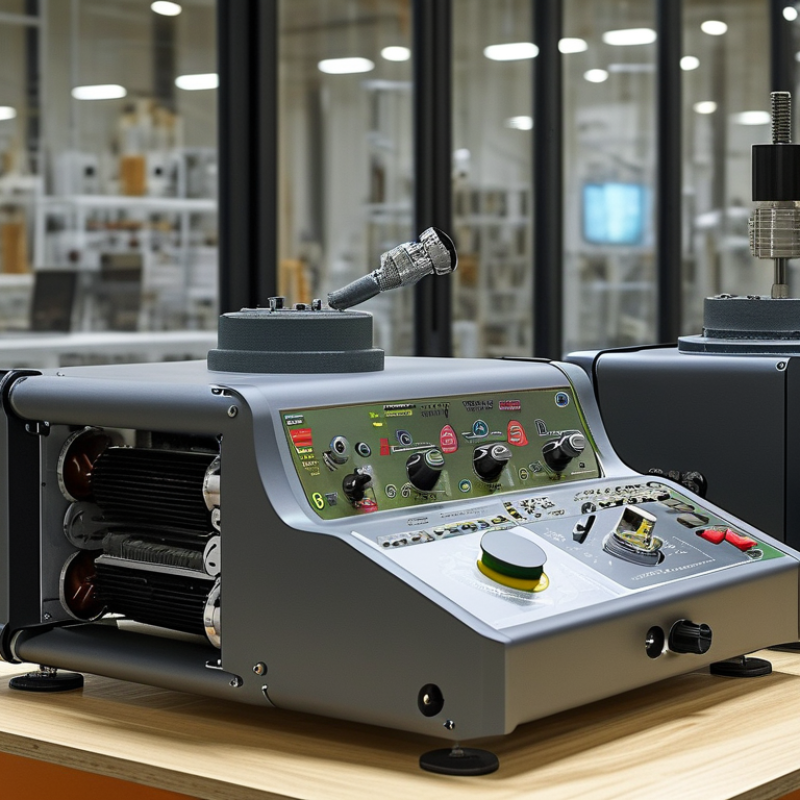
Vibration equipment measures, creates, or controls mechanical movement. Its main types include vibration sensors, shakers, screens, feeders, compactors, and isolation mounts. Sensors detect acceleration, velocity, and displacement. Shakers reproduce controlled forces during product testing. Screens and feeders move bulk materials across mining, recycling, food, and chemical facilities. Compactors use vibration to remove air from soil, concrete, or asphalt.
Industrial selection depends on load, frequency, amplitude, environment, and maintenance access. A poorly matched motor can create heat, noise, and premature bearing failure. In plant practice, a small sensor placed near a bearing may reveal imbalance before operators hear it. Deloitte’s smart manufacturing research reports that predictive maintenance can reduce downtime by 5–15% and raise productivity by 5–25%. McKinsey also estimates that predictive maintenance may cut machine downtime by 30–50%. These figures are useful, but real results vary with data quality and staff response. More data is not always better.
Tips: Match the sensor to the machine’s speed and mounting surface. Record baseline readings during normal operation. Review trends, not single alarms. Keep calibration records. Test equipment under realistic loads. A laboratory result can mislead. Also, avoid installing sensors where cables face heat, dust, or repeated impact. ISO 20816 guidance supports consistent machine-vibration evaluation, yet site conditions still require engineering judgment. Reliable programs combine standards, operator experience, and timely inspection.
| Equipment Type | Definition and Operating Principle | Typical Frequency Range* | Main Motion or Output | Common Industrial Applications | Key Advantages | Important Buyer Considerations |
|---|---|---|---|---|---|---|
| Electrodynamic Shaker | A test system that uses an electromagnetic force to move an armature and reproduce controlled vibration profiles. | Approximately 5–3,000 Hz, depending on system configuration | Primarily linear motion; vertical or horizontal testing with a slip table | Electronics, automotive components, aerospace equipment, batteries, telecommunications hardware | Excellent frequency control, rapid profile changes, sine and random testing capability | Force rating, stroke, payload, cooling method, armature size, controller compatibility and facility power |
| Servo-Hydraulic Shaker | A vibration system driven by hydraulic actuators and servo valves to generate high force and long-stroke motion. | Approximately 0.5–200 Hz, depending on actuator and test setup | Linear motion with high displacement and high force capability | Large vehicle structures, civil engineering components, railway equipment, heavy machinery and seismic simulation | Suitable for large payloads, high force levels and low-frequency endurance testing | Hydraulic power requirements, oil maintenance, noise control, stroke, load stability and installation space |
| Mechanical Vibration Machine | A rotating or cam-driven machine that produces vibration through eccentric masses or mechanical imbalance. | Typically about 5–100 Hz | Usually fixed-frequency sinusoidal or repetitive motion | Packaging transport simulation, material screening, hopper flow improvement and basic component endurance tests | Simple construction, comparatively low operating cost and straightforward maintenance | Limited waveform flexibility, fixed operating frequency, mechanical wear and lower test-data control |
| Electromagnetic Vibrator | A compact electromagnetic actuator that converts electrical signals into oscillating mechanical motion. | Approximately 10–10,000 Hz for small-load systems | Small-amplitude linear vibration | Small electronic assemblies, sensors, switches, laboratory demonstrations and product screening | Compact footprint, fast response and convenient electronic frequency adjustment | Limited payload and displacement, heat generation, mounting method and controller accuracy |
| Pneumatic Vibrator | An air-powered device that creates vibration through a turbine, piston or ball mechanism. | Commonly about 10–20,000 Hz, depending on design and air pressure | Circular, rotary or linear vibration | Bulk-material handling, powder discharge, silo and hopper flow, foundry equipment and process machinery | Suitable for hazardous or wet environments and capable of continuous operation | Compressed-air quality, operating pressure, noise, air consumption, mounting orientation and maintenance access |
| Vibration Screening System | A production-line or laboratory system used to expose products to controlled vibration and identify weak assemblies or loose connections. | Application-dependent; commonly low- to mid-frequency testing | Sine sweep, fixed-frequency or broadband random vibration | Consumer electronics, power supplies, automotive modules, connectors and industrial control assemblies | Improves manufacturing quality by detecting latent defects before shipment | Throughput, repeatability, fixture design, product orientation, data logging and operator safety |
| Vibration Monitoring System | A measurement system using accelerometers or velocity and displacement sensors to assess machine vibration during operation. | Sensor-dependent; commonly from below 1 Hz to several kHz | Measures acceleration, velocity, displacement, frequency and phase | Predictive maintenance for motors, pumps, fans, compressors, gearboxes, turbines and production lines | Supports early fault detection, condition-based maintenance and reduced unplanned downtime | Sensor bandwidth, mounting quality, sampling rate, environmental protection, alarm limits and software integration |
| Seismic or Earthquake Simulator | A large multi-axis test platform that reproduces recorded or synthetic earthquake motions for structural evaluation. | Generally low frequency, often below 50 Hz | Single-axis or multi-axis translational motion | Buildings, bridges, pipelines, industrial equipment, tanks and infrastructure components | Enables controlled evaluation of structural integrity and seismic response | Platform size, payload, displacement, acceleration, multi-axis coordination and foundation requirements |
*Frequency ranges are representative industry ranges rather than universal limits. Actual performance depends on equipment design, payload, fixture, stroke, force rating, controller and test standard.