
Made in America

Get Connected With

JointsCouplings.com White Logo

Opening Hours M-F: 07:00 AM to 4:00 PM (PST)

How to Choose the Right Inverter Transformer?

Choosing an Inverter Transformer is not simply a matter of matching a catalog rating. The transformer must suit the inverter’s output, the connected load, and the conditions where it will operate. A mismatch can cause excess heat, voltage drop, nuisance shutdowns, or shortened service life. Start with the system voltage and required kVA, then check frequency, waveform, and expected operating duty. Consider whether the load includes motors, pumps, or other equipment with high starting currents. Those brief surges can matter as much as steady operation.

The installation deserves equal attention. Ambient temperature, ventilation, mounting space, cable length, and cooling method all affect performance. Ask the supplier for technical data on insulation, temperature rise, impedance, and compatibility with the inverter’s output waveform. Where harmonics or frequent load changes are expected, request an engineering review rather than relying on a generic rating. Small details count.

A neat specification sheet can still miss a real operating condition. For example, a transformer sized for normal load may struggle during repeated motor starts or in a poorly ventilated enclosure. Review the expected load profile, not just its average value, and confirm assumptions with qualified electrical professionals. This guide explains the key selection factors, common trade-offs, and questions to ask before purchase. Some projects will not have perfect data; document the gaps and revisit them before finalizing a design.
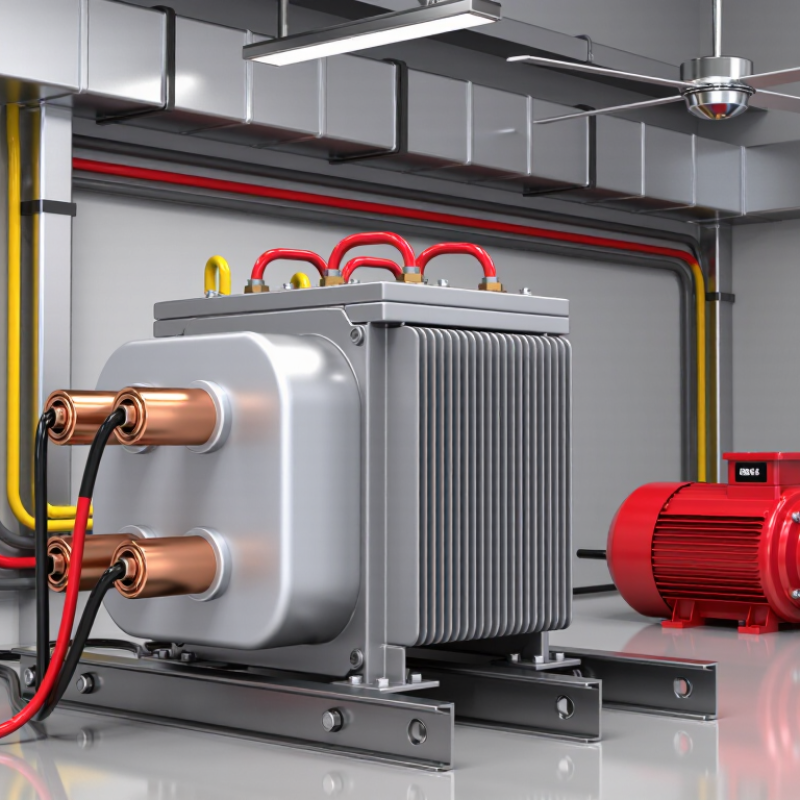
How to Choose the Right Inverter Transformer?

Understand the Inverter Transformer’s Role and Operating Principles

An inverter transformer does not create power; it changes voltage and, in some designs, separates the output electrically from the input. The inverter switches direct current into a changing waveform. That alternating magnetic field in the primary winding induces voltage in the secondary winding. The turns ratio sets the voltage change: more secondary turns generally mean a higher output voltage. That distinction matters. Some inverters use high-frequency transformers, while others transform power at the mains frequency. Their size, losses, and circuit requirements differ.

When choosing a transformer, match its rated voltage and frequency to the inverter’s actual output, not just its label. Check continuous power as well as brief surge demand; motors and compressors can draw much more current at startup. Also confirm whether isolation is required by the system design. Heat tells a story. Undersized windings or poor cooling can cause excessive temperature rise, shortened service life, or unstable output. Review the waveform too: a modified waveform may not suit every load, even when the voltage appears correct. A common selection mistake is focusing on peak watts while overlooking operating temperature and ventilation. The details are easy to miss. Leave headroom, follow the inverter’s technical documentation, and verify the transformer’s ratings under the conditions where it will actually run.

Define the Application, Load Profile, and Operating Conditions

Choosing an inverter transformer starts with the job it must perform. Is it serving a solar system, backup supply, or motor-driven equipment? The answer affects voltage, frequency, isolation, and cooling requirements. A transformer suited to a steady resistive load may struggle with a pump that starts several times per hour.

Measure the load profile, not just the nameplate rating. Record continuous power, peak demand, and startup current; motors and compressors can draw several times their running current. Also consider nonlinear loads, such as computers or LED drivers, which may increase harmonic heating. Small details matter. A brief peak and a sustained overload are not the same.

Operating conditions shape the final choice. A transformer in a warm, enclosed cabinet has less room to shed heat than one in a ventilated electrical room. Check ambient temperature, altitude, duty cycle, vibration, and exposure to dust or moisture. These conditions may require derating or a different enclosure. Use logged measurements where possible, then compare them with the inverter’s output waveform and the transformer’s voltage regulation and inrush limits. The first estimate is rarely perfect. Real loads change, and a modest safety margin should reflect measured demand rather than guesswork.

How to Choose the Right Inverter Transformer

Define the application, load profile, and operating conditions before selecting a transformer rating.

Example load profile: Illustrative demand for a variable industrial load, shown as a percentage of the inverter’s continuous apparent-power rating. The profile peaks at 110%, so check the transformer’s overload capability and duration—not just average demand. Also verify harmonic content, ambient temperature, cooling, voltage, and installation conditions against the equipment specifications. This example is for illustration, not a universal sizing recommendation.

Match Voltage, Power Rating, Frequency, and Winding Configuration

How to Choose the Right Inverter Transformer?

Match Voltage, Power Rating, Frequency, and Winding Configuration

Start by matching the transformer’s input and output voltages to the inverter and load. Check whether each value is specified as RMS voltage, and confirm the required single-phase or three-phase connection. A mismatch can cause poor performance or damage. For power, size the transformer for the load’s continuous VA demand, not just its average wattage. Motors and other inductive loads may draw brief startup surges, so leave suitable capacity for them. Too much oversizing can also be inefficient.

Frequency matters because transformer cores are designed for a particular operating range. A transformer intended for 60 Hz may overheat if operated at 50 Hz with the same voltage. Check the inverter’s output waveform, too; some transformers perform poorly with heavily distorted waveforms. Choose the winding configuration for the job: step-up or step-down, isolation if needed, and compatible phase and tap connections. Verify the manufacturer’s temperature and duty ratings. I would still check the actual load profile; nameplate figures can miss real-world peaks.

Tips: Compare voltage, VA, frequency, waveform, and winding diagrams before ordering. Allow for ventilation around the transformer, and have a qualified technician verify connections. If a specification is unclear, pause and ask.

Compare Insulation, Cooling, Efficiency, and Environmental Protection

Choosing the right inverter transformer means comparing how it handles heat, electrical stress, and the site around it. Start with insulation: check the voltage rating, thermal class, and expected operating temperature. Inverter waveforms can create extra electrical stress, so confirm that the transformer is designed for the intended inverter duty. A specification sheet may look reassuring, but installation conditions still matter.

Cooling affects both service life and maintenance. Natural air cooling can suit clean, well-ventilated rooms; fan-assisted designs may support higher loads but add parts that need inspection. Check airflow clearance and ambient temperature, not just the cooling label. Small details count. Dust on a grille can restrict airflow, while a blocked wall vent can raise temperatures.

Compare efficiency at the load the transformer will actually carry, since losses vary with operating conditions. Then match environmental protection to the location: consider dust, moisture, salt, and corrosive fumes, and select an enclosure rating suited to those exposures. More protection is not automatically better if it traps heat. This trade-off is easy to underestimate. Review the installation layout and maintenance access alongside the datasheet, and ask the supplier to clarify any rating that does not specify test conditions.

How to Choose the Right Inverter Transformer? — Compare Insulation, Cooling, Efficiency, and Environmental Protection

Selection Dimension Options or Specification Practical Facts to Compare When It May Be Suitable
Insulation system Dry-type or liquid-immersed Dry-type designs use solid insulation around the windings; liquid-immersed designs use dielectric liquid for insulation and heat transfer. Confirm the complete insulation system and its rated temperature class on the equipment documentation. Consider dry-type units where avoiding liquid containment is important. Consider liquid-immersed units where the installation and maintenance plan can accommodate the liquid and its containment requirements.
Thermal class For example, Class F or Class H Under IEC 60085, Class F and Class H correspond to thermal classes of 155 °C and 180 °C, respectively. These are insulation-system thermal classification values—not recommended ambient temperatures or winding temperature-rise allowances. Compare the specified insulation class alongside the permitted temperature rise, ambient conditions, loading profile, and manufacturer’s temperature limits.
Cooling method Dry-type: AN or AF
Liquid-immersed: ONAN or ONAF
Common IEC cooling designations describe the cooling medium and circulation method: AN is air natural, AF is air forced, ONAN is liquid natural and air natural, and ONAF is liquid natural and air forced. Check the nameplate and documentation for the exact arrangement. Natural cooling avoids reliance on cooling fans. Forced-air arrangements can support additional cooling capacity when specified, but require suitable fan controls, power, and maintenance.
Inverter waveform and harmonics Transformer designed for the inverter’s actual output Inverter waveforms and harmonic currents can increase transformer heating and losses. Review the inverter’s voltage waveform, switching characteristics, harmonic spectrum, duty cycle, and any required derating with the transformer designer. Essential for inverter duty, variable-frequency operation, and applications with significant harmonic content. Do not assume a standard transformer rating alone confirms suitability.
Efficiency and losses No-load loss, load loss, and efficiency at the intended operating point Ask for guaranteed loss values at the specified voltage, frequency, and reference temperature. No-load loss is present while the transformer is energized; load loss varies with loading. Efficiency depends on operating load, so a single percentage without its test conditions is not enough for comparison. Compare lifecycle energy use using the expected load profile and hours of operation. Check that competing figures use the same rating, test conditions, and applicable efficiency requirements.
Environmental protection Indoor or outdoor installation; enclosure and site protection Specify the required enclosure protection for the installation. IP codes under IEC 60529 describe protection against access, solid objects, and water ingress; they do not by themselves establish corrosion resistance, UV resistance, or suitability for every outdoor environment. For outdoor, dusty, humid, or corrosive locations, define the site conditions and verify the enclosure, coatings, ventilation, and accessories against them.
Liquid containment and fire considerations Liquid type, leak management, and installation controls For liquid-immersed equipment, identify the dielectric liquid and check applicable fire, spill-containment, and environmental requirements. A dry-type design avoids transformer-liquid leakage, but its fire performance and installation clearances still require verification. Important in buildings, sensitive sites, and locations near drains or soil. Follow applicable local codes and site risk assessments.
Standards and documentation Applicable transformer and installation requirements Confirm the applicable standards, rated voltage and frequency, vector group, impedance, temperature-rise limits, cooling designation, routine test results, and guaranteed losses in the technical specification. Use a common specification checklist when comparing quotations so that ratings, test conditions, and included accessories are consistent.

Selection note: Final selection should be based on the inverter manufacturer’s requirements, the transformer’s guaranteed technical data, the load profile, and applicable local installation rules.

Check Standards, Compatibility, Installation, and Maintenance Needs

How to Choose the Right Inverter Transformer?

Check the relevant requirements before comparing ratings. IEC 60076 covers power transformers, while converter safety and local grid codes may add separate conditions. Confirm primary and secondary voltages, frequency, phase arrangement, vector group, grounding method, and isolation needs. Then check the inverter’s waveform, harmonic limits, overload profile, and expected operating temperature. A transformer that matches the nominal voltage can still run hot if harmonics or cooling conditions are overlooked. Small details matter. The U.S. Department of Energy’s 2013 distribution-transformer analysis estimated annual U.S. losses near 61 billion kWh. That figure covers distribution transformers broadly, not every inverter-transformer installation, but it shows why efficiency deserves attention.

Plan the installation around the actual site. Check clearances, airflow, enclosure rating, cable access, lifting points, and the foundation’s capacity before delivery. The IEA’s 2023 Electricity Grids and Secure Energy Transitions report says annual grid investment must exceed USD 600 billion by 2030. That projection highlights the growing need for grid equipment, but it does not replace project-specific engineering. At commissioning, record winding resistance, insulation results, turns ratio, grounding, and protection settings. Keep those readings for comparison during maintenance. Inspect for dust, loose connections, unusual noise, and temperature changes at defined intervals. A neat spreadsheet cannot replace a site check; ventilation and cable routing are easy to underestimate. Some maintenance intervals may need adjusting after real operating data comes in.