
Made in America

Get Connected With

JointsCouplings.com White Logo

Opening Hours M-F: 07:00 AM to 4:00 PM (PST)

How to Choose Welded Steel Pipe Suppliers in 2026?

Choosing a reliable Welded Steel Pipe supplier in 2026 requires more than comparing price lists. Projects depend on consistent dimensions, sound welds, traceable materials, and dependable delivery. A supplier may show polished certificates, yet real performance appears in mill records, inspection reports, and difficult conversations about defects. Experience matters here. Engineers and purchasing teams should examine how a supplier handled previous orders, including delays, replacements, and specification changes. Cheap is not always efficient.

A professional evaluation should connect technical requirements with practical site conditions. Ask about steel grade, pipe size, wall thickness, welding process, coating, end preparation, testing, packaging, and storage. Request current quality documents, not recycled files from an old project. Third-party inspection can strengthen confidence, especially for pressure, structural, or infrastructure applications. However, inspection alone cannot repair weak communication or poor production planning. The supplier must explain tolerances clearly and respond with evidence.

This guide considers supplier capability, quality control, certification, logistics, communication, and long-term risk. It also recognizes an uncomfortable truth: no supplier is perfect, and every project contains uncertainty. A rushed factory visit may reveal little. A confident sales promise may age badly. Buyers should record assumptions, verify critical claims, and leave room for corrective action. The strongest choice is not simply the lowest quotation. It is the supplier that can prove consistency, admit limitations, and protect pipe performance from the factory floor to installation.
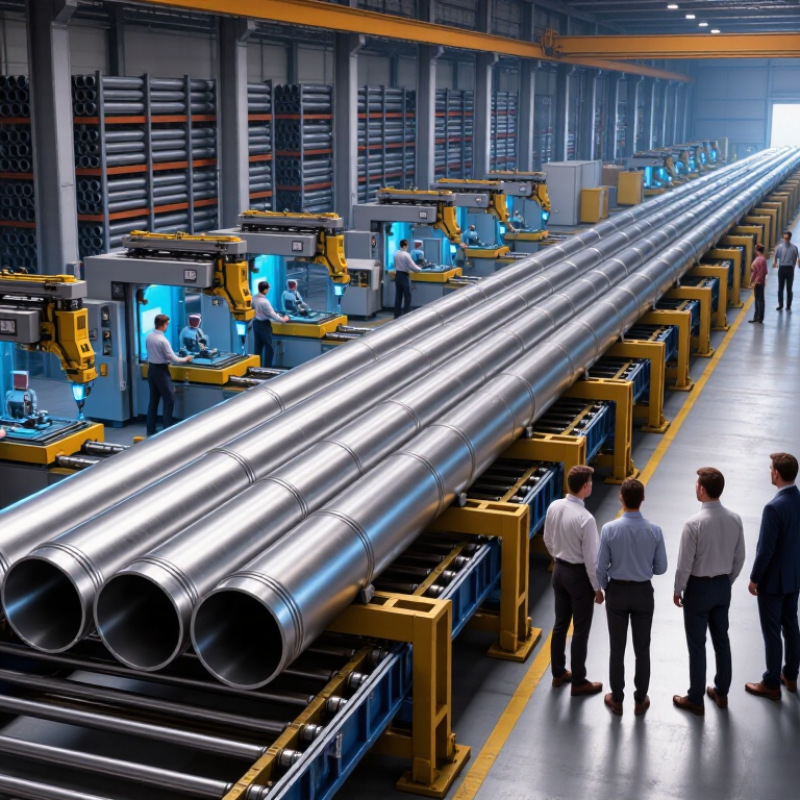
How to Choose Welded Steel Pipe Suppliers in 2026?

What to Know About Welded Steel Pipe Suppliers in 2026

Choosing a welded steel pipe supplier in 2026 requires more than comparing prices. Buyers should examine production experience, technical control, and documentation quality. A reliable supplier can explain its welding process, steel grades, wall thickness tolerance, and inspection procedures clearly. Ask for recent mill test certificates, heat numbers, and traceability records. These details connect each pipe to its original material batch.

Supplier capacity also matters. Confirm whether the factory can maintain stable output during busy periods. Request realistic lead times, not optimistic promises. Production samples should show clean weld beads, consistent dimensions, and protected ends. Independent testing may include hydrostatic pressure checks, ultrasonic inspection, tensile testing, and chemical analysis. The exact requirements depend on the project and applicable standards.

Digital communication is useful, but it cannot replace physical evidence. Factory videos may be outdated. A live audit or third-party inspection offers stronger proof. Environmental reporting is becoming more important, including energy use, recycled content, and waste handling. However, these claims need supporting records. I have seen buyers focus too heavily on a polished website and overlook weak after-sales communication. That is an easy mistake.

A practical supplier evaluation should include references from similar projects. Check how the supplier handles rejected pipes, schedule changes, and technical disputes. Response speed matters. So does honesty when a specification cannot be met. A cheaper offer may become expensive after rework, storage delays, or additional testing. Ask detailed questions, and record every answer.

How to Choose Welded Steel Pipe Suppliers in 2026?

When evaluating welded steel pipe suppliers, confirm that their production, testing, and documentation can consistently meet the required line-pipe grade. The chart compares minimum yield-strength levels for commonly specified grades, expressed in MPa. Ask suppliers for current mill test certificates, welding procedure qualifications, dimensional inspection records, and traceability documentation before placing an order.

Reference basis: internationally used line-pipe grade requirements; values should be verified against the edition and purchase specification applicable to each project.

How to Define Your Project’s Welded Steel Pipe Requirements

Before contacting suppliers, turn the design into a measurable pipe schedule. Record the outside diameter, wall thickness, length, steel grade, and quantity. State whether the pipe carries water, gas, slurry, or structural loads. Operating temperature, pressure, soil chemistry, and salt air can change the specification. Small details matter. Define the weld type, allowable tolerances, end preparation, coating, and inspection level. Do not write “standard pipe” without naming the applicable standard and edition.

Field experience shows that unclear requirements create expensive revisions. Ask whether the pipe will use ERW, spiral welding, or longitudinal submerged arc welding. Match the process to diameter, thickness, pressure, and service conditions. Specify required tests, such as hydrostatic testing, ultrasonic inspection, or weld visual examination. Request heat numbers, material certificates, weld records, and inspection reports. These documents help connect each pipe bundle to its production data.

Supplier evaluation should include capacity, quality controls, packaging, and delivery planning. Ask for sample reports, production photographs, and a clear nonconformance process. A strong supplier should explain limits, not promise everything. I once underestimated transport damage during planning; protected ends and dry storage would have prevented it. That mistake still influences my requirement checklist. Leave room for site measurements, because drawings are sometimes incomplete.

How to Evaluate Supplier Quality, Certifications, and Production Capacity

How to Choose Welded Steel Pipe Suppliers in 2026?

A supplier’s certificate is only a starting point. The ISO Survey 2022 recorded 1,265,216 ISO 9001 certificates worldwide, but certification alone cannot prove pipe quality. Check the certificate scope, expiry date, issuing body, and covered production site. Then request recent mill test certificates, heat numbers, chemical results, tensile data, and dimensional records. These documents should match the delivered bundle. They should also support traceability.

Production capacity needs evidence, not confident promises. World Steel Association data shows global crude steel output remained near 1.9 billion tonnes in 2024, creating wide differences between mills. Ask for monthly output, welding-line count, forming range, shift patterns, and maintenance records. Compare stated capacity with actual delivery history. A supplier producing 8,000 tonnes monthly may not safely accept a 20,000-tonne order. Capacity claims can age badly.

Review welding procedures, operator qualifications, non-destructive testing, and inspection frequency. Confirm compliance with the project’s required ASTM, EN, or equivalent specifications. Independent pre-shipment inspection adds useful distance. I would not trust a spreadsheet alone. A smaller mill may lack polished dashboards yet provide better heat-level traceability. That possibility deserves consideration. Check sample pipes physically: look for uneven weld beads, ovality, coating damage, and unclear markings. Practical evidence often reveals what certificates politely hide.

How to Choose Welded Steel Pipe Suppliers in 2026? - How to Evaluate Supplier Quality, Certifications, and Production Capacity

Evaluation Dimension Key Data or Requirement Recommended Benchmark Verification Evidence Suggested Weight
Quality Management System Documented procedures for purchasing, welding, inspection, nonconformance control, and corrective action A current ISO 9001 certificate with a scope covering steel pipe manufacturing Certificate number, validity dates, certification scope, and independent certification-body verification 15%
Product Standard Compliance Applicable standard, pipe grade, dimensions, wall thickness, end finish, and delivery condition The purchase specification should clearly identify the applicable standard, such as ASTM A53, ASTM A106, EN 10217, or API 5L, where relevant Approved technical data sheet, standard edition, product certificates, and contract review records 15%
Welding Process Control Welding procedure qualification, welder qualification, heat input, welding current, voltage, speed, and consumable control Qualified welding procedures and personnel for every production process and pipe grade supplied WPS, PQR, welder qualification records, consumable certificates, and production monitoring logs 15%
Inspection and Testing Chemical composition, tensile strength, yield strength, elongation, hydrostatic testing, dimensional inspection, and weld inspection Testing performed according to the specified product standard, with calibrated equipment and traceable results Mill test certificates, inspection and test plans, laboratory reports, calibration records, and non-destructive testing reports 20%
Traceability Link between heat number, raw material, production batch, inspection results, and shipped pipe Heat and batch identification maintained from incoming material through final delivery Heat-number records, permanent or durable markings, packing lists, and certificate-to-pipe reconciliation 10%
Production Capacity Applicable pipe diameter range, wall-thickness range, monthly output, number of production lines, and shift pattern Capacity should exceed the project requirement by at least 20% to provide schedule and maintenance flexibility Production-line list, machine specifications, recent capacity records, planned loading, and factory audit findings 10%
Delivery Reliability Production lead time, raw-material availability, on-time delivery rate, packaging method, and export documentation Documented on-time delivery performance of at least 95% for comparable orders Anonymized delivery records, production schedule, logistics procedure, and sample shipping documents 8%
Environmental and Safety Management Environmental controls, waste handling, occupational safety procedures, and incident management Current ISO 14001 and ISO 45001 certification when required by the buyer, project, or jurisdiction Valid certificates, environmental permits, safety records, training logs, and site-audit reports 4%
Commercial and Technical Support Quotation accuracy, engineering response time, change-control process, warranty terms, and claims handling Complete quotations, technically qualified contacts, written change control, and defined claim-response deadlines Quotation review, communication records, warranty policy, corrective-action examples, and contract terms 3%
Total Evaluation Weight 100%

How to Compare Pricing, Lead Times, Logistics, and After-Sales Support

How to Choose Welded Steel Pipe Suppliers in 2026?

Choosing welded steel pipe suppliers in 2026 requires more than comparing the lowest quoted price. Ask for a line-item quotation covering steel grade, wall thickness, testing, packaging, and delivery terms. A low number may exclude inspection or export handling. Request recent production records and sample quality documents. Those details reveal whether the supplier understands pressure, structural, or general-purpose applications. Keep the comparison honest. Never compare unlike specifications.

Lead time needs evidence, not optimism. Ask for material purchasing, welding, testing, and dispatch dates separately. Confirm monthly capacity and the effect of holidays or raw-material delays. A written schedule with milestones is more useful than “fast delivery.” Check port distance, loading methods, container limits, and damage procedures. Clarify whether pricing includes freight, insurance, duties, and unloading. I once underestimated inland transport; the pipe arrived on time at the port, but not at the jobsite. That mistake changed how I review logistics.

After-sales support should be measurable. Ask who handles nonconformity reports, response times, replacement decisions, and technical questions. Require traceability from heat number to inspection certificate. A reliable supplier should explain corrective actions without hiding behind vague promises. Test communication before signing: send a detailed question and observe the reply. If answers are late or incomplete, future claims may become difficult. One weakness remains: forecasts can fail when markets shift. Build reasonable buffers, document every agreement, and review performance after each shipment.

How to Select and Verify the Right Welded Steel Pipe Supplier

Choosing a welded steel pipe supplier in 2026 requires verification beyond a polished website. World Steel Association data reports 1,888.2 million tonnes of crude steel production in 2023. This scale creates opportunities, but also makes traceability essential. Request the supplier’s legal registration, manufacturing address, production capacity, and recent customer references. Then compare these details with independent records.

Ask for mill test certificates covering chemical composition, yield strength, tensile strength, elongation, and impact results. Every certificate should match the pipe’s heat number. Check that number on the pipe, bundle tag, and inspection report. For welded products, review welding procedures, operator qualifications, weld seam inspection, and non-destructive testing records. Ultrasonic or radiographic results should identify equipment, acceptance criteria, and inspector credentials. Vague statements are warning signs.

A factory audit can reveal more than documents. Observe coil storage, edge preparation, welding lines, calibration labels, and rejected-pipe handling. The OECD’s steel industry analysis repeatedly highlights overcapacity and market pressure, so unusually low prices deserve careful investigation. Ask whether testing is performed internally or by an independent laboratory. Verify laboratory competence against ISO/IEC 17025 requirements. I have seen complete paperwork fail when heat numbers were copied incorrectly. Small checks matter. Confirm tolerances through a pre-shipment inspection, including outer diameter, wall thickness, length, coating, packaging, and marking. No checklist is perfect. Recheck critical evidence.