
Made in America

Get Connected With

JointsCouplings.com White Logo

Opening Hours M-F: 07:00 AM to 4:00 PM (PST)

How to Choose the Right Niobium Plate?

Choosing the right Niobium Plate starts with service conditions, not a supplier’s catalogue image. Niobium is valued for high-temperature strength, corrosion resistance, superconducting applications, and selected chemical environments. However, performance depends on purity, alloy grade, thickness, surface finish, and fabrication history. The U.S. Geological Survey’s Mineral Commodity Summaries 2024 and 2025 show that Brazil supplies more than 90% of global niobium mine production. That concentration matters for procurement planning. Supply continuity, lead time, and material traceability deserve close attention. A low quoted price may hide limited stock, extended delivery, or incomplete documentation.

Technical selection should follow recognized specifications. ASTM B393 covers wrought niobium and niobium-alloy products, including requirements for chemical composition, mechanical properties, and testing. Buyers should request mill certificates, heat numbers, dimensional tolerances, and inspection records. Check them carefully. Plate intended for vacuum equipment may require stricter surface control than plate used in a less demanding fabrication environment. The same thickness can behave differently after rolling, annealing, cutting, or welding. That detail is easy to underestimate.

A practical decision also considers temperature, stress, corrosion exposure, forming method, and final inspection. Ask whether the plate needs commercially pure niobium or an alloy such as Nb-1Zr. Confirm the required grade before discussing price. Industry market assessments from the USGS and producer disclosures suggest that regional supply conditions can influence availability and cost. Still, market data does not replace engineering judgment. A perfect specification on paper can fail in production. The best choice is documented, application-specific, and honestly reviewed.
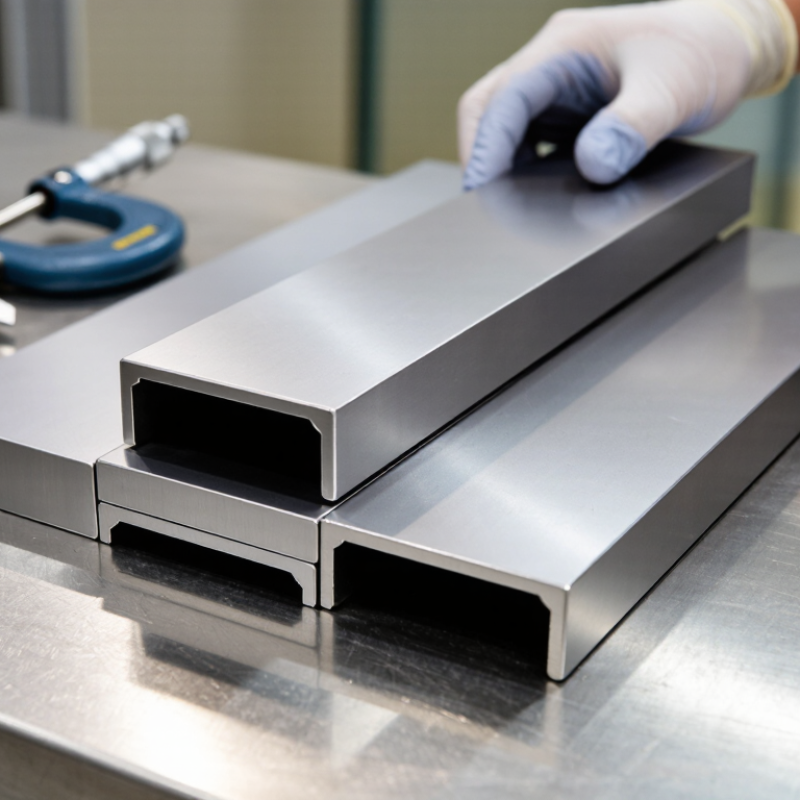
How to Choose the Right Niobium Plate?

Understanding Niobium Plate Properties and Common Applications

How to Choose the Right Niobium Plate?

Niobium plate is valued for its high melting point, corrosion resistance, and low-temperature superconducting behavior. Its melting point is about 2,477°C. A stable oxide layer helps protect the surface from many corrosive environments. The material is also ductile and can be machined, formed, and welded with suitable procedures. These properties support applications in chemical processing equipment, aerospace components, vacuum systems, and superconducting magnets. Plate thickness, purity, surface finish, and dimensional tolerance should match the working conditions. A thicker plate may improve rigidity, but it can increase machining time and material cost. That trade-off is easy to overlook.

Tips: Define the temperature, pressure, chemical exposure, and load before ordering. Check the required grade and purity. Request a material certificate, inspection report, and clear test methods. Examine the surface for scratches, pits, discoloration, or edge damage. Small defects can become serious during forming or welding. Ask whether the plate was annealed when improved ductility is important.

Application details often decide the best choice. Chemical equipment may need strong corrosion resistance and reliable weldability. Superconducting systems demand controlled composition and extremely clean surfaces. Aerospace designs may prioritize low contamination, predictable strength, and strict dimensional control. Niobium is not automatically the best solution for every environment. Strong alkalis, joining conditions, and repeated thermal cycling require careful review. In practice, early specifications are sometimes too general. A technical discussion with a qualified materials engineer can prevent an expensive mismatch.

Identifying the Required Grade, Thickness, and Dimensions

How to Choose the Right Niobium Plate?

Selecting niobium plate starts with the required grade, not the price. Commercially pure grades suit many corrosion-resistant and high-temperature applications. Alloyed grades may provide better strength, but they can change forming behavior and weld response. ASTM B392 covers niobium and niobium alloy sheet, strip, and plate. Specify the exact grade designation, chemistry limits, and delivery condition on the purchase order.

Thickness should reflect temperature, pressure, corrosion allowance, and machining loss. A 2 mm plate may look adequate on a drawing, yet polishing or repeated forming can remove valuable material. In practical sourcing, I request the finished thickness, starting thickness, and permitted tolerance separately. Keep it measurable. Dimensional accuracy matters.

Length and width must also match the cutting plan. A standard plate can create excessive scrap when the component needs narrow strips or circular blanks. The USGS Mineral Commodity Summaries 2025 estimates 2024 global niobium mine production at about 100,000 metric tons of niobium content. That figure describes raw supply, not plate availability, so lead times still need confirmation. Ask for mill test reports, tensile data, hardness results, and surface inspection records. Ultrasonic testing may be sensible for critical sections, though it is not automatically necessary for every plate. I would not assume a thicker plate is safer. It may simply increase weight, cost, and forming difficulty. The drawing may need revision.

How to Choose the Right Niobium Plate? - Identifying the Required Grade, Thickness, and Dimensions

Use the table below to define the niobium plate specification before requesting a quotation or preparing a purchase order.

Selection Factor Recommended Specification or Data When to Choose It Important Verification Point
Material family Commercially pure niobium plate or sheet, specified to the applicable ASTM B393 material grade. For applications requiring niobium’s high melting point, corrosion resistance, and superconducting properties. Confirm the exact ASTM B393 grade, UNS designation, chemical composition, and supply condition on the material certificate.
Typical unalloyed grade selection Grade 1 / Grade 2
Use the specific grade and corresponding UNS designation required by the design or governing specification.
Grade selection should be based on required purity, mechanical properties, forming requirements, and service temperature. Do not select a grade only by the label “pure niobium”; confirm the grade designation and certified chemistry.
Thickness for light fabrication 0.50–1.00 mm
Common planning sizes: 0.50 mm, 0.75 mm, and 1.00 mm.
Thin covers, diaphragms, liners, laboratory components, and parts requiring relatively easy forming. Check the minimum bend radius, flatness, surface condition, and whether machining or welding will be performed.
Thickness for general plate work 1.50–5.00 mm
Common planning sizes: 1.50 mm, 2.00 mm, 3.00 mm, and 5.00 mm.
General fabrication, corrosion-resistant components, structural inserts, and machined parts. Allow for machining loss, dimensional tolerance, edge preparation, and any post-fabrication heat treatment.
Thickness for rigid or machined parts 6.00–12.00 mm or greater, subject to mill capability and order quantity. Components requiring stiffness, deeper machining, heavy-duty handling, or additional material for finishing. Confirm availability, thickness tolerance, internal soundness, flatness, and the required inspection level.
Small cut-piece dimensions Approximately 100 × 100 mm to 300 × 300 mm. Prototype work, laboratory testing, small components, and trial fabrication. Specify whether dimensions are nominal, finished, or saw-cut dimensions, and state the permitted cutting tolerance.
Medium plate dimensions Approximately 300 × 300 mm to 600 × 600 mm. Small-batch fabrication and components that require a larger working area. Confirm the usable area after edge trimming and identify any required rolling or grain-direction information.
Large plate dimensions Approximately 600 × 600 mm to 1,000 × 2,000 mm, depending on thickness and production capability. Large liners, panels, vacuum or high-temperature components, and parts requiring fewer welded joints. Check maximum available plate size, flatness, handling limitations, packaging, and transport protection.
Surface condition Specify as-rolled, pickled, chemically cleaned, ground, or polished surface as required. Choose a cleaned or polished surface for vacuum, chemical, laboratory, or appearance-critical applications. Define allowable scratches, pits, discoloration, oxide scale, and surface roughness where applicable.
Forming requirement State whether the plate will be bent, deep-drawn, spun, or otherwise cold-formed. Important when the finished part contains curves, flanges, or tight-radius bends. Request suitable temper or annealed condition when needed, and confirm forming limits before production.
Welding requirement Identify the welding process, joint design, filler-metal requirement, and shielding-gas purity. Required for assemblies exposed to high temperature, corrosive media, or vacuum service. Niobium is highly reactive at elevated temperature; effective inert-gas shielding and clean joint preparation are essential.
Dimensional tolerance Specify thickness, length, width, squareness, flatness, and cutting tolerances separately. For precision-machined parts or components that must fit within a controlled assembly envelope. Use the applicable material standard or agreed purchase specification rather than relying on an unspecified “standard tolerance.”
Certificate and inspection Material test report with grade, chemical analysis, mechanical data where applicable, dimensions, heat or lot number, and inspection results. For traceable production, regulated applications, vacuum equipment, and quality-controlled projects. State required documentation before order placement; inspection requirements can affect lead time and cost.
Reference Property Approximate Value Design Relevance
Density of niobium Approximately 8.57 g/cm³ at room temperature Use this value for preliminary weight estimation; final weight depends on actual dimensions and tolerances.
Melting point Approximately 2,468°C Indicates very high-temperature capability, but actual service temperature also depends on atmosphere, contamination, stress, and component design.
Electrical transition temperature Approximately 9.2 K for high-purity niobium Relevant to superconducting applications; purity, processing history, geometry, and magnetic conditions must also be controlled.
Specification reminder: The final purchase description should include the material standard and grade, thickness, length, width, quantity, surface condition, dimensional tolerances, forming or welding requirements, inspection documents, and packaging requirements. The dimensions shown above are practical planning ranges rather than universal standard sizes; confirm availability and tolerances for the selected grade and thickness.

Matching Niobium Plates to Temperature and Corrosion Conditions

How to Choose the Right Niobium Plate?

Matching Niobium Plates to Temperature and Corrosion Conditions

Temperature is only one part of niobium plate selection. The surrounding atmosphere matters just as much. In vacuum or inert gas, niobium can perform at very high temperatures. In air, oxidation becomes increasingly important as temperature rises, especially during long exposure. A plate designed for a furnace may fail early if oxygen enters through a leaking seal.

Check the actual working temperature, not only the equipment rating. Include heating speed, cooling cycles, contact with other metals, and local hot spots. Thin plates respond quickly to temperature changes. Thicker plates retain heat and may experience greater thermal stress. Small details matter here.

Corrosion conditions need equal attention. Niobium forms a stable oxide film, giving it strong resistance in many chemical environments. However, fluoride-containing media, strong alkaline solutions, and certain oxidizing mixtures can require additional evaluation. Concentration, pressure, impurities, and weld quality may change the result. A plate that performs well in a laboratory beaker may behave differently in a heated production vessel.

Review the material certificate, chemical composition, thickness tolerance, and surface condition. Ask for corrosion data at the expected temperature. Testing a small coupon is often wiser than trusting a general resistance chart. It may feel slower, but replacing a corroded plate is rarely simple. Selection can still be imperfect when operating conditions are poorly measured. That uncertainty should remain visible in the final specification.

Evaluating Surface Finish, Fabrication, and Quality Standards

How to Choose the Right Niobium Plate?

Evaluating Surface Finish, Fabrication, and Quality Standards

A niobium plate should be judged by its final use, not appearance alone. In fabrication work, I inspect both sides under angled light. Fine scratches can become stress concentrators after forming or machining. Ask for the measured surface roughness, usually reported as Ra, rather than accepting “smooth” as a description. Edge condition matters too. Clean, square edges reduce setup problems during cutting and welding.

Fabrication history also deserves attention. Rolling direction can influence forming behavior and dimensional stability. Confirm thickness tolerance, flatness, grain orientation, and any annealing treatment before production begins. For welded assemblies, request evidence of controlled shielding and contamination prevention. Niobium reacts readily with oxygen at elevated temperatures. Small handling errors may cause discoloration or weaker zones. This is easy to underestimate.

Quality documentation should connect the plate to a traceable heat or batch number. A reliable material certificate should list chemical composition, dimensions, mechanical results, and applicable inspection methods. Standards such as ASTM or ISO may define useful testing and reporting practices, but the exact grade and application must match. Visual inspection is not enough. Ultrasonic testing, dimensional checks, and independent laboratory verification can reveal issues hidden beneath a clean surface.

Do not rely on polished photographs.

In my experience, supplier answers sometimes sound precise while leaving key details unclear. I would challenge vague terms, compare certificates, and request a small trial piece when forming behavior is critical. That extra step costs time, but it can expose an unsuitable plate before the full fabrication run.

Comparing Suppliers, Certifications, Pricing, and Delivery Options

How to Choose the Right Niobium Plate?

Choosing a niobium plate starts with the supplier, not the lowest quotation. Experienced buyers should check production history, technical staff, and quality controls. Ask whether the supplier can provide a heat number and full material traceability. A reliable supplier should also share dimensional tolerances, surface condition, and available niobium grades. These details matter when a plate must fit a machined assembly or withstand high temperatures.

Certifications should support the purchase, not decorate it. Request a current material test report showing chemical composition, thickness, mechanical data, and inspection results. ISO 9001 certification can indicate a controlled quality system, but it does not replace product-specific testing. Confirm whether inspection follows the required ASTM, ASME, or project standard. I once focused too heavily on certification documents and overlooked edge quality. That was a costly lesson. Ask for clear photographs or an inspection sample when the surface finish is important.

Pricing needs a wider view. Compare the plate price, cutting fees, testing charges, packaging, freight, duties, and minimum order quantity. A cheaper offer may hide a longer production schedule. Discuss delivery dates in writing, including production time and shipping time. Request protective packaging, especially for thin plates that can bend during transit. Keep a realistic buffer for customs or inspection delays. Fast delivery sounds attractive, but incomplete documents can slow the shipment. Small mistakes happen, so confirm grade, dimensions, quantity, and delivery terms before payment.

How to Choose the Right Niobium Plate?

Supplier selection should balance total purchasing cost, certification quality, delivery reliability, technical conformity, and order flexibility. The chart shows an illustrative buyer-side weighting model for comparing niobium plate offers.

Before placing an order, verify the applicable specification, such as ASTM B393 where relevant, request material test documentation, confirm dimensional tolerances, and compare quoted lead time and shipping terms.