
Made in America

Get Connected With

JointsCouplings.com White Logo

Opening Hours M-F: 07:00 AM to 4:00 PM (PST)

How to Choose a Feather Meal Processing Machine

Choosing a Feather Meal Processing Machine is not just a matter of comparing prices or motor sizes. The right system must match the plant’s raw-material volume, available floor space, energy supply, and product-quality targets. Feather batches can vary in moisture and density. That variation affects feeding, cooking, drying, and grinding. A machine that looks suitable on a brochure may perform differently during a full production shift.

Quality-management expert W. Edwards Deming said, “Quality comes not from inspection, but from improvement of the production process.” His principle is useful here: assess the complete processing line, not one machine in isolation. Ask suppliers for documented capacity figures, operating conditions, maintenance intervals, and material specifications. Check where operators will load material, clean screens, and reach service points. Small details matter. A narrow access panel can turn routine maintenance into lost production time. A demonstration using representative material can reveal issues that a specification sheet cannot.

This guide outlines practical criteria for comparing a Feather Meal Processing Machine, from capacity and heat control to construction and after-sales support. It also considers the trade-offs between initial cost and dependable operation. No selection is perfect. Even experienced buyers can overlook a constraint. Verify claims with site-specific data, and leave room to question assumptions before committing.
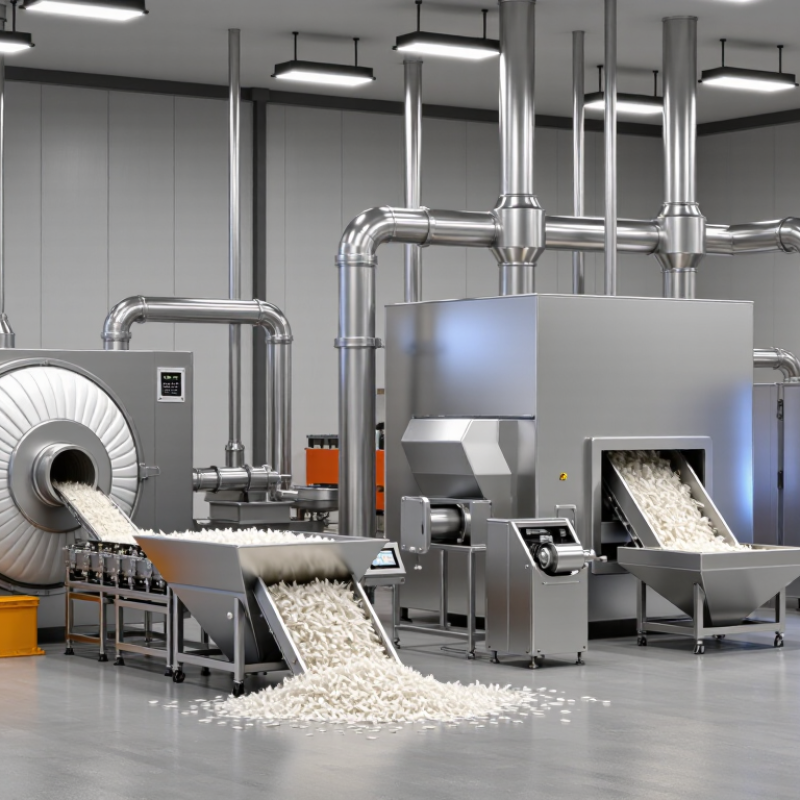
How to Choose a Feather Meal Processing Machine

Assess Feather Input, Moisture, and Required Production Capacity

Feathers arrive wet, bulky, and inconsistent. A load from a small poultry plant may contain more water and blood than a clean, drained batch. Measure moisture across several deliveries before selecting a machine; one sample can mislead. Record daily wet weight, batch size, and available operating hours. Then compare machines using raw-feed capacity, not finished-meal output.

Moisture changes both drying demand and practical throughput. Feedipedia’s feather-meal datasheet, compiled by INRAE, CIRAD, AFZ, and FAO, reports average crude protein of about 86.6% on a dry-matter basis. That figure describes processed meal, not incoming feathers, so it cannot substitute for a moisture test. Size the system around your measured feed conditions and required daily output. Leave room for downtime and seasonal swings. A tidy spreadsheet can still hide a bottleneck.

Tips: Weigh and test a representative batch. Ask suppliers to run your actual feathers through a trial, and record feed rate, moisture, and output. Measure, don’t guess.

Compare Processing Methods for Hydrolysis, Drying, and Grinding

Choosing a feather meal processing machine starts with the hydrolysis stage. Steam pressure, temperature, and holding time affect how thoroughly keratin breaks down. A batch vessel offers straightforward control, while a continuous system may suit steady, higher-volume production. Compare how each handles changes in incoming feather moisture and load size. Small variations matter.

Drying options also deserve close attention. Direct-heat dryers can respond quickly, but uneven airflow may leave damp pockets or over-dry material near the outlet. Indirect systems separate the heat source from the product, which can help with temperature control. Check moisture readings at several points, not just at discharge. A polished specification sheet can still mislead if it ignores cleaning access, heat recovery, or actual operating conditions.

Grinding should match the finished meal’s intended particle size. A hammer mill can process dried material quickly, though screen choice and wear affect consistency. A finer grind is not always better; it can increase energy use and create more dust. Ask suppliers for test runs using representative material, then compare throughput, final moisture, particle size, and maintenance needs. I would still leave room for adjustment: feedstock changes, and no single setting stays ideal forever.

Evaluate Machine Design, Materials, Automation, and Energy Use

A feather meal processing machine must move wet, fibrous material without frequent plugging. Compare the layout of the cooker, press, dryer, and grinder as one connected process. A narrow transfer point can slow the whole line. Check whether operators can reach screens, bearings, and cleanout doors without dismantling major sections. Small details matter.

Materials face heat, moisture, and abrasion. Product-contact surfaces should resist corrosion and be easy to clean; wear-prone areas may need replaceable liners. Ask for material specifications, not just a general claim of durability. Inspect welds, seals, and access covers, since overlooked gaps can hold residue. These choices affect maintenance as much as purchase cost.

Automation can regulate temperature, pressure, feed rate, and dryer conditions. Useful controls show readings clearly and provide alarms when values drift. Still, automation is only helpful when staff can understand and maintain it. Energy use deserves the same scrutiny. Request consumption figures under comparable operating conditions, and check insulation, motor efficiency, and heat recovery options. Watch the meter. A short production trial with your own raw material can reveal uneven drying or excess power demand, though one trial may not represent every season or shift.

How to Choose a Feather Meal Processing Machine - Evaluate Machine Design, Materials, Automation, and Energy Use

Evaluation area What to evaluate Useful data or acceptance check Why it matters
Process layout Check that the proposed line covers receiving, size reduction if required, steam hydrolysis, dewatering or drying, milling, screening, and conveying. Request a process-flow diagram showing equipment, transfer points, dust-control provisions, and the basis for the stated throughput. Feathers contain keratin and typically require controlled hydrolysis before the resulting material is dried and milled.
Hydrolyzer design Assess vessel capacity, loading and discharge arrangements, mixing or agitation where applicable, steam distribution, insulation, and access for inspection and cleaning. Ask for the operating temperature, pressure, batch or continuous cycle time, usable capacity, and process records for the intended feedstock. Confirm pressure-vessel compliance with applicable local codes. Hydrolysis performance depends on the combination of time, temperature, pressure, and feedstock conditions; a nameplate capacity alone does not establish product performance.
Materials and fabrication Identify the material used for each product-contact component, including the vessel interior, piping, valves, seals, and conveyors. Check weld finish and cleanability. Compare documented material grades with feedstock chemistry, cleaning chemicals, temperature, and chloride exposure. Stainless steel grades such as 304 or 316L may be considered, subject to a corrosion review. Material suitability depends on the actual operating and cleaning environment; corrosion resistance should not be assumed from the term “stainless steel” alone.
Drying and milling Review dryer type, heat source, airflow and exhaust arrangement, temperature control, mill configuration, screen access, and dust-management equipment. Specify the required finished-product moisture and particle-size distribution. Request test results from representative material and details of how moisture and particle size are measured. Drying and grinding requirements depend on the incoming moisture, desired product specification, and downstream handling or use.
Automation and safety Review the control system, instrument coverage, alarms, recipe or batch records, interlocks, emergency stops, and manual operating procedures. Confirm monitoring and recording of critical process variables such as temperature, pressure, and cycle time. Check that safeguards prevent unsafe operation and that sensor calibration is documented. Consistent monitoring supports repeatable operation, troubleshooting, and safe use of pressurized equipment.
Energy use Compare electrical demand for motors, fans, pumps, and conveying equipment, as well as steam or other thermal-energy demand. Request measured or guaranteed electricity use in kWh per tonne of finished meal and steam use in kg per tonne of stated feedstock. Require the feedstock moisture, operating rate, and test method used for each figure. Normalized figures make comparisons more meaningful than installed motor power alone; actual consumption varies with feedstock and operating conditions.
Capacity and verification Check the rated capacity against the facility’s expected operating schedule, feedstock variability, utilities, and planned maintenance time. Define a commissioning test using representative feathers and agreed criteria for throughput, product moisture, particle size, and energy consumption. Record test conditions and results. A defined acceptance test helps verify performance under relevant conditions rather than relying only on nominal or theoretical ratings.

Check Hygiene, Safety, Emissions, and Regulatory Requirements

A feather meal machine should be judged by what it keeps out, not only what it cooks. Check whether product-contact surfaces are corrosion-resistant, drainable, and accessible for cleaning. Ask how operators inspect the cooker, conveyor, and discharge points for trapped residue. Small details matter. In the United States, FDA 21 CFR Part 507 sets current good manufacturing practice and preventive-control requirements for animal food; confirm how the machine supports your facility’s documented sanitation and hazard controls. Requirements vary by location and process.

Safety needs evidence, not just a warning sticker. The U.S. Bureau of Labor Statistics recorded 5,283 fatal work injuries in 2023, across all industries; this is not a machine-specific figure, but it reinforces the need to examine guarding, emergency stops, lockout access, and safe maintenance procedures. Ask to see an operating demonstration. Check whether hot surfaces, moving parts, and dust-handling equipment are clearly addressed. A polished brochure is not enough.

For emissions, request measurements or engineering calculations for your expected throughput, fuel, and control equipment. EPA’s AP-42 Chapter 9.5.3, “Meat Rendering,” reports emission factors by rendering process and control configuration, illustrating why generic claims may not fit your installation. Ask about vapor capture, odor control, dust collection, and where condensate goes. Then compare the proposal with local permits and reporting rules. I would still want site-specific verification before purchase.

Compare Suppliers, Maintenance Needs, and Total Operating Costs

When comparing feather meal processing machine suppliers, request a test run using material with similar moisture and throughput to your plant. Compare finished meal consistency, energy use per tonne, and cleaning time—not just rated capacity. Ask for motor power, wear-part life, spare-parts lead times, and a written service response target. The U.S. Department of Energy’s 2014 United States Industrial Electric Motor Systems Market Opportunities Assessment reports that motor-driven systems account for about 68% of U.S. industrial electricity use. This makes motors, fans, and conveyors worth checking closely, though actual machine consumption varies.

Maintenance details can change the economics. Ask how operators access bearings, screens, and seals, and whether routine work requires specialist tools. Small leaks matter. Request a sample maintenance schedule and prices for common replacement parts. A supplier’s claims are useful, but recent service records from comparable installations are more convincing. NIST Handbook 135 (2022) recommends life-cycle cost analysis that includes purchase, energy, operation, maintenance, and replacement costs.

Build a simple annual comparison using your expected operating hours, local electricity rates, labor time, and planned shutdowns. Include freight, installation, and training. Check warranty exclusions and whether critical parts are stocked nearby. A low purchase price may still mean longer downtime. I would leave room for uncertainty: feather composition and moisture can shift wear and energy demand, so ask suppliers to state their test conditions clearly.