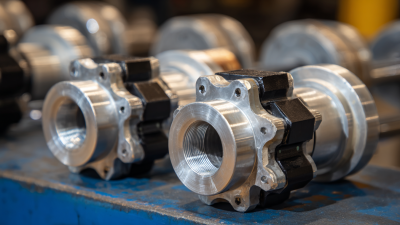
How to Choose the Right Pipe Joints for Your Project?
When embarking on a project that involves plumbing or construction, selecting the right pipe joints becomes crucial. Pipe joints serve as the connectors between different sections of piping, playing a vital role in ensuring the integrity of the entire system. The choices may seem overwhelming, yet understanding the basics can lead to a more efficient installation.
Consider the material and type of joint required for your specific project. For instance, metallic joints may be ideal for high-pressure scenarios, while rubber joints are more flexible and suitable for seismic applications. Each type offers unique advantages and potential challenges. It's essential to weigh these factors carefully.
Moreover, installation plays a key role in performance. Poorly fitted pipe joints can lead to leaks or system failures. Many overlook this aspect, thinking it’s a minor detail. However, precision in fitting is the foundation of a reliable system. Reflecting on these aspects can lead to better decision-making in your project.
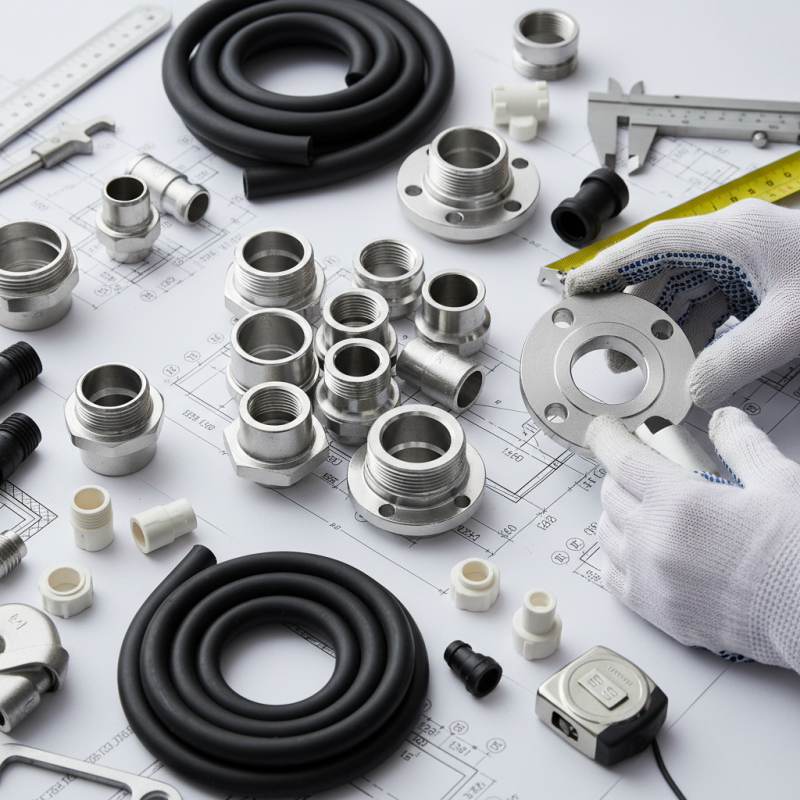
Types of Pipe Joints and Their Applications
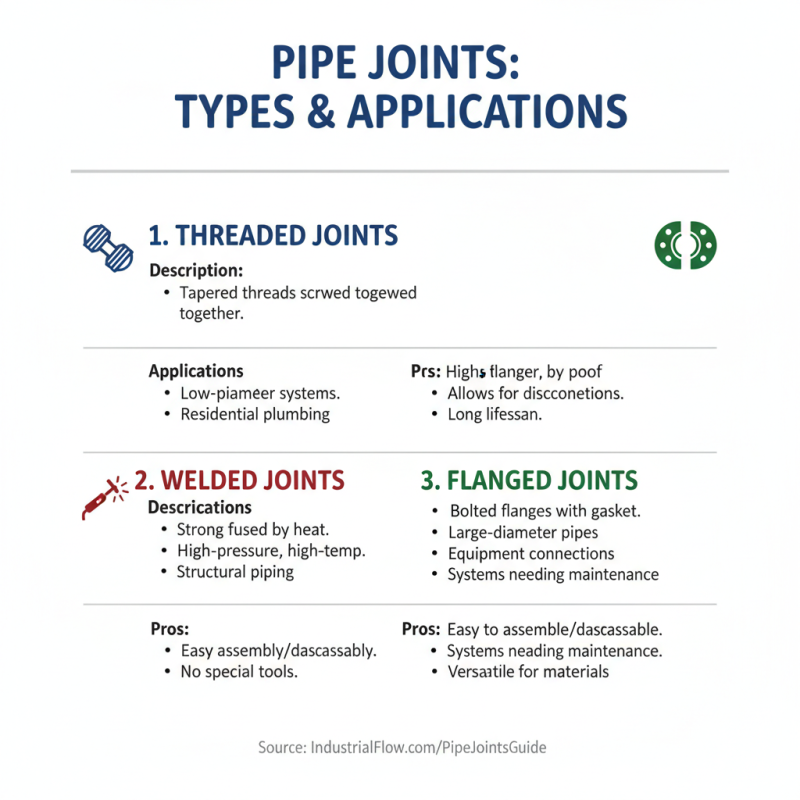
When selecting the right pipe joints, understanding their types and applications is crucial. There are several widely used types of pipe joints, including threaded, welded, and flanged joints. Each type has unique characteristics suited for different applications.
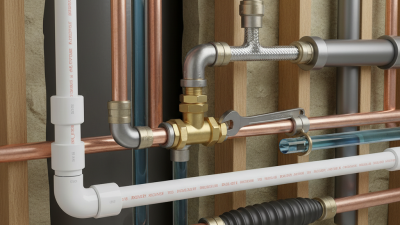
Threaded joints are common in residential plumbing. They are easy to install and are great for low-pressure systems. However, they can leak if not tightened properly. A report by the American Society of Mechanical Engineers (ASME) indicates that over 35% of plumbing failures stem from poor connections.
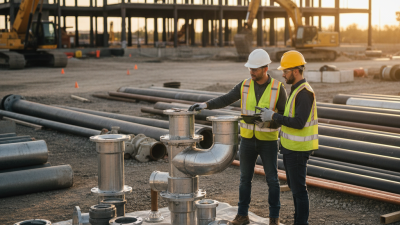
Welded joints provide a strong seal that resists high pressure. They are often used in industrial applications. Yet, improper welding can lead to catastrophic failures. According to a study from the American Welding Society, nearly 20% of weld failures are due to insufficient technique.
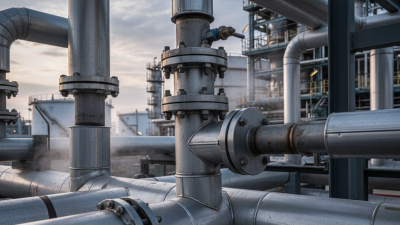
Flanged joints allow for easy disassembly and inspection. They are ideal for large pipes in chemical plants. However, they can be costly and require careful alignment. Choosing the right type involves assessing project requirements and potential pitfalls. Each joint type poses unique advantages and drawbacks that should be weighed carefully.
Factors to Consider When Choosing Pipe Joints
When selecting pipe joints, several factors come into play. The material is vital. Different types impact durability and flexibility. For example, metal joints offer strength. Plastic alternatives may be lighter but less durable. Examine the environment where the pipes will be used. High temperatures and corrosive substances can damage weaker materials.
Another crucial aspect is the size and compatibility. Not all joints fit every pipe. Measuring accurately is essential. A slight miscalculation can lead to leaks or failures. It's also worth considering the connection type. Some joints require welding, while others offer threading or pushing methods. Each choice affects installation difficulty.
Don’t forget about future maintenance. Accessible joints can simplify repairs down the line. Planning for potential changes is smart. Sometimes, we overlook this aspect. A need for modifications can lead to costly adjustments later. Consider the long-term impact of your choices. Reflect on your project requirements. Balance immediate needs with future possibilities.
Materials Used in Pipe Joint Construction
When selecting pipe joints, the materials used play a vital role. Common materials include PVC, metal, and rubber. Each has unique properties.
PVC is lightweight and resistant to corrosion. It is ideal for drainage systems. However, it may not withstand high temperatures. Over time, it can become brittle.
Metal joints, such as steel or copper, offer strength and durability. They are suitable for high-pressure systems. Yet, they are prone to corrosion if not treated properly. Maintenance is crucial.
Rubber joints provide flexibility. They can absorb vibrations and accommodate movement. However, they may degrade over time, especially in extreme temperatures.
Choosing the right material requires careful consideration. Think about the specific project requirements. Temperature, pressure, and chemical exposure are essential factors. Every material has its pros and cons.
It's important to align them with your project's goals. Sometimes, the wrong choice can lead to costly repairs later. Reflect on your options and seek expert advice if needed.
Installation Techniques for Different Pipe Joints
Choosing the right installation technique for pipe joints can significantly impact project success. Different types of pipe joints require unique approaches. For instance, welding ensures strong, permanent connections but demands skilled labor. According to industry data, improper welding can lead to failures in up to 25% of joint connections in high-stress environments.
On the other hand, threaded joints offer ease of assembly and maintenance. However, they are more prone to leaks if not installed correctly. A study revealed that nearly 30% of leaks in piping systems stem from improperly made threaded joints. Ensuring precise alignment and using appropriate sealing methods can mitigate this risk.
Additionally, the use of compression joints provides flexibility. While they are easier to install, they also require careful inspection post-installation. Only a fraction of users check the tightness of these joints, which could lead to long-term issues. Each technique has its own advantages and disadvantages, highlighting the need for careful consideration and skilled execution in every project.
Common Mistakes to Avoid When Selecting Pipe Joints
Selecting the right pipe joints can be tricky. Common mistakes often lead to costly project delays. One major error is ignoring compatibility. Not all materials work well together. For instance, PVC joints might not fit with metal pipes, causing leaks.
Another frequent mistake is overlooking pressure ratings. Pipe joints must handle the system's pressure. Reports show that nearly 30% of failures result from inadequate pressure ratings. This can lead to significant safety hazards. Always check specifications before making a choice.
Tip: Always double-check your specifications. Ensure that all components are compatible with the intended use.
Also, consider environmental factors. Temperature fluctuations impact joint performance. If joints are not rated for extreme temperatures, they may fail. This oversight can derail an entire project. Remember, what's on paper might not hold up in practice.
Tip: Conduct field tests to ensure the joints perform under real-world conditions.