What Is the Best Air Power Rock Drill from China?
Choosing the best Air Power Rock Drill from China depends on the work, not just the name on its housing. A quarry crew drilling repeated holes may value steady impact and easy servicing. A contractor working on a narrow hillside may care more about weight, grip, and maneuverability. The right comparison starts with the rock type, required hole diameter, drilling depth, and available air supply. Small details matter. A hose that kinks, a worn bit, or an inconsistent compressor can affect progress as much as the drill itself.
Chinese manufacturers offer different designs and configurations, so buyers should compare verified specifications rather than rely on promotional claims. Check air consumption, impact rate, operating pressure, tool weight, and compatible drill bits. Ask how the supplier tests equipment, which wear parts are readily available, and what technical support comes with the purchase. Clear documentation and responsive service are useful signs of a dependable supplier, though they cannot guarantee performance at every site. There is no perfectly neat answer. A specification sheet can look convincing while leaving practical questions unanswered. Where possible, request test records or a demonstration under conditions close to your own. This guide explains how to assess the main options and weigh their trade-offs. The best choice is the one that suits the ground, crew, compressor, and maintenance plan—not simply the lowest price.
How an Air-Powered Rock Drill Works
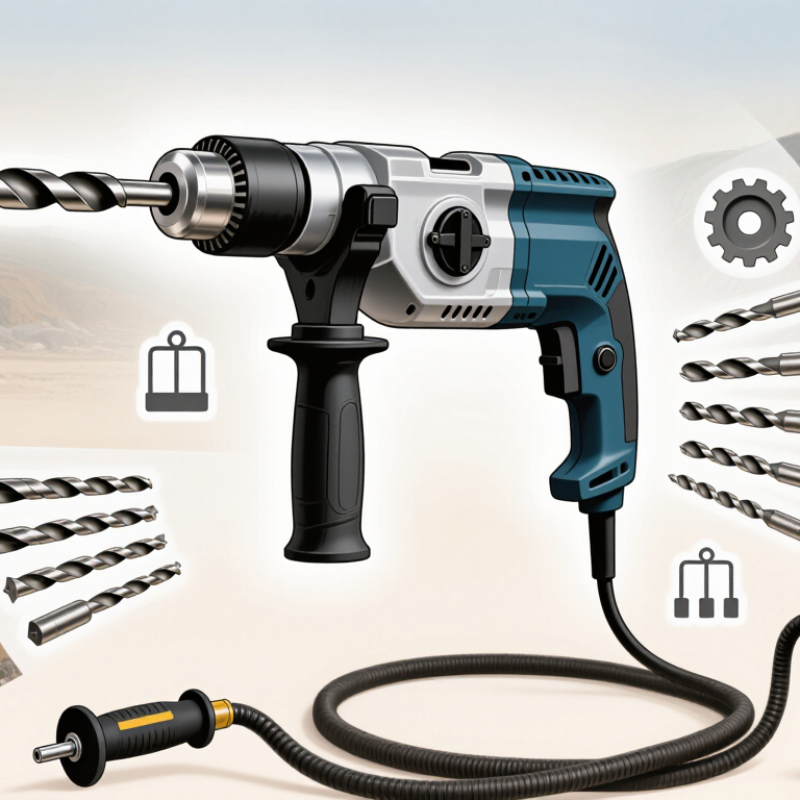
An air-powered rock drill converts compressed-air energy into repeated piston impacts. Air passes through a control valve, drives the piston forward, then shifts it back for another stroke. The piston strikes the drill steel, while a rotation mechanism turns the bit between impacts. The sound is unmistakable. So is the vibration.
Performance depends on more than pressure at the compressor. Airflow, hose diameter, moisture, filter condition, and lubrication all affect the energy reaching the piston. The U.S. Department of Energy’s Improving Compressed Air System Performance sourcebook reports that leaks can waste 20–30% of compressor output in poorly maintained systems. That figure describes compressed-air systems generally, not rock drills alone, but it shows why leak checks matter. A gauge reading can look fine while a narrow hose or leaking coupling starves the tool. I would check airflow at the drill, not just the compressor. Dust control matters too: drilling can release respirable silica, so use suitable suppression and follow the applicable exposure controls. Even a well-built drill feels underpowered when its air supply is neglected.
What Sets Chinese Rock Drill Models Apart
Chinese air power rock drills are not one uniform category; model differences often reflect rock type, hole size, and working conditions. Some suit shallow bench work, while others are designed for deeper holes or harder formations. Compare operating data, not country of origin. Check rated air pressure, air consumption, impact rate, and shank type against the compressor and bits already on site.
Weight and balance matter when an operator holds a drill through repeated cycles. A lighter body may reduce fatigue, but it does not automatically drill faster. Check vibration control, handle layout, muffler design, and access for inspecting the front head. Small details matter. In dusty, wet, or cold conditions, lubrication access and corrosion-resistant finishes can affect daily reliability. Chinese models vary widely in construction, available wear parts, and price.
Ask for test records from comparable rock and bit conditions, plus a clear parts list and maintenance schedule. A supplier should explain expected air use and wear intervals, rather than rely on one headline output figure. If possible, compare a sample on the actual job. A drill can look efficient on paper yet run poorly with an undersized compressor. No model is best for every crew; fit performance, service support, and operating demands to the work.
What Is the Best Air Power Rock Drill from China? What Sets Chinese Rock Drill Models Apart?
Typical specified air-supply pressure for pneumatic rock drills
Many pneumatic rock drills specify an operating air pressure in the approximate range of 0.40–0.63 MPa. The required pressure varies by model, so check the drill’s technical specifications and ensure the compressor and air line can supply the required pressure and airflow. Pressure alone does not determine which drill is best; also compare drill weight, impact performance, hole size, and service requirements.
Which Performance Factors Matter Most
Choosing an air power rock drill from China starts with the job, not the biggest number on a specification sheet. For hard, fractured rock, impact energy and blow frequency affect drilling speed and bit wear. Match the drill’s air-pressure and airflow requirements to the compressor, using the same hose length and working conditions specified by the supplier. Otherwise, rated performance may not reflect what reaches the tool underground or at the work face.
Bit compatibility matters. Check shank dimensions, rotation speed, and flushing arrangements before comparing prices. A mismatch can cause poor cutting or extra downtime. Weight and handle design also deserve attention, especially when operators drill overhead or work through long shifts. Vibration, noise, and exhaust direction can change comfort and communication on site. Small details, but not small after eight hours.
Durability is more than a heavy steel body. Ask about wear-part availability, service intervals, and access to repair documentation. Request test data that states pressure, airflow, bit size, and rock conditions; figures without test conditions are hard to compare. A spec sheet still leaves things out. If possible, assess a sample under representative conditions and record penetration rate, air use, and maintenance needs. There may be no single best drill, and the first comparison can miss something. That is worth admitting.
How to Compare Leading Chinese Rock Drills
What Is the Best Air Power Rock Drill from China?
How to Compare Leading Chinese Rock Drills
Comparing leading Chinese air power rock drills starts with the job, not the catalogue. Match each model to the same rock type, bit diameter, hole depth, and air pressure. Then record penetration rate, air consumption, and drilling time across repeated holes. A fast first hole can mislead. Check whether performance holds after several hours, when heat, dust, and operator fatigue affect results.
Look closely at total operating cost. A lighter drill may reduce handling strain, while durable piston parts and readily available components can limit downtime. Ask suppliers for test conditions and maintenance intervals, not just headline output figures. I would be cautious about comparing results from different sites; rock hardness and compressor condition can distort the numbers. A clean test is useful, but real ground is rarely clean.
Noise and vibration belong in the comparison too. NIOSH’s Criteria for a Recommended Standard: Occupational Noise Exposure sets an 85 dBA recommended limit for an eight-hour workday, using a 3 dB exchange rate. Measure noise near the operator during actual drilling, and check whether vibration data reflect field use. Small details matter. A clear service manual, consistent spare-part dimensions, and a reachable repair contact can count more than a marginal gain in advertised drilling speed.
How to Choose the Best Drill for Your Job
Choosing an air-powered rock drill starts with the rock, not the catalog. Granite, limestone, and fractured formations place different demands on the bit and impact mechanism. Record the hole diameter, depth, and number of holes per shift. A lighter drill may suit short jobs, while repetitive work calls for steady impact and durable components. There is no universal best.
Check the air supply carefully. Compare the drill’s required pressure and air consumption with the compressor’s actual output. Allow for hose length and fittings. A mismatch can slow drilling, even when the machine looks powerful on paper. Not just on paper. For a Chinese-made drill, compare clear specifications, bit compatibility, lubrication needs, replacement-part availability, and service support. Ask how performance was tested and under what conditions.
Weight and handling matter after several hours. If possible, hold the drill and test it in representative rock. Watch for excessive vibration, air leaks, and awkward balance. Test it. Ask experienced operators what tends to fail first; their answers may be inconvenient, but useful. Confirm maintenance instructions and access to service parts before buying. A slightly slower drill that your crew can control may work better over a full shift. Follow the manual and use suitable eye, hearing, and respiratory protection.