
Made in America
Get Connected With



Choosing the best Spc Wall Panel in 2026 requires more than comparing colors and surface textures. A panel may look impressive under showroom lighting, yet fail when exposed to bathroom steam, uneven walls, or constant cleaning. Project owners should examine core density, surface wear resistance, moisture performance, fire classification, formaldehyde emissions, and installation requirements. The right choice depends on the room, not only the product brochure.
Building-materials consultant Daniel Reed offers a practical warning: “A wall panel must perform in its actual room, not merely look attractive in a sample box.” This principle deserves attention. A hotel corridor needs strong scratch resistance and easy replacement. A bathroom needs stable joints and careful edge sealing. A retail space may require stronger impact performance and verified fire documentation. Small details matter.
This guide explores how to compare SPC Wall Panel options for residential, commercial, and hospitality projects in 2026. It considers thickness, locking systems, adhesive compatibility, substrate preparation, acoustic expectations, and long-term maintenance. It also explains how to read technical sheets without accepting vague marketing claims.
Some decisions remain imperfect. A thicker panel is not always the best panel. A lower price can hide higher preparation costs. Even accurate specifications may not predict every installation challenge. Measure twice.
Review samples in natural light. Test the joints. Ask for current certificates and warranty terms. Reliable sourcing, trained installation, and realistic project planning often matter as much as appearance. The final goal is not simply a modern wall. It is a surface that remains safe, stable, attractive, and practical after years of everyday use.
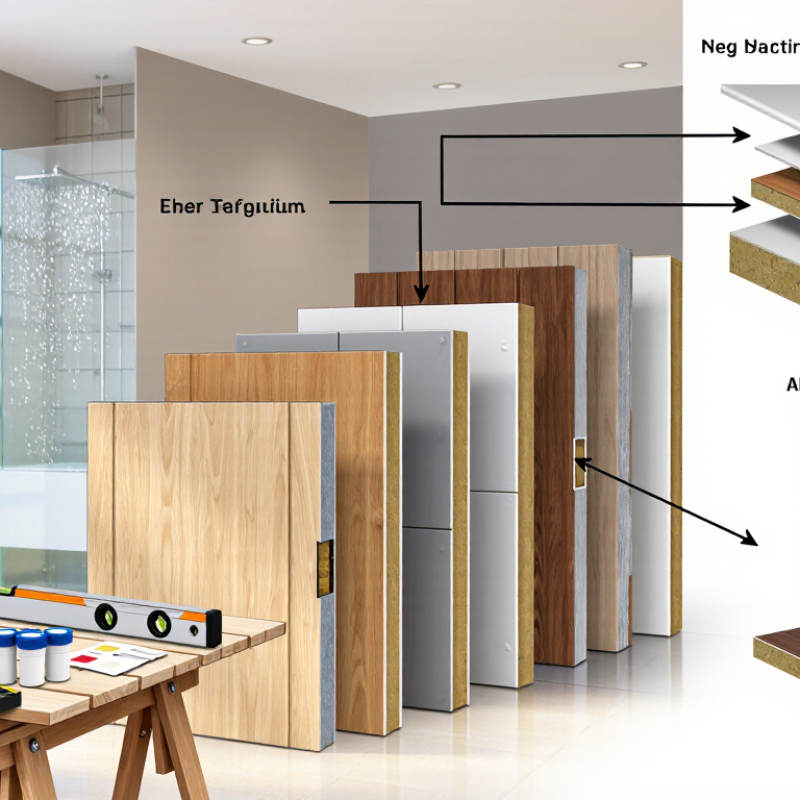
SPC wall panels combine a mineral-filled core with polymer layers, creating rigid boards that resist moisture and everyday knocks. The exact core recipe varies, so performance should be checked against product test data rather than assumed from the label. In bathrooms, kitchens, or busy corridors, sealed joints and suitable edge details matter as much as the panel itself. A neat surface can still fail at a poorly finished corner.
Why consider them in 2026?
Buildings remain a major climate challenge. The 2024 Global Status Report for Buildings and Construction, published by the UN Environment Programme and the Global Alliance for Buildings and Construction, says buildings account for 32% of global energy use and 34% of energy-related CO2 emissions. Those figures do not prove that SPC panels reduce emissions. They do underline why renovation choices deserve scrutiny.
Ask suppliers for documented fire, emissions, and durability results, and check whether installation avoids unnecessary removal of existing finishes. Less mess. But not automatically greener. SPC can offer a wipe-clean surface and quick installation, yet its composite makeup may complicate end-of-life recycling. Compare the project’s actual maintenance needs, indoor-air requirements, and disposal options before choosing.
Before comparing SPC wall panels, define how the room will be used. A busy hallway, a damp utility room, and a quiet home office place different demands on the wall surface. Note likely impacts, cleaning routines, and exposure to moisture. Measure each wall, including doors, windows, corners, and outlets. A rough sketch with dimensions can prevent costly ordering errors.
Check the installation surface, too. Panels may need a flat, dry, stable substrate; uneven plaster can create visible gaps or stress at the joints. Bring a tape measure and inspect the wall under side lighting. Small waves show up quickly. Decide whether the project needs a smooth finish, a stone-like texture, or a specific color that works with existing floors and trim. Keep a physical sample if possible. Screen colors can mislead.
Then set practical limits: panel thickness, edge profile, available installation space, and budget. Ask for product specifications covering water resistance, cleaning, and installation conditions, and verify that they suit your room rather than relying on a broad sales claim. Also plan for cuts and waste. The exact amount is easy to underestimate. I have found that a little extra material can help with awkward corners, though too much can strain a tight budget. Define these requirements before choosing a panel; some details may change once the wall is opened or measured more carefully.
Start by measuring the wall area in each room, then use the results to estimate panel quantities and compare product dimensions. This illustrative sample totals 60 m²; replace it with your project’s measured areas and allow for cuts, openings, and the supplier’s recommended waste factor. Before choosing panels, also confirm thickness, installation method, moisture exposure, and applicable fire and building-code requirements.
SPC wall panels combine mineral filler and polymer, but recipes vary. Compare the technical sheet, not just the showroom sample. Check panel thickness, core density, surface-layer thickness, and joint design. A rigid core can feel sturdy, yet a weak locking edge may still chip during installation. Bring a sample to the site. Look at it under the project’s actual lighting.
Performance claims need context. ASTM E84 classifies surface-burning behavior; Class A corresponds to a flame-spread index of 0–25 and a smoke-developed index of 0–450. These figures describe test results, not a guarantee of fire safety in every assembly. Ask for the full report and confirm it covers the exact panel construction. For wet areas, request water-resistance test details and installation limits. “Waterproof” can sound reassuring. The joints still matter.
Style affects upkeep as much as appearance. Deep texture and dark finishes can show dust, while glossy surfaces reveal scratches under bright light. Ask for abrasion and stain-test results, plus the cleaning method used in testing. Compare those results across products using the same test method; otherwise, the numbers may mislead. I would also check replacement-panel availability. That detail is easy to overlook, and it can become a real problem later.
When choosing SPC wall panels in 2026, I assess installation before surface appearance. On a recent renovation, uneven cement caused visible joints and extra adhesive work. Measure twice. The wall should be clean, dry, and structurally sound. Check each panel’s cutting method, locking system, recommended adhesive, and required expansion gaps. Small gaps matter. Reliable installation guides and independent performance reports provide stronger evidence than attractive product photos.
Maintenance should fit the room’s daily conditions. In a busy hallway, textured surfaces may hide dust but require more careful cleaning. Smooth panels usually need only a soft cloth and mild detergent. Avoid abrasive pads, excessive water, and unapproved chemicals. Ask how the surface handles stains, humidity, heat, and repeated cleaning. It looked perfect. Then the wrong cleaner dulled one section, and replacement panels did not match perfectly.
Long-term value depends on more than the purchase price. Compare panel thickness, wear resistance, repair options, expected service life, and installation labor. Confirm fire, moisture, and indoor-air documentation for the intended application. Local building requirements still matter. I also calculate waste from cutting around outlets, corners, and doors. My earlier estimates were too optimistic. A cheaper panel can become expensive when damaged edges, difficult repairs, or frequent replacement enter the calculation. Choose evidence you can verify, not promises you cannot.
How to Choose the Best SPC Wall Panels for Your Project in 2026?
A reliable SPC wall panel supplier should prove quality before discussing price. Ask for recent batch records, technical datasheets, and independent test reports. Check core thickness, surface wear, dimensional stability, locking accuracy, and formaldehyde emissions. The ISO Survey 2022 recorded 1,265,216 ISO 9001 certificates worldwide. However, certification alone is not enough. Visit the factory, inspect production controls, and request samples from different batches. A polished sample may not represent daily output.
Tips: Compare three suppliers using the same checklist. Request fire-test evidence for your target market. Confirm testing follows recognized standards, such as ASTM E84 or EN 13501-1. Also ask how rejected panels are handled. Good answers should be specific, not comfortable.
Supplier reliability also appears after the purchase. Confirm lead times, replacement procedures, packaging strength, and color consistency between shipments. EPA guidance notes that indoor pollutant levels can be two to five times higher than outdoor levels, so material-emission documents deserve attention. Do not accept vague “eco-friendly” claims. Request laboratory names, test dates, and product codes. I have seen projects delayed by missing trim pieces, not defective panels. That detail is easy to overlook. A supplier should provide installation guidance, realistic tolerances, and responsive technical support. My own selection process is still imperfect; low prices can distort judgment. Build a small pilot wall first, then evaluate cutting dust, edge behavior, cleaning, and visual consistency under real lighting.
| Selection Area | What to Check | Evidence to Request | Practical Decision Guide |
|---|---|---|---|
| Project environment | Room use, humidity, cleaning routine, temperature range, and exposure to splashes or standing water. | Written installation and maintenance guidance for the intended room and substrate. | Confirm suitability for the actual conditions. Water-resistant panels do not make joints, edges, or the wall behind them waterproof. |
| Panel construction | Core composition, total thickness, surface layer, backing, edge profile, and stated panel dimensions. | Technical data sheet, cross-section details, and a physical sample matching the quoted product. | Compare products using the same stated dimensions and construction details; SPC formulations and panel specifications vary. |
| Fire performance | The required local code and the fire classification applicable to the project. | A current test report for the specific product and, where relevant, the tested installation assembly. Reports may use standards such as ASTM E84 or EN 13501-1. | For ASTM E84, Class A surface-burning limits are flame-spread index 0–25 and smoke-developed index 0–450. Verify the report and local requirements rather than relying on a general claim. |
| Indoor air quality | Whether emissions documentation is needed for the building type or project specification. | A test report identifying the product and the method used, such as the CDPH Standard Method where applicable. | Check that the report covers the supplied product; a generic “low-VOC” statement is not a substitute for test documentation. |
| Water and stain claims | The test method, exposure conditions, and whether the result applies to the panel, joints, or complete installation. | Product-specific test results and written limits for cleaning agents, moisture exposure, and joint sealing. | Treat “waterproof” as a claim to verify. Installation details and the condition of the substrate affect moisture performance. |
| Installation requirements | Substrate flatness, adhesive or fastening method, expansion gaps, trims, and cutting instructions. | A current installation manual with preparation steps and compatible accessory specifications. | Follow the product’s own instructions; do not assume one panel’s gap, adhesive, or fixing details apply to another. |
| Appearance and batch consistency | Color, gloss, surface texture, print repeat, edge alignment, and variation between panels. | Representative samples, production-lot identification, and a documented process for approving samples before production. | Review several panels under the project’s lighting and order sufficient material from a consistent production lot when possible. |
| Supplier quality control | Incoming-material checks, in-process inspections, finished-product checks, and traceability. | A written quality-control outline, inspection records or sample reports, and batch/lot traceability details. | Prefer a supplier that explains how defects are identified, documented, and handled—not only one that provides general quality claims. |
| Warranty and support | Coverage period, exclusions, installation conditions, claim process, and availability of replacement panels or trims. | Full written warranty terms and a named contact or documented process for technical questions and claims. | Compare exclusions and remedy terms, not just the stated warranty duration. |
| Quotation and delivery | Panel dimensions, quantity, accessories, packaging, lead time, shipping terms, and replacement policy for transit damage. | An itemized written quotation, confirmed production schedule, packaging details, and delivery/claims terms. | Compare total project cost and delivery conditions, including trims, installation materials, waste allowance, and freight—not unit price alone. |