
Made in America
Get Connected With

Opening Hours M-F: 07:00 AM to 4:00 PM (PST)




Email Us
sale@abrvpartsacc.com
Call Us
+1 (626) 448-2100Made in America
Get Connected With
Opening Hours M-F: 07:00 AM to 4:00 PM (PST)
Choosing a reliable manufacturer in China takes more than comparing prices or glossy catalogs. A Cnc Screw Machine must match the part, material, tolerance, and production volume. For a buyer, the real questions are practical. Can the machine hold repeatable dimensions across a long production run? Are setup instructions, spare parts, and service support easy to obtain? Details matter. A spindle running smoothly in a showroom tells only part of the story. Ask for sample components, inspection records, and clear explanations of the machine configuration. When possible, compare these against your own drawings and acceptance criteria. This can expose gaps before a purchase becomes expensive.
This guide examines Chinese manufacturers through verifiable indicators: machine range, accuracy claims, quality controls, export experience, and after-sales support. Confirm claims with recent documentation rather than relying on a website headline. A factory visit or live video demonstration can reveal workflow, cleanliness, and how operators handle changeovers. Still, one visit cannot predict every service experience. Ask how warranty requests are tracked and which components are stocked locally.
The best fit depends on the work ahead. A shop producing small brass fittings may value fast changeovers, while a high-volume supplier may prioritize uptime and process consistency. Request a sample run using representative material, then review dimensions and surface finish with your quality team. Do not treat the lowest quote as the complete cost. Tooling, training, shipping, and maintenance can change the calculation. Some details remain uncertain until installation. That is worth acknowledging. The following comparison helps readers shortlist suitable partners, ask sharper questions, and verify whether each Cnc Screw Machine manufacturer can support their actual production needs.
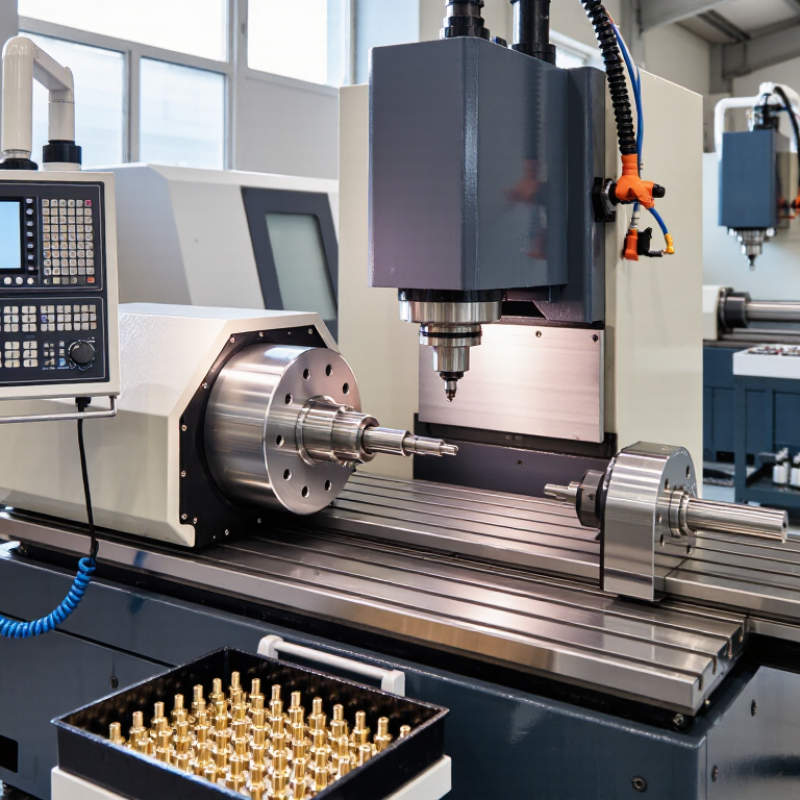
CNC screw machines turn bar stock into precise components through programmed cutting operations. In Swiss-type turning, the bar passes through a guide bushing that supports it close to the cutting tools. This support helps control deflection, especially on long, slender parts. The machine can turn, drill, and cut features in one setup, reducing repeated handling.
A stated capacity of 38 mm describes the upper bar diameter a machine may accept, not a guarantee for every job. Actual limits depend on the machine configuration, bar feeder, material, and tooling. Alloy steel, stainless steel, and aluminum can behave differently under the same cutting conditions. Small details matter. Bar straightness, tool overhang, coolant flow, and chip shape all affect stability and finish. A setup that looks sound on paper may still need a slower first run.
For a shop evaluating this process, check the part drawing against the machine’s usable turning length, spindle capability, and tool positions. Ask how the bar is guided and how chips are cleared during longer cycles. A short trial can reveal chatter, burrs, or tool wear before production begins. It is not magic. Careful setup and measured adjustments remain part of producing consistent parts from bar stock up to 38 mm.
| Dimension | Typical Capability or Feature | What It Means in Practice |
|---|---|---|
| Bar-stock capacity | Up to 38 mm on machines designed for that capacity | The maximum bar diameter is model-specific. Confirm the machine’s rated capacity, bar-feeder compatibility, and material before specifying a job. |
| Workholding and support | Guide bushing or guide-bushing-free configuration | A guide bushing supports material close to the cutting zone, which can help control deflection on long, slender parts. Some jobs are better suited to a guide-bushing-free setup. |
| Turning method | Synchronized spindle rotation with CNC-controlled tools | The arrangement supports turning operations such as facing, profiling, grooving, and threading, with multiple tools able to work during a cycle where the machine configuration allows. |
| Machining axes | Common configurations range from basic multi-axis setups to machines with additional linear and rotary axes | The available axes determine which features can be machined in one setup. Axis count alone does not define productivity; tool layout and programming also matter. |
| Sub-spindle | Available on many configurations | A sub-spindle can pick up a part for back-working, helping complete features on both ends without a separate manual transfer. |
| Typical part geometry | Small to medium-diameter, turned components, including slender or detailed parts | Common examples include shafts, pins, fittings, sleeves, and threaded components. Suitability depends on part length, geometry, material, and tolerances. |
| Materials commonly machined | Machinable metals such as stainless and carbon steels, aluminum, brass, and selected engineering alloys | Tooling, cutting parameters, chip control, and coolant requirements should be selected for the specific grade and condition of the material. |
| Accuracy | Process-dependent; no single tolerance applies to every part or machine | Achievable dimensions depend on machine condition, setup, tooling, material behavior, temperature, and inspection method. Confirm critical tolerances with a representative trial. |
| Automation | Often paired with a bar feeder and automatic part handling | Automation can support continuous production from bar stock, but reliable operation requires matching the feeder, bar diameter, remnant length, and part-ejection method. |
| Key selection checks | Capacity, part envelope, axis and tool configuration, spindle arrangement, and service support | Review an actual part drawing and production plan before choosing equipment. Also verify tooling availability, maintenance needs, commissioning, and operator training. |
Capabilities vary by machine configuration, tooling, material, and workholding. The figures and descriptions above are general selection guidance, not a specification for every CNC Swiss-type machine.