Made in America
Get Connected With



Choosing the right repair coupling in 2026 starts with the failure, not the product brochure. Water mains, irrigation lines, industrial piping, and service connections create different repair pressures. Common options include full-circle clamps, split sleeve couplings, restrained repair couplings, and flanged repair adapters. Each type addresses a different field problem. Some seal small leaks with stainless-steel bolts and flexible elastomeric gaskets. Others restore damaged pipe sections while resisting axial movement. Pipe material matters too. Ductile iron, steel, PVC, and polyethylene may require different sealing methods, torque levels, or restraint systems. A quick visual match is not enough.
A reliable comparison should examine pressure ratings, pipe diameter tolerance, corrosion resistance, installation space, and gasket compatibility. Experienced maintenance teams also check whether the pipe is clean, round, and structurally sound around the damaged area. Small surface damage may suit a clamp. A split or missing section may need a sleeve or flanged connection. That judgment cannot come from a product name alone. Manufacturer datasheets, testing records, and recognized installation guidance provide stronger evidence than sales claims. Field reports can reveal practical details, such as bolt access beside a trench wall or gasket movement during pressure testing. These details matter.
No single type wins everywhere.
This article examines the leading 2026 repair coupling types and their practical differences. It also questions common assumptions. A highly rated coupling may still fail when installation conditions are poor. That limitation deserves attention. The final choice should balance safety, service life, pipe condition, and verified compatibility.
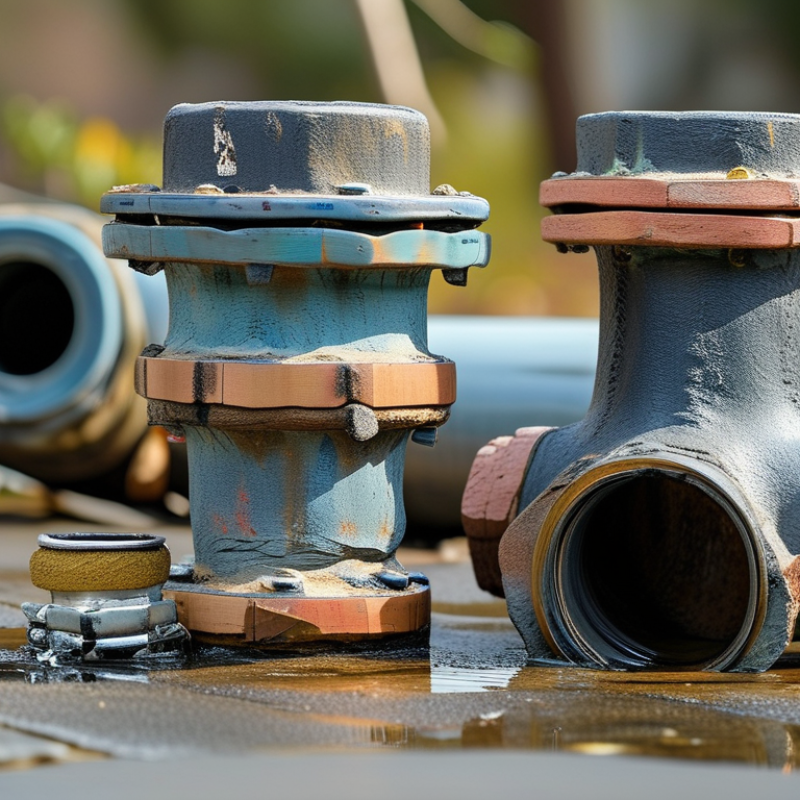
A repair coupling is a mechanical connector used to join or restore two pipe sections. It helps avoid replacing a long, damaged run. In practice, technicians place the coupling over the pipe ends and tighten seals or bolts. The internal gasket presses against the pipe surface. This creates a controlled seal while the outer sleeve holds the connection in place.
Compression repair couplings are common for fast repairs on water lines. They suit small movements and uneven pipe ends. Slip couplings can cover a wider damaged area because the sleeve slides along the pipe. Dresser-style couplings use separate glands and gaskets, offering flexibility under vibration. Flanged repair couplings work well near valves, pumps, and fixed equipment. Each type has limits. A flexible coupling may not correct serious pipe misalignment. A compression seal may also fail if the pipe is scratched, oval, or poorly cleaned.
Before installation, I measure the outside diameter at several points, not just once. I remove loose material, check the pipe wall, and confirm pressure ratings. A clean, square pipe end matters more than many rushed repairs suggest. The coupling must match the pipe material, service fluid, temperature, and expected movement. Torque should follow the manufacturer’s instructions, although field conditions can make this less exact. I still recheck for leaks after pressurizing the line slowly. A repair that looks dry for five minutes may reveal a small seep later. That detail is easy to miss.
Repair coupling demand is shifting toward fast installation, controlled leakage, and fewer excavation hours. Grand View Research valued the global pipe fittings market at about USD 16.4 billion in 2023 and expects continued growth through 2030. This wider market does not isolate repair couplings, but it signals stronger infrastructure replacement activity. In field work, stainless-steel mechanical repair couplings remain highly practical. They seal cracks, pinholes, and joint damage without removing long pipe sections. Their bolted housings also suit emergency maintenance.
Flexible repair couplings are leading where pipes need tolerance for movement, vibration, or minor misalignment. They use elastomeric seals and often fit cast iron, steel, ductile iron, and plastic pipes.
Restrained couplings are gaining attention on pressurized water lines. Their gripping systems reduce axial movement, especially near bends and unstable soil.
Compression couplings still serve smaller-diameter repairs because crews can install them with limited equipment. They are simple. Sometimes too simple.
A 2024 report from MarketsandMarkets projects the global water and wastewater treatment market to grow steadily through 2029, supporting demand for reliable pipeline maintenance components. Yet product selection remains site-specific. Temperature, pressure, pipe material, corrosion, and external loading can change the best choice. I have seen quick repairs fail when installers ignored pipe ovality. That detail matters. In 2026, the leading coupling type is not always the most advanced one; it is the type that matches the damaged pipe, installation conditions, and verified performance data.
Repair couplings solve different field problems.
use nuts and ferrules to grip the pipe. They need no heat, welding, or special power tools. A square pipe cut and clean surfaces are essential. They suit many small repairs and moderate pressures. However, overtightening can damage the ferrule or distort softer pipe. The fitting may look secure, yet still leak after temperature changes.
use a sleeve, gasket, and bolted housings. They handle larger pipes, wider gaps, and some movement between pipe sections. Installers should inspect the gasket, align the pipe, and tighten bolts evenly. A calibrated torque method improves reliability. These couplings often need more working space. That detail is easy to miss.
use an internal seal and gripping ring. They install quickly, even in wet or cramped locations. The pipe must be fully inserted, deburred, and supported against movement. Dirt, scratches, or incorrect pipe materials can weaken the seal. Push-fit is fast. It is not universally suitable. Pressure, temperature, fluid compatibility, and access for future inspection still matter.
My practical preference is simple: choose the coupling that matches the pipe condition, not merely the fastest installation time. Even experienced workers can underestimate hidden pipe damage.
What Are the 2026 Top Repair Coupling Types?
In 2026, repair couplings continue to serve water, drainage, industrial, and agricultural pipe systems. The correct type depends on pipe material, damage length, pressure, and movement. Compression couplings use rubber seals and bolted housings. They work well with steel, ductile iron, PVC, and polyethylene pipes when outside diameters match. They are practical for small leaks and tight excavation sites. Keep the pipe surface clean. Dirt can weaken sealing performance.
Mechanical sleeve couplings provide stronger coverage across cracks, holes, or separated joints. Stainless steel or coated steel bodies suit buried water lines and exposed service areas. Wide sleeves are useful when damage extends beyond one narrow point. For pipelines under vibration, restrained couplings add gripping rings or other locking features. These prevent pipe pullout, especially near bends and pump stations. However, restraint can stress fragile pipes. A careful inspection remains necessary.
Flexible couplings suit systems with minor settlement, thermal expansion, or alignment changes. Their elastomeric seals pair with metal housings and commonly support cast iron, steel, concrete, and plastic connections. Flanged repair couplings fit industrial lines requiring controlled disassembly and firm bolted connections. They are useful around valves, tanks, and treatment equipment. Material compatibility matters more than appearance. Some seals resist chemicals, while others degrade quickly in oils or high heat. I would not select a coupling from diameter alone. Field measurements, pressure records, and pipe condition can change the safest choice. Mistakes happen.
Materials and applications suited to each repair coupling type
How to read the chart: The suitability index is rated from 1 to 5, based on typical compatibility, installation flexibility, pressure-service potential, and common use in utility and industrial piping. Actual selection must be confirmed against pipe material, outside diameter, pressure rating, temperature, corrosion conditions, and applicable gas or potable-water approvals.
Typical material fit: Wide-range mechanical couplings suit ductile iron, steel, PVC, and asbestos-cement pipe. Full-circle repair clamps are commonly used on steel, ductile iron, copper, and selected plastic pipe. Split repair sleeves are preferred for structural repairs on steel and ductile iron. Transition couplings connect dissimilar materials such as PVC or PE to metal pipe. Restrained repair couplings are selected where axial movement or pressure thrust must be controlled.
Selecting a 2026 repair coupling starts with the pipe, not the product label. Measure the actual outside diameter at several points. Check pipe material, pressure, temperature, joint movement, and the damaged section’s length. Compression couplings suit small, localized leaks. Bolted sleeve couplings handle broader repairs. Restrained couplings are safer where internal pressure may create axial thrust. Flexible designs help when minor settlement or angular movement is expected.
The numbers justify careful selection. The U.S. Environmental Protection Agency’s 2023 Drinking Water Infrastructure Needs Survey estimates $625 billion in needs over the next 20 years. ASCE’s 2021 Infrastructure Report Card rated U.S. drinking water infrastructure C-. Every repair deserves field-level discipline. Expose enough pipe for full gasket contact. Remove rust, soil, and sharp edges. Confirm the coupling matches the measured diameter. Center it across the defect. Tighten bolts gradually in a cross pattern, using a calibrated torque wrench and the specified sequence. Do not guess torque.
Pressure-test the repaired section before backfilling. Inspect for weeping, gasket displacement, and pipe movement. A coupling that seals during installation may fail after loading. That is the uncomfortable part. Even experienced crews can overlook ovalized pipe or buried thrust forces. Follow the applicable coupling standard, such as AWWA C219, and record measurements, torque values, test pressure, and site conditions for future maintenance.
| Repair Coupling Type | Typical Pipe Size Range | Suitable Pipe Materials | Typical Working Pressure* | Axial Restraint | Best Application | Key Selection Criteria | Installation Requirements |
|---|---|---|---|---|---|---|---|
| Full-Circle Sleeve Coupling | DN15–DN300 (approximately ½–12 in) |
Steel, ductile iron, cast iron, PVC, PE and asbestos-cement where permitted by local regulations | Up to approximately 1.6 MPa (16 bar), product-dependent | Usually non-restrained; external thrust restraint may be required | Sealing localized leaks, pinholes, corrosion damage and small circumferential cracks | Measure the actual outside diameter; confirm the damage length is fully covered; select a gasket compatible with the conveyed fluid and pipe surface | Clean and deburr the pipe, center the sleeve over the defect, lubricate the gasket if approved, tighten bolts diagonally and recheck torque after pressurization |
| Two-Piece Split Repair Coupling | DN50–DN600 (approximately 2–24 in) |
Steel, ductile iron, cast iron, PVC and other rigid or semi-rigid pipes within the manufacturer’s diameter range | Up to approximately 2.5 MPa (25 bar), product-dependent | Generally non-restrained unless supplied with a restrained or flanged configuration | Repairs where the pipe cannot be moved or disconnected, including buried and confined installations | Check shell half alignment, pipe ovality, joint gap and bolt clearance; verify that the coupling length exceeds the damaged area | Place both halves around the pipe, install bolts and nuts, tighten evenly in a cross pattern, and pressure-test before backfilling |
| Wide-Band Repair Coupling | DN50–DN1200 (approximately 2–48 in) |
Steel, ductile iron, cast iron, concrete, PVC and PE when the gasket profile and diameter range are suitable | Commonly 1.0–1.6 MPa (10–16 bar), product-dependent | Normally non-restrained | Long cracks, multiple leak points, joint offsets and damage that requires a wider sealing area | Use the widest practical band; confirm pipe roundness, surface condition, gasket compression and available installation space | Expose the full repair zone, remove scale and sharp edges, position the gasket centrally, tighten gradually from the center outward, and inspect for extrusion |
| Mechanical Joint Repair Coupling | DN80–DN600 (approximately 3–24 in) |
Ductile iron, cast iron and steel; compatibility with PVC or PE depends on the gasket and restraint design | Up to approximately 2.5 MPa (25 bar), product-dependent | May provide limited restraint; use dedicated restraint components where axial movement is expected | High-pressure water pipelines and repairs near existing mechanical joints or flanged components | Match pipe outside diameter, pressure class, bolt material, gasket grade and allowable angular deflection | Clean the spigot area, install the gasket and gland in the specified order, tighten bolts uniformly, and verify that gland compression is even around the circumference |
| Restrained Repair Coupling | DN50–DN600 (approximately 2–24 in) |
Ductile iron, steel, PVC and PE systems designed for axial restraint | Typically 1.0–2.5 MPa (10–25 bar), product-dependent | Yes; teeth, gripping rings or restraint segments transfer axial load | Pressurized lines exposed to internal thrust, pipe separation, vibration or ground movement | Calculate thrust forces; confirm pipe wall thickness, material hardness, allowable joint movement and restraint length | Prepare the pipe without damaging the surface, position restraint components correctly, tighten to the specified sequence and torque, then conduct a controlled pressure test |
| Flanged Repair Coupling | DN50–DN600 (approximately 2–24 in) |
Steel, ductile iron, cast iron, PVC and PE with compatible flange adaptors | PN10–PN16 commonly available; higher ratings require specific engineering approval | Can provide positive restraint when correctly bolted and supported | Connecting a damaged pipe to valves, pumps, meters, dismantling joints or existing flanged equipment | Match flange drilling pattern, nominal pressure class, gasket type, bolt grade, face condition and required end-to-end length | Align flanges without forcing the pipe, install the gasket concentrically, tighten bolts in a star pattern, and support heavy valves or fittings independently |
| Flexible Universal Coupling | DN50–DN600 (approximately 2–24 in) |
Steel, ductile iron, cast iron, PVC, PE and other pipe materials with compatible outside diameters | Usually 1.0–1.6 MPa (10–16 bar), product-dependent | Usually non-restrained; separate anchoring may be necessary | Joining pipes with different outside diameters, minor angular deviation or small installation misalignment | Confirm the coupling’s diameter tolerance, maximum angular deflection, pressure rating and gasket compatibility with both pipe materials | Set the insertion depth on both pipes, keep the coupling centered, avoid excessive angular deflection, and tighten bolts evenly to the specified torque |
| Selection and safety note: Pressure ratings, size ranges, temperature limits, bolt torque and allowable pipe gaps vary by design and manufacturer. Always verify the current technical data sheet, applicable piping code, fluid compatibility, operating temperature, pipe outside diameter, wall thickness, joint movement and local installation requirements before use. Depressurize and drain the line before installation, and complete a controlled leak and pressure test before returning the system to service. | |||||||