Made in America

Get Connected With

JointsCouplings.com White Logo

Opening Hours M-F: 07:00 AM to 4:00 PM (PST)

2026 Top Sewer Drain Pipe Types for Global Buyers

Choosing the right sewer drain pipe now requires more than comparing prices, diameters, and supplier catalogs. Global buyers face aging networks, heavier rainfall, soil movement, and stricter environmental expectations. The U.S. Environmental Protection Agency’s 2022 Clean Watersheds Needs Survey estimated $630.1 billion in wastewater infrastructure needs over the next twenty years. That figure signals a market under pressure.

The United Nations Environment Programme reports that most global wastewater remains untreated. Every joint, bedding layer, and inspection chamber therefore matters. PVC, HDPE, ductile iron, concrete, vitrified clay, and fiberglass each perform differently underground. Their value depends on loading, chemistry, temperature, installation quality, and maintenance access.

Dr. George Tchobanoglous, a leading wastewater engineering authority, has emphasized, “The selection of materials must be based on performance requirements, not simply initial cost.” That principle should guide every sewer drain pipe evaluation. A low-priced pipe can become expensive after settlement, infiltration, or repeated repairs. The reverse can also happen. Premium materials do not excuse poor trench preparation.

This guide compares the leading sewer drain pipe types for 2026. It considers service life, hydraulic behavior, corrosion resistance, joining methods, transport, and regional availability. It also reflects real procurement difficulties, including incomplete technical data and inconsistent supplier claims. No ranking is perfect. Soil conditions can overturn a laboratory advantage. Buyers should verify standards, test certificates, and installation instructions before signing contracts. Small details matter underground.
2026 Top Sewer Drain Pipe Types for Global Buyers

Sewer Drain Pipe Types: Definitions and Core Functions

Sewer Drain Pipe Types: Definitions and Core Functions

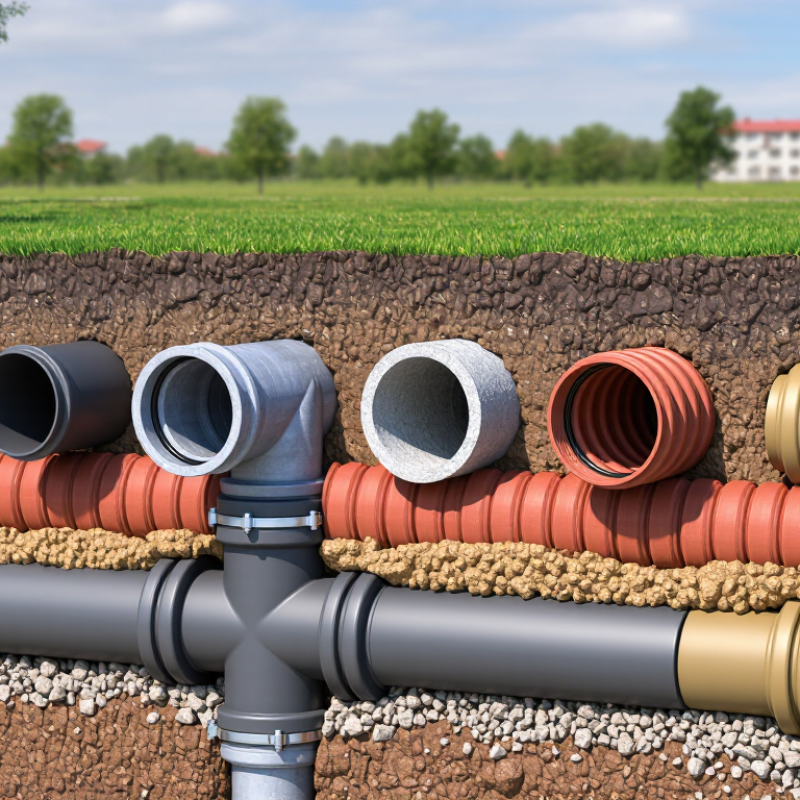
Sewer drain pipes carry wastewater from buildings, roads, and treatment networks to controlled discharge points. Their core function is simple: maintain flow while resisting soil pressure, corrosion, leakage, and root intrusion. Pipe type means the material and structural design chosen for a specific installation condition. Diameter, stiffness, joint method, and slope also affect performance.

Clay pipes are rigid and chemically stable, but their joints require careful sealing and ground preparation.

Concrete pipes provide high compressive strength for deep burial and heavy traffic areas. They are heavier, so transportation and lifting need proper planning.

PVC pipes are lightweight, smooth inside, and useful for many gravity sewer lines.

HDPE pipes tolerate ground movement and offer heat-fused joints with low leakage risk.

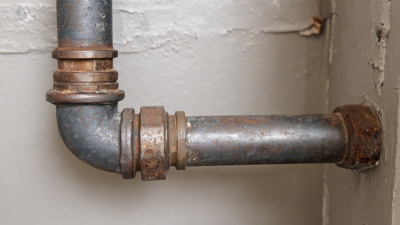
Cast iron remains valuable where impact resistance and fire performance matter, though its weight and corrosion protection need review.

In procurement, buyers should match pipe properties with soil, groundwater, traffic, temperature, and local installation practice. A smooth wall does not automatically guarantee reliable drainage. Poor bedding or uneven settlement can damage any material. Inspection records often reveal joint defects before blockages become visible. Specifications should state load class, dimensions, tolerances, testing, and traceability documents. One weakness deserves attention: catalog comparisons may ignore site workmanship. A technically excellent pipe can underperform when alignment, compaction, or testing is rushed. Clear installation control is part of the pipe’s real function.
Key Materials Used in Modern Sewer Drain Pipes

For 2026, global sewer buyers are comparing materials, not just pipe prices. Material choice affects service life, leakage risk, installation speed, and maintenance costs. The U.S. Environmental Protection Agency’s 2022 Clean Watersheds Needs Survey estimated wastewater infrastructure needs at 630.1 billion dollars over 20 years. That figure signals major replacement demand. Material failure is expensive. The WHO/UNICEF Joint Monitoring Programme reported that 3.5 billion people lacked safely managed sanitation in 2022, increasing pressure for durable systems.

Unplasticized PVC offers low weight, smooth internal walls, and strong resistance to many household chemicals. High-density polyethylene provides flexibility and heat-fused joints, which can reduce infiltration in unstable ground. Polypropylene performs well where higher temperature resistance and structural strength are needed. These plastics simplify handling. However, joint quality and bedding remain critical. A strong pipe can still fail in poor backfill.

Concrete remains suitable for large diameters and heavy traffic loads, especially when engineered correctly. Vitrified clay resists abrasion and many chemicals, but its rigid joints demand careful alignment. Ductile iron provides high mechanical strength, although corrosion protection requires site-specific assessment. No material wins every site. A useful purchasing review should examine soil chemistry, groundwater, traffic loading, flow temperature, and local installation skills. Site reviews often expose a weak point: buyers compare nominal strength while overlooking joint testing, trench support, or long-term maintenance access.

2026 Top Sewer Drain Pipe Types for Global Buyers - Key Materials Used in Modern Sewer Drain Pipes

Pipe Type Primary Material Typical Sewer Applications Key Performance Characteristics Main Advantages Important Limitations Common International Standards
PVC Sewer Pipe Unplasticized polyvinyl chloride (uPVC) Gravity sanitary sewers, house connections, stormwater drainage, and low-pressure sewer systems Smooth internal surface; low hydraulic friction; strong resistance to corrosion and biological attack; commonly manufactured in stiffness classes Lightweight, easy to install, chemically resistant, and generally cost-effective More sensitive to installation quality, temperature, and external loading than rigid pipe; requires suitable bedding and backfill EN 1401; ISO 4435; ASTM D3034
HDPE Sewer Pipe High-density polyethylene (PE) Trenchless sewer rehabilitation, force mains, marine outfalls, pump stations, and areas with ground movement Flexible pipe with high impact resistance; heat-fused joints can form a leak-resistant continuous pipeline; good abrasion and chemical resistance Excellent joint integrity, flexibility, low weight, and suitability for directional drilling or pipe bursting Thermal expansion requires design consideration; installation and fusion require trained personnel and controlled procedures EN 12666-1; ISO 4427; ASTM F714; ASTM D3350
PP Sewer Pipe Polypropylene (PP) Gravity sewers, drainage networks, industrial wastewater, and installations requiring high ring stiffness Low density; good chemical and abrasion resistance; available in structured-wall and solid-wall designs; performs well across a broad temperature range Lightweight, durable, smooth-bore, and resistant to many aggressive wastewater constituents Long-term deflection depends on pipe class and installation; product availability and standards may differ by market EN 1852; ISO 21138; ASTM F2764
Vitrified Clay Pipe Vitrified clay with sealed elastomeric joints Gravity sanitary sewers, corrosive wastewater systems, and applications requiring long service life Rigid structure; very high resistance to chemical corrosion, abrasion, and elevated wastewater temperatures Long service potential, non-combustible material, and strong resistance to hydrogen sulfide-related corrosion Heavy and brittle compared with thermoplastic pipe; requires careful handling, bedding, and joint installation EN di 295; ISO 160; ASTM C700
Reinforced Concrete Pipe Concrete reinforced with steel cage or reinforcing wire Large-diameter trunk sewers, stormwater culverts, deep-buried pipelines, and high-load crossings High structural capacity; suitable for substantial external loads; available in large diameters and multiple strength classes Strong under heavy traffic loads, widely available, and suitable for large flow volumes Heavy transportation and lifting requirements; concrete may require protection in acidic or sulfide-rich wastewater environments EN 1916; ISO 25780; ASTM C76
Ductile Iron Pipe Ductile cast iron with protective lining and external coating Sewer force mains, pumping systems, bridge crossings, shallow installations, and high-pressure wastewater pipelines High tensile strength and stiffness; handles internal pressure and external loads effectively; available with restrained joints Robust, impact-resistant, and suitable for demanding pressure applications Heavier than plastic alternatives; corrosion protection and soil conditions must be evaluated carefully ISO 2531; EN 598; AWWA C151
GRP/FRP Sewer Pipe Glass-fiber-reinforced thermosetting resin, commonly polyester or vinyl ester resin Large-diameter gravity sewers, wastewater treatment plants, corrosive industrial effluent, and pressure sewer systems High specific stiffness; corrosion-resistant; smooth internal surface; manufactured with tailored structural wall designs Lower weight than many rigid alternatives, good hydraulic efficiency, and strong resistance to many chemicals Requires protection from excessive point loading and impact; joint and handling procedures must follow manufacturer specifications EN 14364; ISO 10467; ASTM D3262
Corrugated Structural-Wall Pipe Polyethylene or polypropylene with profiled outer wall and smooth inner wall Storm drains, culverts, non-pressure drainage, and gravity sewer installations Lightweight flexible-wall construction; structural strength is developed through pipe-soil interaction; smooth bore supports efficient flow Efficient handling, fast installation, and reduced transport weight for large diameters Not normally intended for pressurized service; performance depends strongly on trench design, bedding, and compaction EN 13476; ISO 21138; ASTM F894
Buyer note: Actual suitability depends on pipe diameter, pressure or gravity service, burial depth, soil conditions, groundwater, wastewater chemistry, joint design, local regulations, and the required design life. Standard references should be verified against the latest edition adopted in the target market.

How to Compare Pipe Types by Strength, Flow, and Service Life

2026 Top Sewer Drain Pipe Types for Global Buyers
How to Compare Pipe Types by Strength, Flow, and Service Life

Choosing a sewer drain pipe requires more than checking its material name. Strength depends on soil pressure, traffic loads, burial depth, and bedding quality. PVC often provides smooth internal walls and reliable flow for gravity systems. HDPE handles ground movement well because its joints can remain flexible. Concrete offers high structural strength, but rougher surfaces may increase resistance. Ductile iron suits demanding locations, although corrosion protection needs careful inspection.

Service life depends on installation as much as the pipe itself. A strong pipe can fail under poor bedding, misaligned joints, or repeated ground settlement. Check the pipe’s load class, stiffness rating, joint design, and chemical resistance. For flow comparisons, review internal diameter, surface roughness, slope, and expected peak discharge. Larger does not always mean better. Oversized pipes may reduce self-cleaning velocity. That detail is often missed. In my field experience, installation records are as important as laboratory specifications. However, site conditions can still prove the original design incomplete.

Tips: Request soil data and traffic loads before selecting a pipe. Compare flow calculations using the same slope and diameter. Inspect sample joints, not only pipe walls. Allow access for future cleaning. Also, question unusually long service-life claims; maintenance quality and local climate can change the result.

2026 Top Sewer Drain Pipe Types for Global Buyers

How to Compare Pipe Types by Strength, Flow, and Service Life

Strength

Comparative structural-capacity index based on typical stiffness, load resistance, and installation conditions.

Flow Efficiency

Hydraulic index reflecting typical Manning roughness values. Smoother pipes generally produce lower friction losses.

Service Life

Typical expected service-life index for properly designed, installed, and maintained sewer systems.

The 0–100 scores are comparative engineering benchmarks derived from commonly reported material ranges. Typical Manning roughness is approximately 0.009–0.011 for PVC and HDPE, 0.012–0.013 for ductile iron, 0.013 for vitrified clay, and 0.013–0.015 for concrete. Expected service life varies widely with soil, loading, joints, corrosion, installation quality, and maintenance; final selection should follow local standards and project calculations.

Regional Standards, Climate Factors, and Installation Requirements

2026 Top Sewer Drain Pipe Types for Global Buyers

Regional Standards, Climate Factors, and Installation Requirements

Selecting sewer drain pipe requires more than comparing material prices. The U.S. EPA’s 2022 Clean Watersheds Needs Survey estimates $630.1 billion in wastewater infrastructure needs over the next 20 years. That figure reflects aging networks, capacity upgrades, and stricter treatment requirements. PVC-U suits many gravity systems because it is lightweight and corrosion-resistant. HDPE performs well where ground movement or aggressive soil may damage rigid joints. Vitrified clay remains useful for high chemical resistance, while ductile iron supports demanding road and pressure applications.

Standards vary by market. Buyers should verify ASTM D3034 or ASTM F679 requirements in North America, EN 1401 for European plastic gravity pipes, and EN 1610 for sewer installation and testing. Local authorities may also require minimum stiffness, ring deflection, joint tightness, and CCTV inspection. A pipe can meet one standard and still fail a municipal approval process. That detail is often missed.

Climate changes the installation method. In freezing regions, bedding depth must limit frost movement, and flexible joints need careful restraint. Hot climates increase thermal expansion during open-trench storage. Coastal or sulfate-rich soils may require enhanced corrosion protection. In seismic zones, flexible joints and controlled backfill reduce breakage risk. Field experience shows that poor bedding causes many failures, not weak pipe walls. Still, material choice alone cannot solve rushed compaction, inaccurate slopes, or unclear inspection records. These practical gaps deserve more attention.

Buyer Selection Guide for Global Sewer Drain Projects

Choosing sewer drain pipes in 2026 requires more than comparing purchase prices. Global buyers should match pipe material with soil, loading, flow, and local standards.

PVC pipes suit many gravity sewer lines because they are lightweight, smooth, and resistant to common wastewater corrosion. HDPE performs well where ground movement or trenchless installation is expected. Concrete offers high stiffness for deep installations and heavy traffic areas. Vitrified clay remains useful where chemical resistance and long service life matter. Ductile iron can serve pressurized sewer sections, but its protective system requires careful specification.

The United Nations World Water Development Report 2024 highlights continuing wastewater management gaps worldwide. This increases pressure on projects to prevent leakage and infiltration. The U.S. Environmental Protection Agency also identifies inflow and infiltration as major contributors to sewer overflows and treatment costs. A pipe with a low unit price may create expensive maintenance later. That part is easy to underestimate.

Tips: Request soil-resistivity, groundwater, and traffic data before selecting a wall class. Check joint performance, gasket compatibility, and installation tolerances. Ask for independent test records, not only supplier brochures. For long routes, compare whole-life cost, including bedding, transport, repairs, and energy. Confirm compliance with recognized standards, such as ISO, EN, ASTM, or applicable national requirements. Field experience still matters. Design assumptions can be wrong.