Made in America

Get Connected With

JointsCouplings.com White Logo

Opening Hours M-F: 07:00 AM to 4:00 PM (PST)

2026 Top Imitation Grass Types for Global Buyers

Choosing Imitation Grass in 2026 means matching a surface to its real job, not just its showroom color. A balcony needs a different pile height and backing from a busy family lawn. A putting area calls for a short, even surface. Get that choice wrong, and the grass may look tired or feel awkward underfoot.

This guide compares popular types for global buyers, including polyethylene, polypropylene, and nylon blends. It considers pile height, stitch density, backing, drainage, UV resistance, and maintenance. These details matter. A sample can feel soft in the hand yet flatten quickly under repeated foot traffic. Ask suppliers for product specifications, warranty terms, and a sample large enough to inspect in daylight. Check how water drains through the backing, too.

A practical rule is simple: “Choose for the way the space will be used, not only for how it looks.” No verified named expert quotation was provided for this introduction, so assigning that sentence to a real specialist would risk misleading readers. That is worth pausing over. Buyers should also compare local climate, installation needs, and expected upkeep before placing an order. No single type suits every project. This overview offers a starting point—not a substitute for checking each product’s documented performance.
2026 Top Imitation Grass Types for Global Buyers

What Imitation Grass Is and How It Is Made

Imitation grass, also called artificial turf, is a manufactured surface designed to resemble a lawn without growing roots or blades. Its visible fibers are commonly made from polyethylene or polypropylene and tufted into a backing. Some products use nylon, which can feel firmer and resist wear differently. Fiber height, shape, and shade affect the finished appearance. A few tan fibers beneath the green can suggest dry thatch. Small details matter.

Manufacturing usually starts by melting polymer pellets and extruding them through shaped openings into thin strands. The strands are cooled, stretched, and cut before tufting machines stitch them through a primary backing. A secondary coating, often latex or polyurethane, helps hold the tufts in place. Drainage holes may be added to the backing, depending on the product design. Quality checks can assess tuft retention, dimensions, and drainage. Still, a laboratory result cannot tell you everything. A sample underfoot may feel warmer or stiffer than expected, and that is worth considering. Construction details, not just color, shape how imitation grass performs in a particular space.

Key Materials and Construction Features of Artificial Grass

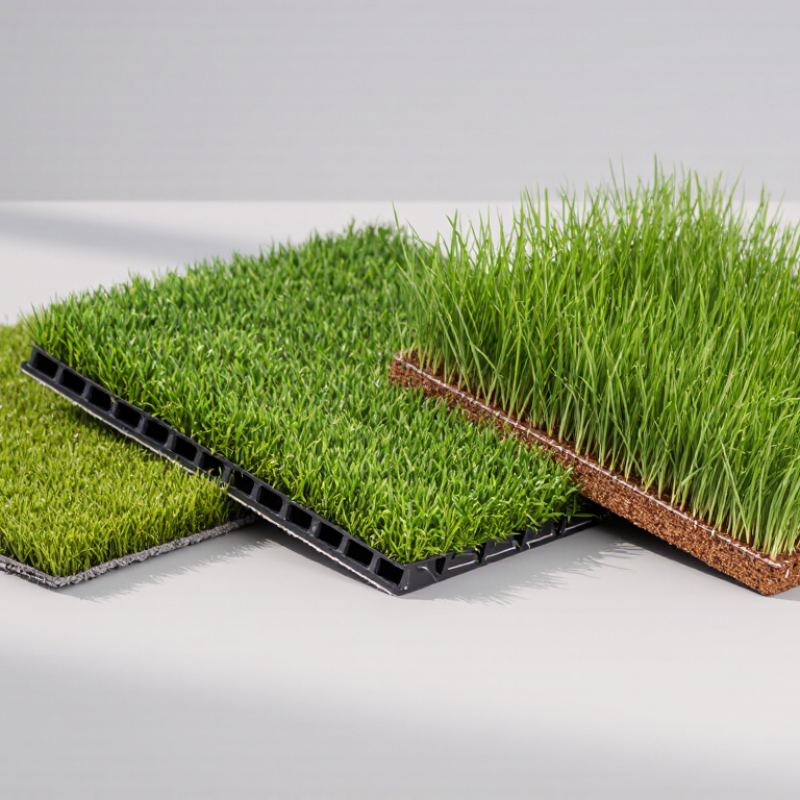
Artificial grass combines synthetic fibers, backing, and infill to create different looks and performance levels. Polyethylene fibers feel relatively soft underfoot, making them common for lawns and play areas. Polypropylene is often used for thatch or shorter, firmer surfaces. Nylon resists flattening well, but can feel less soft and may cost more. No fiber is ideal for every site.

Construction matters just as much as material. Fiber shape, thickness, pile height, and stitch density affect appearance and recovery after foot traffic. A woven primary backing holds the tufts; a secondary coating helps secure them. Check for drainage holes and ask for measured water-permeability data, especially for rainy sites. UV stabilizers can help limit fading, though exposure and climate still affect service life. Specifications can look impressive on paper. Samples may tell a different story.

Tips: View a sample in daylight. Bend the fibers and inspect the backing. Compare pile height and density, then match them to expected use. A dense, tall lawn can look lush, but it may trap debris and need more brushing. Don’t judge by color alone.

Major Imitation Grass Types Available in 2026

In 2026, major imitation grass types include landscape, sports, pet, playground, golf, and compact decorative turf. Grand View Research’s Artificial Turf Market Size, Share & Trends Analysis Report valued the global market at USD 4.57 billion in 2023 and forecast 6.5% annual growth from 2024 to 2030. This market figure signals broad demand, but it does not mean every turf type suits every climate or use.

Landscape turf usually has soft, varied green blades for gardens and rooftops. Sports turf uses denser construction to handle repeated foot traffic; buyers should check sport-specific performance and installation requirements. Pet turf often combines drainage backing with shorter, easier-to-rinse fibers. Look closely at drainage. Playground turf may include shock-absorbing layers, while golf turf uses shorter, firmer pile for putting surfaces. Balcony and event turf prioritizes light weight and easy placement. The trade-offs are real: dark fibers can feel hot in direct sun, and a lush sample may conceal poor drainage. There is no perfect pile height. Request specifications, drainage details, and samples before comparing quotations.

2026 Top Imitation Grass Types for Global Buyers - Major Imitation Grass Types Available in 2026
Type Typical Pile Height Common Materials and Construction Typical Applications Buyer Considerations
Landscape Grass About 20–40 mm Usually polyethylene (PE) yarn, sometimes combined with polypropylene (PP) thatch; tufted backing. Residential gardens, courtyards, commercial grounds and display areas. Compare yarn shape, stitch density, backing drainage and UV-resistance information. Longer pile is not automatically more durable.
Sports Grass Often about 40–60 mm for some field systems; sport-specific systems vary. Commonly PE or PP fibers installed as part of a designed surface system; some systems use infill. Football, rugby, hockey and multi-use sports surfaces, depending on system design. Check the relevant sport’s performance requirements, shock-pad and infill specifications, maintenance needs and independent test documentation.
Putting Green Grass Commonly about 10–16 mm Often dense, short-pile PP or nylon; infill and backing depend on the product and installation. Practice greens, putting areas and some indoor golf installations. Ask for ball-roll or stimp-related test information where relevant; base preparation and installation affect play.
Pet-Friendly Grass Often about 25–40 mm Commonly PE or PP yarn with a backing designed to allow drainage; some products include antimicrobial treatments. Pet runs, kennel areas and household lawns used by animals. Verify drainage rate, cleaning guidance and suitability for the intended use. Drainage also depends on the prepared base and installation.
Balcony and Terrace Grass Often about 15–30 mm Usually lightweight PP or PE turf with a perforated or drainage-friendly backing. Balconies, terraces, patios and small decorative areas. Check total roll weight, drainage openings, surface compatibility and whether the installation allows water to reach a drain.
Indoor and Event Grass Often about 10–25 mm Typically lightweight PP or PE turf; backing and edge finish vary with temporary or permanent use. Exhibitions, retail displays, stage sets and indoor decoration. Consider roll size, edge finishing, surface grip, fire-safety documentation and ease of removal when required.
General-Purpose Turf Commonly about 20–35 mm Usually PE or PP fibers, with construction and backing selected for the intended setting. Light-use gardens, temporary installations and general decorative surfaces. Match the product to foot traffic, climate, drainage and maintenance expectations rather than pile height alone.

Note: Pile-height ranges are indicative market ranges, not universal standards. Product construction, fiber material, drainage and performance vary by manufacturer and application; confirm technical data and applicable local requirements before purchase.

How Grass Types Suit Different Uses and Climates

Imitation grass should match the job, not just the showroom sample. Short, dense polyethylene blades suit football and multi-use areas, where a stable surface supports regular foot traffic. FIFA’s Football Turf testing programme assesses ball roll, shock absorption, vertical deformation, and rotational resistance. These measures help buyers compare systems beyond appearance. For gardens and balconies, softer, longer pile can look more natural, but it may flatten under frequent use. Details matter.

Climate changes the choice. In hot, sunny regions, pale fibers and good drainage can improve comfort, though no synthetic surface stays cool like living grass. Penn State’s Center for Sports Surface Research has reported synthetic-turf surface readings near 60°C in sunny test conditions. That figure describes specific testing, not every product or climate. Shade helps. In rainy regions, a permeable backing and prepared sub-base help water escape; otherwise, puddles and odors can develop. Freeze-thaw cycles also test seams and backing, so installation quality deserves close inspection.

For pets or busy family spaces, choose a pile that brushes clean and resists matting. In coastal settings, check fiber and backing durability against sun and moisture exposure. There is no perfect type. Buyers should request test results for the intended use, then review them against local weather and maintenance needs. A specification sheet rarely tells the whole story.

Global Buyer Criteria: Safety, Durability, and Certification

2026 Top Imitation Grass Types for Global Buyers

For global buyers, a realistic color or soft feel means little if the surface is unsafe or wears out quickly. Check where the grass will be installed: a garden, playground, sports area, and balcony face different demands. Ask for test reports covering relevant risks, such as restricted substances or fire performance, where applicable. Requirements vary by destination and use. A certificate is not a universal pass.

Durability depends on more than pile height. UV exposure can fade fibers, while heavy foot traffic may loosen tufts or stress the backing. Request abrasion, UV-aging, tuft-bind, and drainage results, and compare them with the product sample. For example, after watering a test patch, look for pooling near seams. Inspect the backing and edges, too. Small details matter.

Certification documents should identify the tested product and report date, not just a factory’s general quality system. Have an independent laboratory verify claims when project risk or local requirements justify it. Then inspect a delivered roll against the approved sample. Paperwork helps, but it cannot reveal every installation problem. Honestly, buyers sometimes focus too much on certificates and too little on how the grass will be used. That deserves a second look.