
Made in America
Get Connected With

Opening Hours M-F: 07:00 AM to 4:00 PM (PST)




Email Us
sale@abrvpartsacc.com
Call Us
+1 (626) 448-2100Made in America
Get Connected With
Opening Hours M-F: 07:00 AM to 4:00 PM (PST)
Choosing a Hydrocell Golf Cart Battery in 2026 means matching the battery to your cart, not simply choosing the largest number on a product page. Voltage, capacity, battery chemistry, dimensions, and terminal placement all affect fit and performance. Check your cart’s manual and the battery manufacturer’s current specifications before buying. A tray that looks roomy may still leave too little clearance for cables.
Think about how you actually drive. A short, flat trip around a neighborhood asks different things than repeated hills, long rounds, or carrying extra passengers. Pay attention to the expected range, charging time, operating temperature, and recommended charger for the specific model. Details matter.
This guide explains how to compare those points, review warranty terms, and estimate ownership costs. It also covers installation questions and routine care, since even a capable battery can disappoint when paired with an unsuitable charger or an incompatible cart. Do not rely on a single advertised range figure; terrain, load, speed, and weather can change real-world results. It is easy to overlook those variables.
Hydrocell models may differ, so verify exact specifications rather than assuming every battery shares the same features. When information is unclear, ask the seller or manufacturer for written confirmation. That extra step can feel tedious, but it is better than discovering a fit problem after delivery. There is no universal best choice. The right battery is the one that fits your cart, supports your typical use, and comes with clear, verifiable product information.
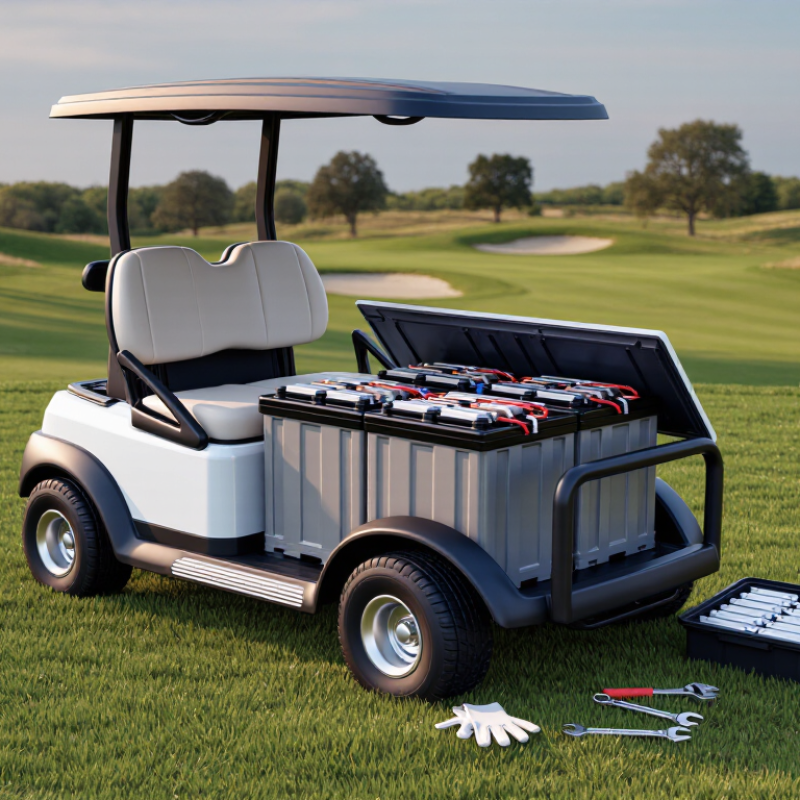
A hydrocell golf cart battery is usually a deep-cycle battery with liquid electrolyte, often a flooded lead-acid design. The term “hydrocell” is not a universally standardized battery chemistry, so the label alone may not explain how the battery is built. Check its specification sheet for chemistry, voltage, capacity, and maintenance requirements.
In a flooded lead-acid battery, lead plates sit in an electrolyte made from sulfuric acid and water. During charging, the battery stores energy through a chemical reaction; during use, it supplies power to the cart’s motor and accessories. That distinction matters. It is not just water. Some models require periodic inspection and distilled-water top-ups, while sealed designs do not allow routine access to the electrolyte. A vented battery also needs suitable airflow during charging.
For a buyer, practical details matter more than the name. Look for the stated amp-hour rating and confirm it matches the cart’s voltage system and expected daily range. A heavy battery can affect handling, and an older charger may not suit every battery type. The name can sound more precise than it is; I would verify the construction before assuming how much care it needs. Check the manual for charging limits, watering instructions, and safe lifting points.
“Hydrocell” is not a standardized battery chemistry name. In golf-cart listings, it commonly refers to a flooded lead-acid deep-cycle battery with liquid electrolyte. Check the product specifications to confirm the actual construction and maintenance requirements.
| Buying Dimension | What to Know | Practical Buying Check |
|---|---|---|
| Battery Type | Flooded lead-acid batteries contain liquid electrolyte and are designed for repeated charging and discharging. They are different from sealed AGM, gel, and lithium batteries. | Confirm the chemistry on the specification sheet; do not rely on “hydrocell” alone as a technical classification. |
| System Voltage | Golf carts commonly use 36V or 48V battery systems. A pack is assembled from multiple batteries connected in series. | Match the total pack voltage and battery count required by the cart. Do not mix batteries of different voltages or ages in one pack. |
| Common Configurations | A 36V pack may use six 6V batteries or three 12V batteries. A 48V pack may use eight 6V batteries, six 8V batteries, or four 12V batteries. | Verify the existing configuration, tray layout, cable connections, and the cart manufacturer’s requirements before ordering. |
| Capacity (Ah) | Amp-hour ratings indicate capacity under specified test conditions. Ratings depend on battery size and the stated discharge rate; they are not directly comparable unless the test conditions match. | Compare the same voltage and rating duration, commonly a 20-hour rate. Choose capacity based on required range, passenger load, terrain, and accessory use. |
| Deep-Cycle Design | Deep-cycle batteries are built to supply sustained power and tolerate repeated cycling better than typical automotive starting batteries. | Choose a deep-cycle model intended for traction or golf-cart use rather than a standard starting battery. |
| Dimensions and Weight | Battery case sizes and terminal positions vary. Lead-acid batteries are also heavy, and the installed pack contributes substantial vehicle weight. | Measure the battery compartment and check terminal orientation, hold-down clearance, cable reach, and the cart’s load limits. |
| Charging Compatibility | Flooded lead-acid batteries need a charger profile suitable for their chemistry and pack voltage. Charging settings and voltage targets vary by battery design and temperature. | Use a compatible charger and follow its instructions together with the battery maker’s charging guidance. Avoid assuming a lithium or sealed-battery profile is suitable. |
| Watering and Maintenance | Serviceable flooded batteries may need periodic electrolyte-level checks and topping up with distilled water. Watering frequency depends on use and charging conditions. | Follow the manufacturer’s inspection procedure. Add water only as directed, and never expose battery plates by allowing electrolyte levels to fall too low. |
| Ventilation and Safety | Flooded lead-acid batteries can release hydrogen during charging. They also contain corrosive electrolyte and can deliver high short-circuit current. | Charge in a well-ventilated area, keep sparks and flames away, use appropriate protective equipment, and follow the cart and battery safety instructions. |
| Operating Range | Available capacity and charging behavior are affected by temperature, discharge rate, battery age, and maintenance. Cold conditions can reduce available performance. | Consider the cart’s climate and duty cycle, and consult the battery’s temperature and operating guidance for the expected environment. |
| Service Life | Cycle life is not a fixed number. It depends on depth of discharge, charging habits, temperature, maintenance, and how the battery is used. | Compare warranty terms and published test conditions, and avoid selecting a battery based on an unsupported cycle-life claim. |
| Best-Fit Use | Flooded deep-cycle batteries can suit users who want a conventional lead-acid option and can accommodate regular inspection and watering. | Consider sealed or lithium alternatives if reduced routine maintenance or lower battery weight is a priority; compare compatibility, cost, and charger requirements. |
| Before You Buy | Pack voltage, battery dimensions, capacity, terminal layout, charger compatibility, and maintenance requirements all affect fit and performance. | Check the cart manual and battery datasheet, then confirm every pack-level specification before purchase or installation. |