
Made in America

Get Connected With

JointsCouplings.com White Logo

Opening Hours M-F: 07:00 AM to 4:00 PM (PST)

2026 Best Heat Resisting Waterproof Rubber Tape?

Choosing the 2026 Best Heat Resisting Waterproof Rubber Tape requires more than checking a temperature number on the package. Real performance depends on the rubber backing, adhesive chemistry, surface preparation, pressure, moisture exposure, and aging. A tape that survives a brief heat test may soften beside a hot pipe after weeks of humidity. That difference matters.

Materials specialist Dr. George Wypych offers a useful principle: “Adhesive performance depends on the adhesive, the surface, and the application conditions.” This idea should guide every comparison. The strongest Heat Resisting Waterproof Rubber Tape should bond firmly to clean metal, plastic, rubber, or painted surfaces. It should also resist water penetration without becoming brittle or excessively soft. A flexible edge is valuable. So is stable adhesion after repeated heating and cooling.

The best products are not always the thickest. Thickness can improve sealing, but it may reduce flexibility around narrow bends. Some tapes perform well outdoors, yet fail when oil, dust, or condensation remains underneath. That is an easy detail to overlook.

This guide examines practical factors, including heat range, waterproofing, tensile strength, elongation, electrical safety, shelf life, and installation behavior. It also considers independent test evidence instead of relying only on marketing language. Results can vary.

A careful buyer should test a small section first. Press the tape firmly. Observe it after several heating cycles. Look for lifting, cracking, bubbling, or adhesive transfer. No single tape wins every application. The right choice depends on the temperature, surface, movement, and exposure conditions.
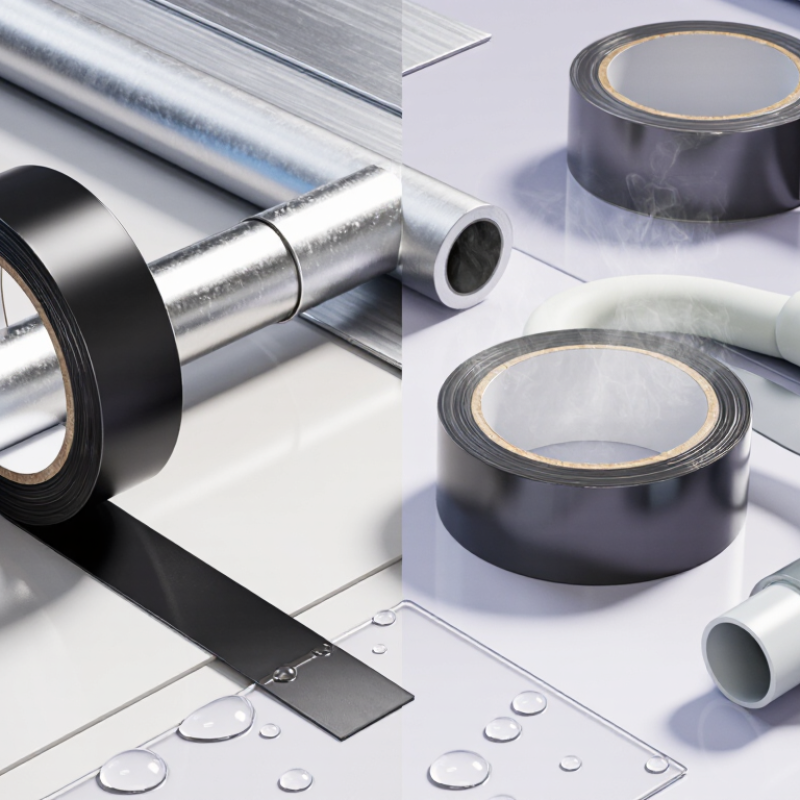
2026 Best Heat Resisting Waterproof Rubber Tape?

What Is Heat-Resistant Waterproof Rubber Tape?

Heat-resistant waterproof rubber tape is a flexible sealing material for joints exposed to water and elevated temperatures. It usually combines an elastic rubber backing with pressure-sensitive adhesive or a self-fusing compound. Unlike ordinary electrical tape, it can stretch around uneven surfaces and maintain a tighter seal. The word “waterproof” needs context. Some tapes resist splashes, while others withstand temporary immersion. Always check the temperature and exposure ratings.

In field repairs, surface preparation often matters more than tape thickness. I remove oil, dust, and loose rust, then dry the area completely. Even a small wet patch can create a hidden leakage path. When wrapping a pipe connection, I overlap each turn by roughly half its width. Firm tension helps the rubber conform to threads, corners, and small gaps. It should feel secure, not stretched to its limit. That mistake is common.

Heat resistance depends on continuous temperature, short-term peaks, pressure, and chemical contact. A tape rated for 120°C may fail faster beside a hot engine or under constant vibration. Rubber can soften, harden, or lose adhesion during repeated temperature changes. I check the technical data sheet and test a small section first. Then I inspect the seal after heating and cooling. No tape is magic. The material must match the surface, heat, moisture, and movement.

How Heat-Resistant Rubber Tape Works and What It Protects

2026 Best Heat Resisting Waterproof Rubber Tape?

Heat-resistant rubber tape works by stretching around a joint and forming a tight, flexible layer. Many self-fusing types bond to themselves instead of using ordinary glue. As tension releases, the tape compresses against the surface. This creates a continuous barrier with fewer paths for water, dust, and air.

In practical maintenance, technicians use it around cable splices, hose connections, pipe joints, and outdoor wiring. It helps protect against rain, condensation, salt spray, vibration, and surface abrasion. A properly wrapped layer can also reduce heat transfer and shield insulation from cracking. The tape does not cool an overheated component. That limitation matters.

Performance depends on the rubber compound, thickness, stretching ratio, and temperature rating. Some products tolerate high temperatures, while others soften, shrink, or lose strength near heat sources. Check the technical data before covering an engine part, heating line, or electrical connection. Clean, dry surfaces are essential. Remove oil and sharp edges first.

Wrap with steady tension.

Overlap every turn.

I have seen rushed repairs fail at the ends, where water entered beneath the tape. This is easy to overlook. Leave no exposed gaps, but avoid excessive stretching that can thin the seal. Recheck the repair after heating, cooling, and movement. For critical electrical systems, tape alone may not provide the required insulation or certification. Use approved installation methods and inspect the finished seal regularly.

Key Features to Compare When Choosing Rubber Tape in 2026

2026 Best Heat Resisting Waterproof Rubber Tape?

Key Features to Compare When Choosing Rubber Tape in 2026

Choosing rubber tape for high-temperature, wet environments requires more than reading the word “waterproof.” Check the continuous operating temperature, not only the short-term peak. A tape rated for 120°C continuously may tolerate 180°C briefly, but repeated heating can weaken its bond. That difference matters around engine compartments, outdoor pipes, and electrical enclosures.

Examine the backing material, thickness, and stretch. A flexible rubber backing should conform around a 12-millimeter cable or an uneven pipe joint without lifting at the edges. Adhesive quality also matters. Test a small piece on a clean, dry surface, then expose it to moisture for 24 hours. Some tapes resist rain but fail during immersion. That was an easy mistake in field use. Surface preparation is often more important than expected.

Compare resistance to UV light, oil, saltwater, and mild chemicals when outdoor exposure is likely. Review tensile strength and elongation, because excessive stretching can thin the tape and reduce protection. For electrical applications, verify insulation ratings and required testing documents from the supplier. Do not rely on color or thickness alone. A thicker tape is not automatically safer. Look for clear data, batch information, storage instructions, and a realistic service temperature. If the datasheet omits test conditions, treat the claim carefully and request a sample before buying in volume.

How to Select the Right Tape for Different Applications

Selecting heat-resistant waterproof rubber tape starts with the real working environment, not the label. Check the highest continuous temperature, short-term heat spikes, moisture level, and surface material. A tape rated for 90°C may fail near an engine, roof penetration, or heated pipe. Silicone rubber tapes often tolerate higher temperatures, while butyl-based tapes usually provide stronger sealing on irregular surfaces. The choice is rarely perfect.

For electrical insulation, review dielectric strength, adhesion, and flame performance. UL 510 covers insulating tape requirements, while ASTM D1000 evaluates properties such as tensile strength, elongation, and adhesion. These tests matter when tape wraps a cable under tension. For outdoor repairs, look for resistance to ultraviolet exposure, rain, ozone, and repeated expansion. The International Energy Agency reports that global solar capacity exceeded 1,400 GW in 2023, increasing demand for durable weather-resistant sealing around outdoor electrical systems.

Application details can change the result. Clean metal and plastic with a compatible solvent, then allow the surface to dry fully. Stretch self-fusing tape evenly, usually with overlapping layers, and press the final edge firmly. Avoid applying tape to dusty, oily, or frozen surfaces. A 2024 report from the National Fire Protection Association links electrical distribution equipment to a significant share of property fires, reminding users that tape cannot replace proper connectors or damaged-cable replacement. Field conditions are often harsher than laboratory ratings. Recheck the seal after heat cycles, heavy rain, or vibration.

2026 Best Heat-Resisting Waterproof Rubber Tape? — How to Select the Right Tape for Different Applications
Rubber Tape Type Typical Continuous Temperature Range Short-Term Temperature Resistance Waterproofing Performance Best Applications Suitable Surfaces Key Advantages Main Limitations Recommended Selection Priority
Silicone Self-Fusing Tape Approximately −60°C to 200°C Often up to approximately 260°C, depending on construction and exposure time Excellent after fusion High-temperature cable splicing, electrical insulation, emergency hose repair, outdoor sealing Clean, dry cables, hoses, pipes, and smooth or moderately irregular surfaces Forms a seamless, non-adhesive rubber sleeve; strong resistance to moisture, ozone, and weathering Needs firm stretching during installation; does not bond reliably to every surface; limited resistance to sharp abrasion Choose when heat resistance, electrical insulation, and a watertight seal are all required
Self-Amalgamating EPDM Rubber Tape Approximately −40°C to 120°C Usually up to approximately 150°C for limited periods Excellent after fusion Outdoor cable joints, pipe connections, automotive wiring, marine and utility repairs Rubber, plastic, metal, and insulated cable jackets after surface preparation Flexible, weather-resistant, and effective on curved or uneven components Lower maximum temperature than silicone tape; requires overlapping wraps and adequate tension Choose for durable outdoor waterproofing where temperatures are moderate rather than extreme
Butyl Rubber Waterproof Tape Approximately −40°C to 90°C Commonly up to approximately 100°C for limited periods Excellent, highly moisture resistant Roof flashing, window and door sealing, gutters, ducts, tanks, and low-pressure pipe joints Metal, glass, concrete, wood, masonry, many plastics, and painted surfaces Excellent gap filling, low water absorption, and strong conformability Can soften or flow at elevated temperatures; usually unsuitable for high-voltage insulation or high-pressure repairs Choose when waterproofing and gap filling matter more than very high-temperature performance
EPDM Adhesive Rubber Tape Approximately −40°C to 120°C Often up to approximately 150°C, depending on adhesive grade Very good HVAC duct sealing, automotive trim, outdoor enclosures, vibration damping, and weather seals Clean metal, glass, painted metal, rubber, and selected plastics Good resistance to sunlight, ozone, rain, and temperature cycling Adhesion can be poor on oily, dusty, low-energy, or silicone-contaminated surfaces Choose for permanent or semi-permanent weather sealing on prepared surfaces
High-Temperature Fiberglass-Reinforced Rubber Tape Approximately −40°C to 150°C May tolerate approximately 180°C to 200°C for short periods, depending on adhesive and reinforcement Good when overlapped correctly Hose reinforcement, thermal insulation support, engine-bay repairs, and high-temperature bundling Metal pipes, rubber hoses, cable jackets, and heat-resistant insulation materials Higher mechanical strength and dimensional stability than unreinforced rubber tape Less flexible around very tight bends; the adhesive layer may limit the true service temperature Choose when tensile strength and moderate heat resistance are more important than maximum flexibility
Silicone Adhesive Rubber Tape Approximately −50°C to 180°C Often up to approximately 230°C for short-term exposure Very good High-temperature gaskets, electrical enclosures, lighting assemblies, and outdoor equipment sealing Glass, metal, silicone rubber, selected plastics, and clean painted surfaces Maintains flexibility across a wide temperature range and resists UV and ozone Usually more expensive; adhesion may be weaker than acrylic or butyl systems on some substrates Choose when the tape must remain flexible during repeated heating and cooling cycles
Neoprene Rubber Adhesive Tape Approximately −30°C to 90°C Usually up to approximately 110°C for limited periods Good General weather sealing, vibration control, equipment protection, and low-temperature industrial repairs Metal, glass, wood, painted surfaces, and many rigid materials Good flexibility, abrasion resistance, and resistance to oils compared with some other rubber types Less resistant to long-term sunlight and ozone than EPDM; not intended for very high temperatures Choose for general-purpose sealing where moderate heat, vibration, and abrasion are present
Natural Rubber Adhesive Tape Approximately −20°C to 70°C Typically below 90°C for short periods Moderate to good Indoor bundling, temporary sealing, packaging, and light-duty maintenance Paper, cardboard, wood, metal, and clean low-stress surfaces High initial tack, easy handling, and good conformability Lower resistance to heat, UV, ozone, and aging than silicone, EPDM, or butyl systems Choose only for moderate-temperature, mainly indoor applications
Selection note: Temperature ranges are typical values for generic tape constructions, not universal ratings. Always verify the manufacturer’s technical data sheet for the exact backing, adhesive, thickness, pressure, exposure time, electrical requirements, and substrate. For any waterproof repair, clean and dry the surface, remove oil and dust, use sufficient overlap, and test the finished seal under the expected operating conditions.

How to Apply, Test, and Maintain Heat-Resistant Waterproof Tape

Choosing the 2026 best heat-resistant waterproof rubber tape depends on the surface, temperature, moisture, and movement involved. A tape that performs well on metal may fail on dusty concrete. Check the stated temperature range, thickness, adhesive type, and exposure limits before purchase. Do not judge quality by thickness alone.

Clean the surface with a suitable solvent, then let it dry completely. Remove rust, loose paint, oil, and sharp burrs. Cut the tape longer than the damaged area. Apply it without stretching unless the instructions allow stretching. Press from the center outward, keeping the edges firmly bonded. Overlap each layer by half its width. Small wrinkles can become leak paths. I have seen careful repairs fail because installers touched the adhesive with oily gloves.

Test the repair after application. Press around the edges and look for lifting, bubbles, or exposed gaps. For waterproofing, spray or wipe the area with water after the recommended curing period. For heat testing, increase temperature gradually and monitor the tape, nearby materials, and bond line. Never exceed the product’s rated limit. Recheck the repair after cooling, because some adhesives soften when hot. Inspect monthly in vibrating, outdoor, or oily environments. Replace tape showing cracking, swelling, hardening, or edge separation. A second inspection often reveals what the first one missed.