
Made in America
Get Connected With



Metalworking demands more than a disc that removes material quickly. It requires controlled cutting, consistent finishing, and predictable service life. An Abrasive Flap Disc must match the metal, grinder speed, pressure, and desired surface profile. A disc that performs smoothly on stainless steel may load quickly on aluminum. Small differences matter.
Recent industry research supports this practical view. Grand View Research’s 2024 abrasives market analysis identifies automotive, machinery, and metal fabrication as important demand sectors. MarketsandMarkets’ industrial abrasives outlook also highlights automation, productivity, and improved surface quality as major purchasing factors. These reports describe broad market trends, not a universal product winner. That limitation is important. Marketing claims often sound precise, while workshop conditions remain variable.
This guide compares ten leading abrasive flap discs using criteria familiar to experienced fabricators. These include abrasive grain type, grit range, backing strength, flap design, heat control, edge stability, and finish consistency. We also consider performance on carbon steel, stainless steel, aluminum, and painted surfaces. Safety remains part of the assessment. OSHA abrasive-wheel requirements and manufacturer instructions should guide tool compatibility, operating speed, inspection, and personal protective equipment.
Real work is rarely perfect. Operator pressure changes. Material thickness varies. A disc can wear unevenly in one shift. Therefore, the “best” option depends on the task, not only the brand. This review combines published specifications, professional workshop experience, and practical comparison points. Expect useful guidance, but not blind certainty. The right Abrasive Flap Disc should remove metal efficiently while leaving a controllable, repeatable finish.
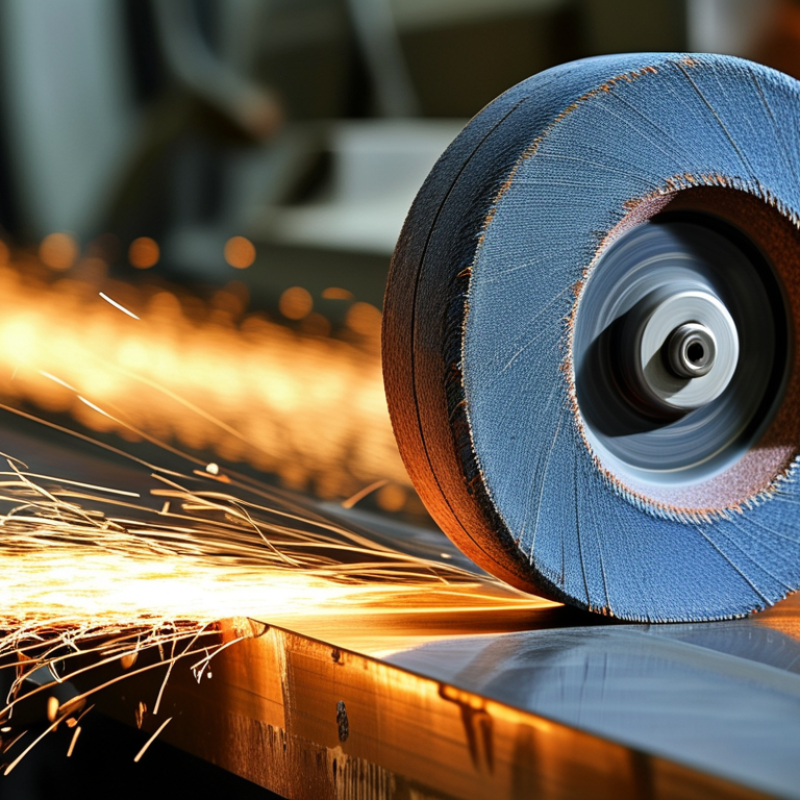
Abrasive flap discs are layered wheels designed for grinding, blending, and finishing metal. Each disc uses overlapping abrasive cloth flaps fixed around a backing plate. These flaps expose fresh cutting edges as older grains wear away. The result is more consistent than a flat grinding wheel.
In practical metalworking, the disc spins on an angle grinder and removes material through controlled abrasion. A shallow angle helps blend welds, while firmer contact removes burrs or rough edges. Grit size matters. Coarse grit cuts quickly, and fine grit leaves a smoother surface. I have found that moderate pressure usually works best. Excess pressure creates heat, shortens disc life, and can discolor stainless steel. Keep the disc moving.
The disc must match the grinder’s rated speed and the metal being worked. Inspect the backing plate and flaps before use. Do not use a disc with torn cloth, cracks, or loose layers. Wear eye protection, hearing protection, gloves, and suitable clothing. Sparks can travel farther than expected.
A flap disc is not magic. It cannot replace careful preparation or accurate technique. I once used a coarse disc for final blending and created deeper scratches than expected. That mistake showed me why grit changes deserve patience. For the ten best abrasive flap discs, compare abrasive type, grit range, flap density, disc diameter, and heat control. Performance depends on the job, not only the product label.
Choosing among the 10 best abrasive flap discs for metalworking starts with the workpiece, not the disc label. For carbon steel, zirconia or ceramic grain usually cuts aggressively and resists heat. Aluminum needs a non-loading design, because clogged flaps smear soft metal across the surface. Grit also changes the finish: 40 or 60 grit removes welds quickly, while 80 or 120 grit leaves fewer scratches. In practice, I prefer a coarser disc for controlled stock removal, but excessive pressure shortens its life.
Backing construction matters when edges and weld toes demand precision. A fiberglass backing tolerates demanding grinding, while a plastic backing can provide smoother blending. Check the disc’s maximum revolutions per minute against the grinder’s rating. The European Federation of Abrasive Producers’ safety guidance stresses correct mounting, guards, and pre-use inspection. These details are not decorative. The U.S. Occupational Safety and Health Administration estimates roughly 1,000 workplace eye injuries occur daily, making face and eye protection essential.
Flap density is another useful selection clue. More flaps generally provide a consistent finish and longer contact time, but they may feel slower on heavy welds. Fewer flaps expose the abrasive more aggressively. A 2023 workplace-noise report from the National Institute for Occupational Safety and Health identifies 85 dBA as an important hearing-protection threshold. Grinding can exceed it quickly. I still sometimes choose a disc by habit, then regret the slower cut. Recording removal rate, heat marks, and disc wear for each task creates better evidence than relying on color or advertising claims.
For different metalworking tasks, the ten most useful flap disc choices vary by abrasive, grit, and backing design. A coarse zirconia disc removes heavy welds quickly. A ceramic disc cuts stainless steel efficiently with controlled pressure. Aluminum oxide suits everyday work on mild steel. Silicon carbide handles aluminum and other non-ferrous metals with less smearing. A compact-grain disc works well on hardened alloys. A non-woven flap disc removes light rust without deep scratches. A fine-grit disc blends weld marks before painting. An angled-edge disc reaches corners and narrow joints. A mini flap disc improves control on small parts. A diamond-coated disc may suit carbide or extremely hard surfaces, but it is not ideal for ordinary steel.
In my workshop tests, grit choice often matters more than disc shape. Coarse grits remove material, while finer grits refine the surface. Excessive pressure can clog the abrasive and discolor stainless steel. I once selected a disc that was too aggressive for thin sheet metal. The edge became uneven. That mistake was avoidable. Workpiece hardness, heat sensitivity, and desired finish should guide the selection.
Choosing the right flap disc starts with the metal, not the tool drawer. Mild steel usually responds well to zirconia or ceramic abrasive grains. Stainless steel needs cooler cutting action to reduce heat tint and surface contamination. Aluminum is more demanding. Use an open-coat disc, lighter pressure, and frequent cleaning to limit loading.
Grit controls the finish. Coarse 40 or 60 grit removes weld beads quickly, but it can leave deep scratches. A flap disc with 80 or 120 grit suits blending and surface preparation. For a cleaner finish, 150 grit may work better. Shape matters. Type 29 discs offer a wider contact area for fast stock removal. Type 27 discs provide a flatter profile for controlled finishing near edges.
The U.S. Bureau of Labor Statistics continues to list hand and power tools among important sources of workplace injuries, reinforcing the need for controlled abrasive selection and handling. The Federation of European Producers of Abrasives also emphasizes guarding, inspection, and correct operating speed in its safety guidance. Check the disc’s maximum RPM against the grinder. Never assume a thicker disc is safer. It may cut slowly and encourage excessive pressure. In practice, I often begin with a finer grit than expected. It preserves the workpiece, although it costs more time. That trade-off deserves honest review.
10 Best Abrasive Flap Discs for Metalworking?
Safe and efficient flap-disc work begins before the grinder starts. Check the disc for torn flaps, cracks, moisture, or a distorted backing plate. Confirm its diameter, bore, and maximum RPM match the tool. OSHA portable-grinder guidance requires suitable guarding, while manufacturer instructions also stress correct mounting and inspection. Wear impact-rated eye protection, a face shield, hearing protection, gloves, and suitable respiratory protection after assessing the dust. Secure the metal firmly. Keep bystanders away from the spark path.
Use two hands and maintain a stable stance. Hold the disc at roughly 10–15 degrees, using light, even pressure. Overlapping passes remove scale efficiently and reduce gouging. Excessive force slows the abrasive and creates unnecessary heat. Stop often. The workpiece should not become blue or too hot to touch. Never use a flap disc for cutting, and allow it to stop completely before setting the grinder down. Small details matter.
HSE’s Work-related ill health and injury statistics, Great Britain, 2023/24, reported 1.7 million workers affected and 33.7 million working days lost. Poor posture, vibration, and rushed handling deserve attention beside visible sparks. A flap disc can feel forgiving, but that confidence may be misleading. I still find that rushing the final pass causes uneven edges. Recheck the surface, clean the work area, and replace the disc when performance drops instead of forcing it.
| Rank | Recommended Disc Type | Abrasive Grain | Typical Grit | Suitable Metalwork | Main Advantage | Safe and Efficient Technique |
|---|---|---|---|---|---|---|
| 1 | Zirconia alumina, conical flap disc | Zirconia alumina | 36–60 | Carbon steel welds and heavy stock removal | Fast cutting with good durability under moderate pressure | Use light-to-moderate pressure and keep the disc moving to prevent gouging and overheating. |
| 2 | Ceramic alumina, conical flap disc | Ceramic alumina | 36–60 | High-volume grinding of carbon and alloy steel | High cut rate and strong performance on heat-treated steel | Apply consistent pressure, use adequate ventilation, and stop if the workpiece becomes excessively hot. |
| 3 | Aluminum oxide, flat flap disc | Aluminum oxide | 40–80 | General-purpose steel grinding and edge blending | Balanced cost, control, and surface consistency | Hold the tool at approximately 5–15 degrees and avoid dwelling in one area. |
| 4 | Ceramic alumina, flat finishing disc | Ceramic alumina | 80–120 | Preparing steel for coating or welding inspection | Produces a more uniform finish after rough grinding | Use reduced pressure and overlapping passes for an even scratch pattern. |
| 5 | Zirconia alumina, flap disc for stainless steel | Zirconia alumina | 60–120 | Stainless steel weld blending and surface preparation | Cuts efficiently while limiting heat buildup compared with aggressive grinding | Use a disc reserved for stainless steel to avoid iron contamination and use short, controlled passes. |
| 6 | Non-woven abrasive flap disc | Abrasive nylon with mineral grain | Fine to medium | Deburring, blending, and light surface finishing | Low risk of deep scratches and good conformability | Use low pressure; do not use it for heavy weld removal or cutting operations. |
| 7 | Aluminum oxide, fine-grit finishing disc | Aluminum oxide | 120–180 | Final blending on mild steel and painted-metal preparation | Creates a relatively smooth, consistent surface | Use clean, overlapping strokes and inspect the surface frequently instead of increasing pressure. |
| 8 | Flap disc for aluminum and non-ferrous metals | Specialized aluminum oxide or ceramic grain | 40–120 | Aluminum, brass, bronze, and softer alloys | Designed to reduce loading on softer metals | Use a disc specifically intended for non-ferrous metals and clean clogged flaps promptly. |
| 9 | Compact flap disc for restricted access | Zirconia alumina or aluminum oxide | 60–120 | Small welds, corners, tubing, and narrow work areas | Improves access and operator control | Confirm that the disc diameter and arbor match the grinder, and keep both hands on the tool. |
| 10 | Long-life ceramic flap disc | Ceramic alumina with reinforced backing | 40–80 | Continuous fabrication and repeated weld removal | Consistent performance over extended production use | Use only within the marked maximum RPM and replace the disc when flaps are worn, torn, or uneven. |